

If 2026 feels like the year AI got “normal,” you’re not imagining it. Tools for writing, design, chat, and automation have become easy enough for beginners, which means regular people can sell real outcomes, part-time, without a big budget.
This guide breaks down best AI business ideas you can start with little to no money. Some of these can grow into $5,000 to $10,000 per month with consistent work and smart packaging, especially service-based offers that turn into retainers.
 An “Idea to Client” flow that shows the simplest way to turn AI skills into paid work, created with AI.
What makes a good AI business idea in 2026 (even if you have no money)?
A good AI business idea isn’t the fanciest one. It’s the one you can deliver quickly, explain clearly, and sell without sounding like a tech ad.
Here’s a simple checklist before you pick anything:
- Clear problem: “You’ll get more leads” beats “AI transformation.”
- Fast delivery: You can complete it in days, not months.
- Low-cost tools: Free tiers, trials, and basic plans get you started.
- Easy to sell: The buyer understands the result in one sentence.
- Room for recurring income: Retainers, maintenance, subscriptions, or ongoing updates.
When you’re starting with no money, speed matters. Your first goal is proof, not perfection.
The easiest way to start: sell a service first, then productize later
Building an app sounds exciting until you realize it can take months to finish and longer to sell. Services flip that. You can sell your time and results now, then turn the process into a product later.
A “service first” path often looks like this:
Service (done-for-you content, automation, chatbots) → Product (templates, prompt packs) → Recurring (subscriptions, retainers, micro SaaS)
If you want long-term stability, recurring revenue is the target. Monthly content retainers, chatbot maintenance, and automation support plans are all simple ways to get there.
Basic tool stack you can start with for free or cheap
You don’t need 20 subscriptions. You need a small stack that matches your offer, plus a way to deliver clean work.
| Task | Free or low-cost tools to start |
|---|---|
| Writing drafts | ChatGPT-style writing tools (free tiers) |
| Images and design | Midjourney, DALL·E, Stable Diffusion, then polish in Canva or Figma |
| Automation | Zapier or Make free tiers, Airtable free plan |
| Editing | Grammarly free plan, QuillBot free tools |
| Building simple apps | Bubble free plan, Replit starter plans |
| Delivery | Google Docs, Notion, simple shared folders |
If you’re unsure which tools are worth your time, Zapier keeps an updated roundup of popular options: The best AI productivity tools in 2026.
Top 7 best AI business ideas to start with no money in 2026
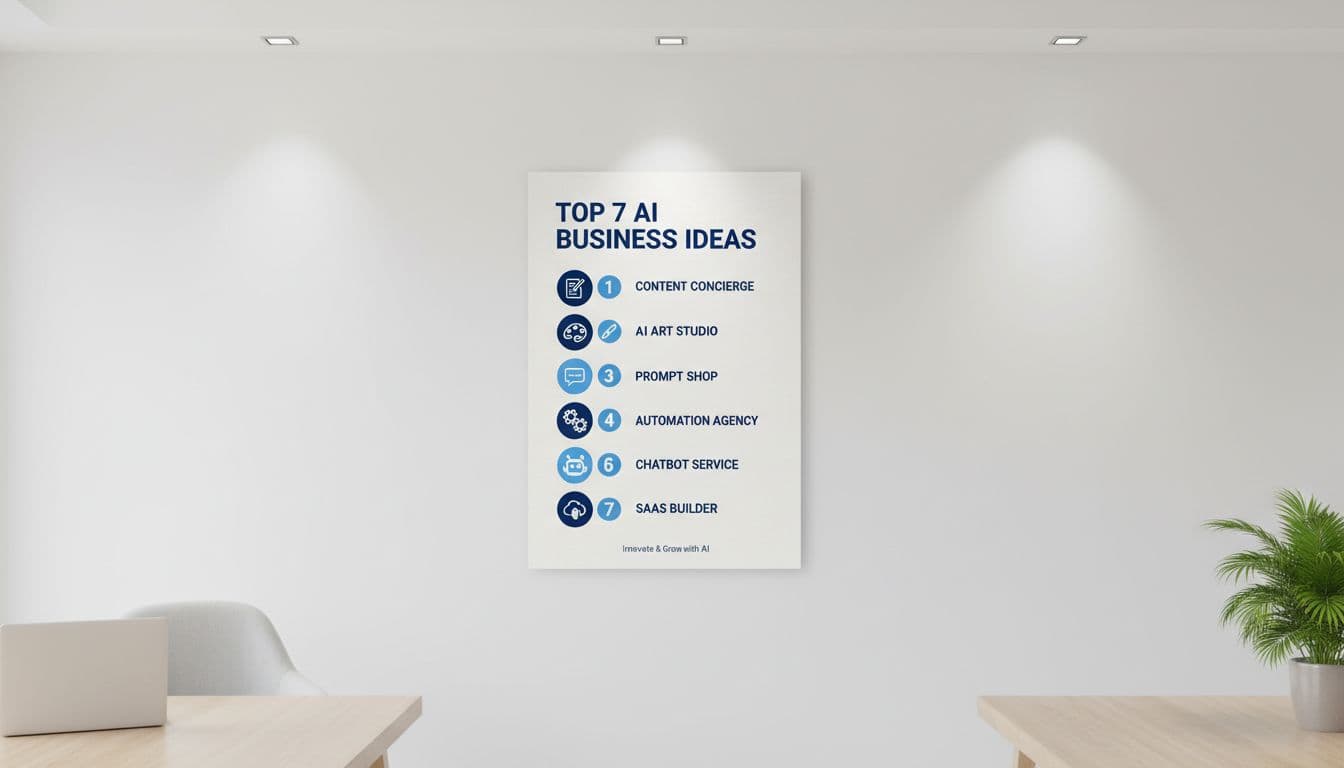 An at-a-glance list of seven beginner-friendly AI business models, created with AI.
1) AI content concierge (blogs, newsletters, and social posts)
Who it helps: local businesses, creators, coaches, and ecommerce shops that need consistent content.
What you sell: fast drafts plus human editing, tailored to their voice. You deliver in Google Docs or Notion.
Start in one weekend: pick one niche (like dentists or realtors), write two sample posts, and build a one-page “menu” of offers.
Free tools: AI writing tool for drafts, Grammarly or QuillBot for cleanup, Google Docs for delivery.
Pricing model: per-article pricing often lands around $50 to $200, or monthly retainers around $500 to $2,000 depending on volume and complexity.
A simple workflow keeps quality high: brief, outline, draft, edit, final, schedule. First clients are easiest through local outreach, or marketplaces like Upwork and Fiverr.
2) AI art and design studio (logos, covers, thumbnails, merch)
Who it helps: YouTubers, authors, small brands, and print-on-demand sellers.
What you sell: digital assets like logos, thumbnails, book covers, and merch-ready designs. AI generates concepts quickly, you refine and format the final files.
Start in one weekend: create 8 to 12 portfolio samples in one style, list two gigs on Fiverr, and upload a small pack to Etsy.
Free tools: Stable Diffusion (or another image generator), Canva or Figma for polish and sizing.
Pricing model: charge per design (like cover packages) or bundles (5 thumbnails per month). Some Etsy merch sellers report $2,000 to $5,000 per month, but style, demand, and consistency matter.
For tool comparisons and options, this roundup is useful: The 8 best AI image generators in 2026.
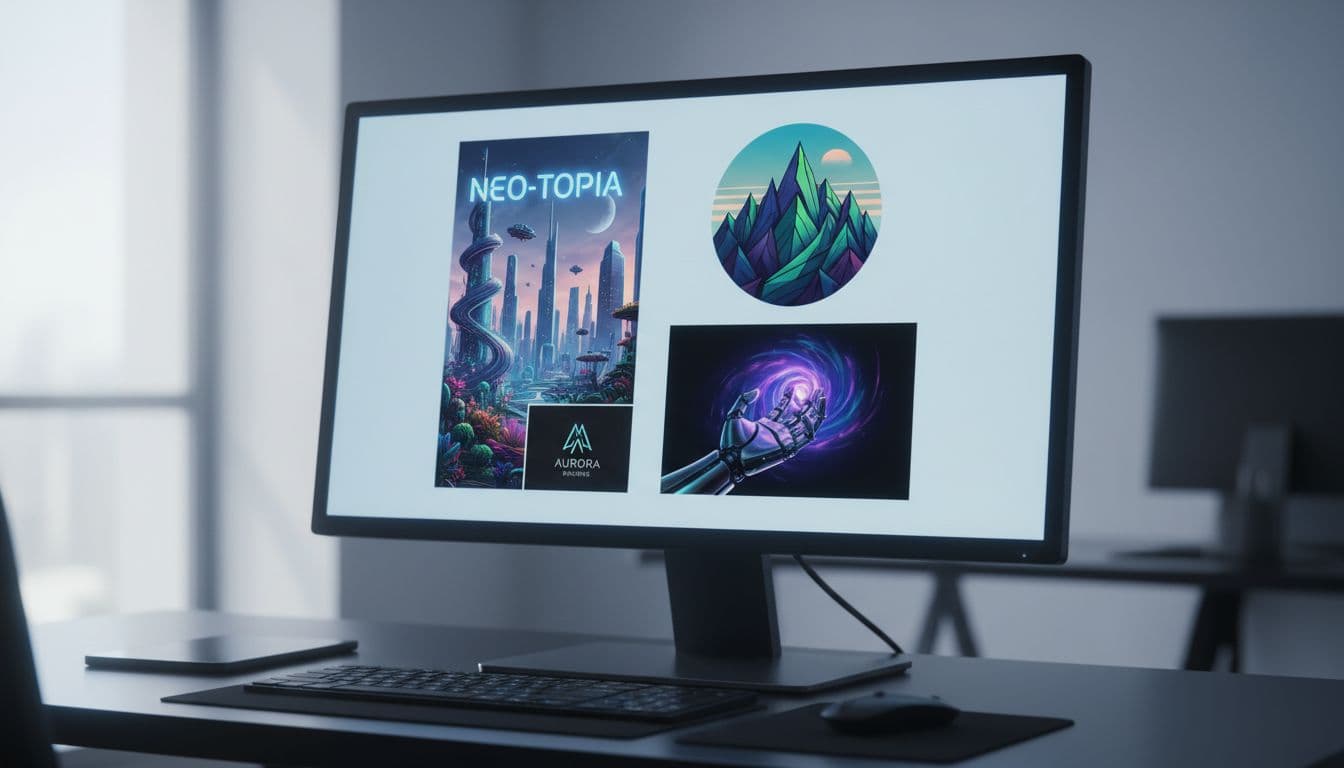 Examples of AI-assisted design outputs like covers, merch graphics, and thumbnails, created with AI.
3) Prompt shop (sell prompt packs and prompt libraries)
Who it helps: marketers, recruiters, real estate agents, support teams, and founders who want repeatable AI outputs.
What you sell: “proven prompts” packaged as a library with examples. Think less “magic words,” more “tested workflows.”
Start in one weekend: pick one niche, build 25 to 50 prompts, and add before-and-after outputs so buyers see what they’ll get.
Free tools: any AI chat tool, Google Docs or Notion to package, Gumroad-style marketplaces to sell downloads.
Pricing model: one-time prompt packs, or subscriptions for monthly drops. A strong pack can earn $300 to $2,000 per month over time, especially if you keep improving it.
To stand out, include a quick “how to use this” guide and a troubleshooting section (what to do when outputs sound generic).
4) AI automation agency (save businesses time with simple automations)
Who it helps: service businesses drowning in admin tasks (gyms, clinics, agencies, home services).
What you sell: set up automations like lead capture, follow-up messages, appointment reminders, content repurposing, and internal reporting.
Start in one weekend: build one “starter automation,” like a lead form that triggers a follow-up email and adds the lead to a sheet.
Free tools: Zapier or Make free tier, Airtable or Google Sheets, plus AI text generation for message drafts.
Pricing model: a setup fee plus monthly support. Many beginner-friendly offers start around $1,000 to $5,000 per client for higher-value builds, with a smaller monthly maintenance plan.
The easiest first client is local: one business, one automation, one clear promise (fewer missed leads).
5) Chatbot concierge service (customer support and lead capture bots)
Who it helps: businesses that answer the same questions all day, or miss leads after hours.
What you sell: a chatbot for FAQs, booking, lead qualification, and basic support. You also set rules for when a human should take over.
Start in one weekend: build a bot for one common niche, then reuse the structure. Restaurants, salons, and clinics are great starters.
Free tools: ManyChat for social DMs, website chat widgets, and OpenAI-style bots for smarter answers.
Pricing model: setup fee plus monthly maintenance (updates, training, reporting). Big brands like Sephora and H&M have used chatbots for customer engagement, and smaller businesses want the same outcome in a simpler package.
Quick checklist: define FAQs, set tone, add escalation rules, test real conversations, track leads weekly.
6) Notion AI studio (sell dashboards, templates, and subscriptions)
Who it helps: creators, freelancers, students, and small teams that need structure.
What you sell: Notion dashboards for content planning, client onboarding, habit tracking, or simple business ops, with AI-friendly prompt sections.
Start in one weekend: create one template, test it yourself for two days, then sell it with a short setup guide and a 2-minute walkthrough video.
Free tools: Notion, basic design assets, and AI prompts built into your template.
Pricing model: one-time purchases, lifetime access, or subscriptions around $10 to $30 per month for ongoing updates. Many template sellers report $500 to $2,000 per month once they build a small catalog and audience.
Marketplaces like Gumroad and the Notion Template Gallery are common starting points.
 A Notion-style dashboard layout for planning and tracking work, created with AI.
7) AI SaaS builder (micro tools for a niche problem)
Who it helps: people with one painful, repeating task, in one industry.
What you sell: a small SaaS tool that solves one job, like a resume builder for nurses, a real estate listing rewriter, or a lead follow-up assistant for roofers.
Start in one weekend: don’t build the full app. Create a landing page, collect waitlist sign-ups, and interview 10 people.
Free tools: Bubble for no-code apps, Replit for fast prototypes, and AI models through OpenAI-style APIs, LangChain workflows, or Hugging Face models.
Pricing model: monthly subscriptions. Some niche tools can reach $5,000 to $50,000 per month in recurring revenue, but only when they solve a real pain and keep churn low. Tools like Copy.ai and Jasper started as focused AI writing products before scaling.
If you want more ideas beyond this list, this roundup can spark directions: Top 10 AI Business Ideas You Can Start in 2026 (Low-Cost, High-Potential).
How to pick one idea and get your first paying customer in 14 days
The fastest path is narrow: one idea, one niche, one offer, one outreach method.
Here’s a simple 14-day plan:
- Days 1 to 2: pick your niche and write your offer in one sentence.
- Days 3 to 5: build 2 to 3 samples.
- Days 6 to 14: contact 10 people a day, track replies, and improve your pitch.
A quick “do this, not that” to avoid spinning out:
Do this: sell one clear outcome, with a simple price.
Not that: build a huge bundle with 12 tools and vague benefits.
For more context on what’s paying right now, these overviews can help you compare paths: How Can You Use AI to Start a Side Hustle? These Are the 10 Best-Paying Ones Right Now. and Best AI Side Hustles in 2026: Smart Income Ideas with AI.
Choose a niche fast (local businesses and creators are easiest)
Local businesses buy because the pain is obvious and immediate. Creators buy because speed matters.
Easy niches: Dentists, gyms, realtors, coaches, ecommerce shops, YouTubers, newsletter writers.
A niche focus also makes outreach simple. Your message stops being “I do AI,” and becomes “I help gyms follow up with leads in under 2 minutes.”
Create a tiny portfolio in one afternoon (no clients needed)
Make 2 to 3 samples that look like the real deliverable:
- A blog post draft plus final edited version
- A set of 3 thumbnails in one style
- A short screen recording of an automation working
- A chatbot script with 10 realistic Q&As
Put it in a one-page Google Doc with: what it is, who it’s for, what result it creates, and a link to the sample.
What I learned from trying these AI business models
When I tested these offers, the biggest surprise was how little clients cared about the tool. They cared about the outcome. “Faster replies to leads” got attention. “AI-powered solution” didn’t.
Editing mattered more than prompting. The first drafts were rarely the final work. Once I treated AI like an assistant and not a replacement, quality went up fast.
Simple offers sold better than custom everything. A tight package like “8 social posts per week” or “one lead follow-up automation” made decisions easy. When I offered too many options, calls got longer and sales dropped.
Recurring revenue also felt lighter. A small monthly plan beat chasing one-off gigs, even when the one-off gigs paid more upfront. The most common beginner mistakes I saw (and made) were overbuilding, juggling too many tools, and pricing in a fuzzy way.
Conclusion
The best AI business ideas for 2026 aren’t about luck or secret hacks. They’re about picking a real problem and delivering a clean result, again and again. Choose one idea from the seven, pick a niche, build one sample, and reach out to 10 people this week. Start small, use free tools, and let momentum do the heavy lifting.


0 Comments