

The next 12 months are a weird window for AI. Tools are getting cheaper and easier, buyers are getting educated, and the “easy wins” are already crowded.
That’s why before 2026 is a real deadline. It’s not magic. It’s math. More competitors will show up, more platforms will package the same features, and the average business owner will stop being impressed by “AI” and start asking, “What result do I get?”
This is a practical ranking, not hype. The main pattern that keeps working is simple: pick one path and commit. Build real skill, get real clients, then expand. If you’re hunting for the best saas ideas, look for businesses that can earn monthly revenue and solve an obvious pain.
How I ranked these AI business ideas (simple scorecard you can copy)
A lot of “AI business idea” lists are just random options stacked together. That’s not helpful when you’re trying to pay bills, avoid burnout, and build something that still works next year.
So I ranked each idea using the same scorecard. Higher rank usually means: clearer ROI for customers, easier recurring revenue, and less reliance on luck.
| Factor | What it means in plain English | Why it matters |
|---|---|---|
| Skill value | The skills you build keep paying you later | You don’t want a dead-end hustle |
| Earning potential | Realistic pricing power in 2026 | High effort with low pricing traps you |
| Client acquisition difficulty | How hard it is to get the first 5 customers | If you can’t sell it, it doesn’t matter |
| Scalability and recurring revenue | Can it grow without hiring 20 people | Subscriptions beat one-time gigs |
| Beginner friendliness | Can a serious beginner start and ship | Early momentum keeps you in the game |
The 5 factors that matter most: skills, profit, clients, scale, and ease
Skills: Choose a path where every project makes you better, like automation design or sales messaging.
Profit: If customers won’t pay enough to justify your time, it’s a hobby.
Clients: If it takes six months to find one buyer, most people quit.
Scale: A monthly plan gives you breathing room. One-time projects keep you sprinting forever.
Ease: If it’s too complex for a beginner to deliver reliably, it creates refunds and stress.
A quick warning about “easy money” AI side hustles
Many trendy plays fail for predictable reasons: thin margins, heavy ad spend, saturated markets, and no real advantage.
A clear example is AI dropshipping. AI can help with product pages and ads, but you still face the same hard parts: ad costs, returns, shipping delays, and copycat sellers. For most beginners, it’s a fast way to lose cash, not make it.
If you want a broader list of ideas (including e-commerce angles), Shopify keeps an updated roundup of AI business ideas, but the ranking below focuses on what’s most reliable going into 2026.
My ranked list of the best AI business ideas to start before 2026
This is the main list, ranked by how well it can work for normal people who want real revenue, not internet points. For each idea, I’ll keep it concrete: who it’s for, what you sell, how you charge, why it wins now, and the fastest first step.
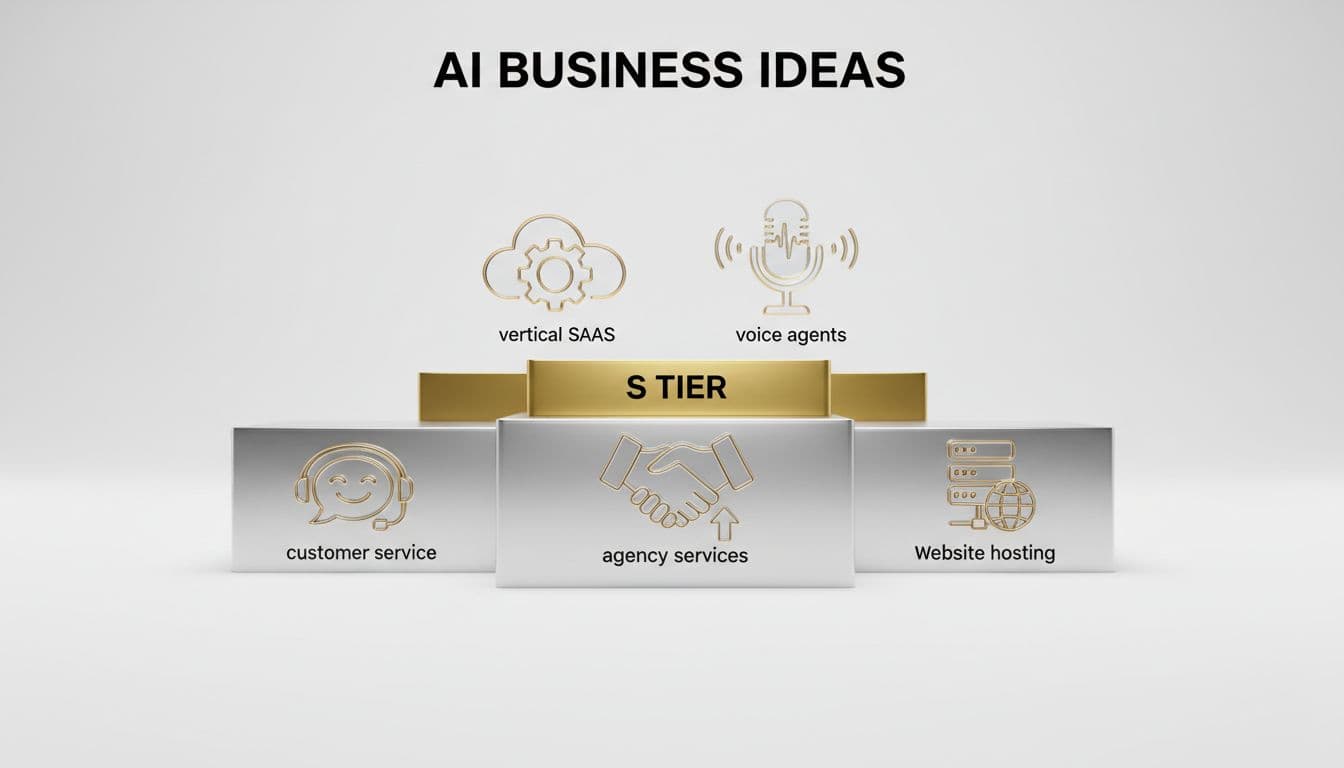 A tier-style ranking view of the strongest AI models for 2026, created with AI.
S Tier: Vertical AI SaaS for one industry (the clearest path to real subscriptions)
Who it’s for: Builders and operators who can stick to one niche for 6 to 12 months.
What you sell: One product for one industry, solving one expensive problem. Not “AI for everyone.” More like “appointment recovery for dental clinics” or “tenant support automation for property managers.”
How you charge: Monthly subscription (often tiered), plus optional setup or onboarding.
Why it wins now: Vertical tools are beating generic tools because they’re easier to trust. The messaging is simple, the workflows are specific, and customers churn less when the product is tied to daily operations.
Example niches (simple and profitable):
- Dental scheduling plus billing follow-up
- Home services quoting plus missed-call follow-up
- Property management tenant FAQs plus maintenance triage
- Legal intake and lead qualification
Fastest first step: Don’t start by coding. Start by interviewing.
- Pick one niche you can access.
- Interview 10 owners or managers.
- Build one narrow workflow that saves time or captures revenue.
- Pre-sell and charge the first 3 customers.
If you want a pain-point-driven approach to picking SaaS, this breakdown of SaaS ideas backed by real pain points is a useful filter for avoiding “cool idea” traps.
S Tier: AI voice agents that answer calls, qualify leads, and book appointments
Who it’s for: People who like selling to local businesses and can handle basic setup and testing.
What you sell: An AI receptionist that answers 24/7, handles common questions, captures lead info, books appointments, and routes urgent calls to a real person.
How you charge: Setup fee plus monthly management (and sometimes usage-based call volume).
Why it wins now: Missed calls are missed money. Restaurants get slammed during rush. Contractors can’t pick up mid-job. Clinics lose new patients because the front desk is busy. Many businesses are drowning in calls, and most can’t hire fast enough.
A simple configuration checklist:
- Greeting and business identity
- FAQs (hours, service areas, pricing ranges, policies)
- Lead fields (name, phone, service needed, urgency)
- Booking rules (calendar, time windows, buffers)
- Escalation (when to transfer to a human, voicemail rules)
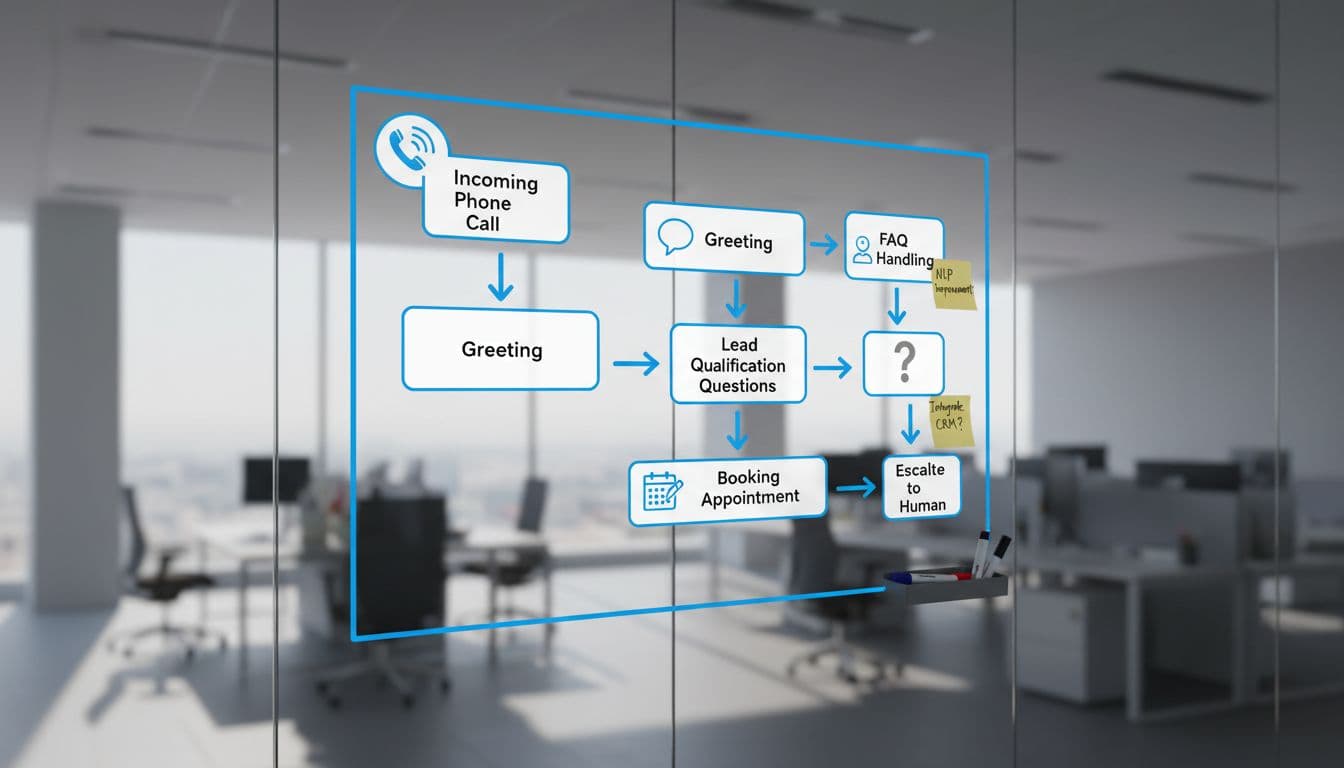 A call-flow view of how a voice agent can route callers to the right outcome, created with AI.
Fastest first step: Build a demo for one niche (like “plumbers” or “dentists”), then call 20 businesses and offer a 7-day pilot using their existing phone number.
A Tier: AI powered customer service and CX automation for small businesses
Who it’s for: People who want recurring revenue without building a full SaaS product on day one.
What you sell: Automated support across website chat, SMS, and social messaging. It answers repetitive questions, captures leads, and reduces support load.
How you charge: Monthly retainer, often with a setup fee for knowledge base and workflows.
Why it wins now: This is one of the easiest “AI sells itself” offers because the value is visible. Instant replies, 24/7 coverage, fewer interruptions, and more leads captured.
What you deliver (keep it simple):
- Knowledge base setup from existing FAQs, policies, and pages
- Lead capture and routing (email, CRM, SMS)
- Analytics review (top questions, drop-offs)
- Weekly tuning during the first month
Fastest first step: Pick one business type, install a basic web widget on a demo site, and show how it handles 15 common questions without staff involvement.
A Tier: Done for you AI agency services (sell outcomes, not tools)
Who it’s for: Sales-first people who’d rather run systems than ship a product.
What you sell: A full outcome, not “AI automation.” Examples: booked appointments, qualified leads, faster follow-up, better show-up rates.
How you charge: Monthly retainer tied to deliverables (booked calls, lead volume, response time). Many shops land in the $1,500 to $5,000 per month range once results are proven.
Why it wins now: Businesses don’t want another tool. They want fewer headaches. When you deliver booked calls or qualified leads, retention is stronger because you’re tied to revenue.
A practical note for beginners: “AI consulting” sounds premium, but credibility usually comes after you’ve implemented systems for real clients. Start with hands-on delivery, collect proof, then move upmarket.
Fastest first step: Choose one outcome for one niche, build a simple funnel plus follow-up sequence, and offer a pilot where the business only pays if you hit a clear KPI.
A Tier: AI website hosting with built-in automation (turn a website into a monthly plan)
Who it’s for: Web builders who want to stop living on one-time projects.
What you sell: Not just a website. A website plus lead capture, chatbot, forms, basic workflows, and booking. In plain words, it’s a site that works 24/7.
How you charge: Monthly hosting plan with tiers. Add a one-time setup if needed.
Why it wins now: Basic web design is a race to the bottom. A monthly “growth site” offer is easier to price because it bundles outcomes (more leads, faster replies, fewer missed inquiries).
Simple package idea:
- Basic: website + forms + email notifications
- Pro: + chatbot + SMS follow-up
- Premium: + voice agent add-on and reporting
Fastest first step: Take one local business website that looks outdated (with permission), rebuild a single-page demo, and show how leads get auto-answered within 60 seconds.
Pick your lane: the fastest way to start, get clients, and not burn out
The biggest mistake isn’t picking the “wrong” idea. It’s switching ideas every week, chasing whatever looks easiest today.
AI rewards early movers, but only the ones who build real expertise. That comes from repetition: the same niche, the same offer, the same delivery system, over and over until it’s boring.
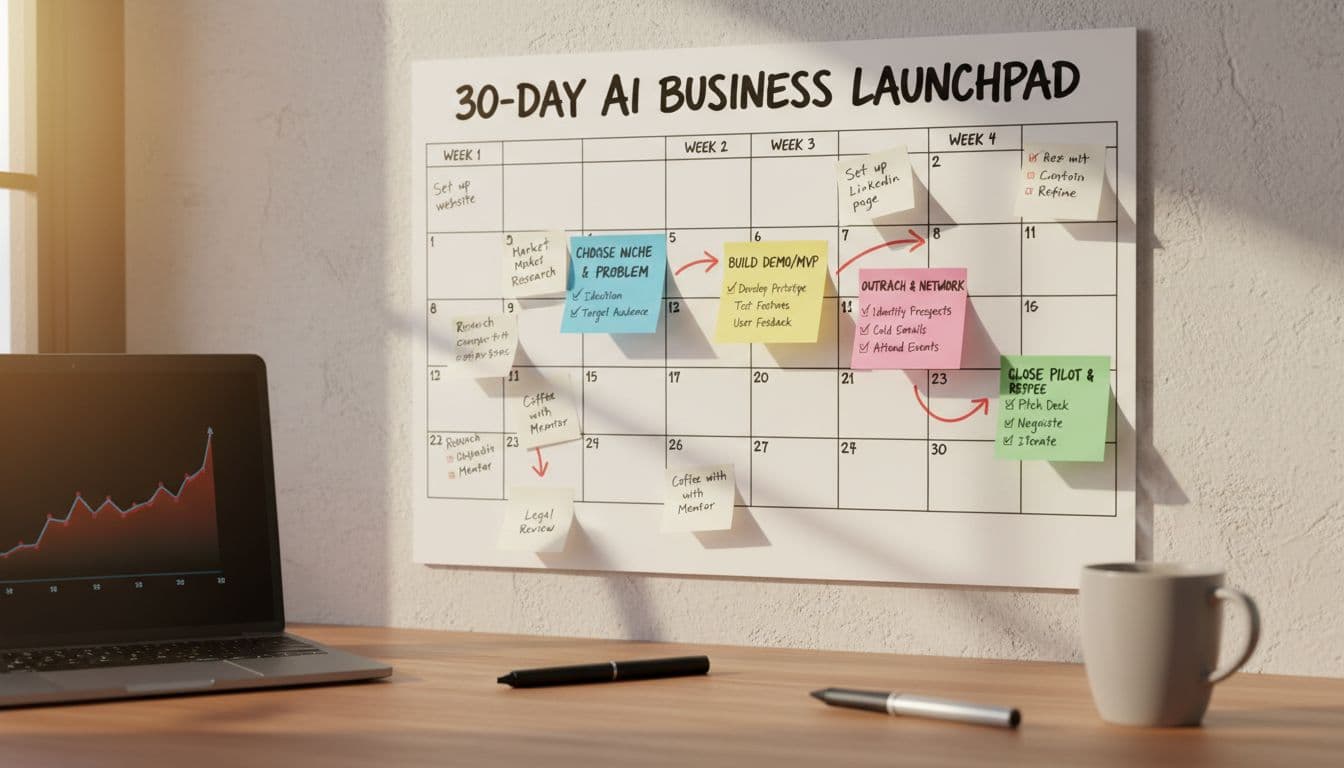 A simple 30-day plan concept for launching an AI offer, created with AI.
A simple 30 day plan to land your first paying customer
Week 1 (pick and focus): Choose one niche and one offer. Write a one-sentence promise, like “We answer every missed call and book more jobs.”
Week 2 (build a demo): Create a working demo, not slides. A basic chatbot, a sample voice agent flow, or a mini funnel is enough.
Week 3 (talk to people): Run 10 to 20 short conversations. Use local Facebook groups, Google Maps lists, and referrals. Keep it human and simple.
Week 4 (close one pilot): Offer a paid pilot with a clear scope. Measure one KPI and report it weekly.
If you like studying real execution, this case study on building multiple SaaS apps to $100K MRR shows how speed and feedback loops beat “perfect planning.”
Pricing and packaging that makes AI feel safe for buyers
Most buyers aren’t scared of AI. They’re scared of paying for something unclear.
A simple packaging structure lowers risk:
- Setup + monthly: setup covers build, monthly covers upkeep
- Pilot period: 14 to 30 days with a pass or fail KPI
- Clear scope: what’s included, what’s not
- No-jargon promise: plain language documentation and a quick training video
- Support plan: weekly tweaks in month one, then monthly optimization
Good KPIs are boring on purpose: calls answered, leads captured, appointments booked, response time, show-up rate.
What I learned building with AI, and what I would do differently before 2026
The biggest lesson is that AI doesn’t reward dabbling. It rewards depth. The people who win aren’t the ones who try 12 side hustles. They’re the ones who pick one lane, get real customers, and keep improving the same system.
Another lesson is that credibility comes from implementation. You can’t “brand” your way into trust. A simple case study beats a fancy website every time.
If starting again before 2026, I’d also treat AI as a tool, not a replacement. The value usually comes from the full system: the prompts, the workflow, the follow-up, the reporting, and the ongoing tuning.
Mistakes I’d avoid next time:
- Overselling outcomes before you’ve tested reliability
- Building too broad instead of shipping one narrow workflow
- Skipping real calls with customers because you’d rather build
- Ignoring edge cases that break trust (wrong bookings, bad hand-offs)
- Chasing shiny objects when the boring offer is already working
For another example of how a focused AI product can scale fast, this story on building a $400K/month AI fitness app is a good reminder that niche plus distribution beats endless features.
Conclusion
If you’re serious about starting before 2026, pick based on your personality: builders should start with vertical AI SaaS, sales-focused operators should start with voice agents or done-for-you AI services, and steady implementers should start with customer service automation or AI website hosting.
The deadline isn’t about panic, it’s about getting in while buyers are still choosing who they trust. Take one step this week: choose one niche, pick one offer, and book five discovery calls. That single action is where momentum starts.


0 Comments