


If you think you need to be a programmer to build a successful app, George Lampropolis just proved you wrong.
At 18 years old, this college freshman took an idea for a wrestling coach app, vibe coded it with AI in about a month, and grew it into a $17,000 per month startup. No traditional coding background, no big team, just smart use of AI, a niche audience, and a lot of determination.
In this breakdown, you’ll see how he:
- Built Wrestle AI, a mobile app that acts like an AI wrestling coach
- Used a six-step vibe coding process to go from idea to App Store
- Turned influencer marketing into his main growth engine
- Treated the whole thing like a real business, not a side project
If you want to build your own app startup without writing code, this story is a playbook.
George’s Story: From Zero Coding To App Store Success
George Lampropolis is a first-year college student who openly says, “I literally don’t know how to code at all.”
Yet his app, Wrestle AI, now pulls in around $17,000 per month. It launched less than six months ago and has:
- Around 17,000 downloads
- Over 2 million impressions across social media
- A mix of monthly and yearly subscribers
The pricing is simple:
- $9.99 per month
- $59.99 per year, with a free trial attached to the yearly plan
On his revenue dashboard, his monthly recurring revenue (MRR) from monthlies sits around $8,000, and the rest comes from yearly plans that stack up over time.
George built almost everything himself by “vibe coding” with a tool called ROR and using AI as his on-call mentor. When he hit problems porting the app to TestFlight or dealing with Expo errors, he copied the logs, dropped them into ChatGPT, and followed the guidance step by step.
For the few things he could not handle, like payments and authentication, he paid a freelance developer about $250 to knock it out.
You can see the live app yourself on Wrestle AI on Google Play, and you can follow George on his X profile to watch how he keeps scaling this thing.
From Failed App To Obsession With Startups
Wrestle AI was not George’s first attempt at building something.
At 15 years old, he teamed up with a friend to build a social self‑improvement app. They actually did the hardest part first: they built demand.
- The idea went viral on social media
- They grew 10,000 followers waiting for the launch
- They hired three development agencies to build the app
That should have been a dream start. Instead, it turned into a slow crash.
It took a year and a half for the app to be finished. By the time it launched, the hype was gone, the audience had moved on, and all the money they saved was gone too. George ended up working at TJ Maxx to refill his savings.
That failure lit a fire.
He describes walking around with a “chip on my shoulder” and a belief that he was meant to succeed with startups. When he saw that relying on agencies cost him time and money, he decided the next time he would be relentless about building and shipping on his own terms.
Wrestle AI is the result of that decision.
What Is Wrestle AI? The Niche Wrestling App That Hit Big
Wrestle AI is an AI wrestling coach in your pocket. It is built for wrestlers who want real feedback on their matches and training, not just a generic workout app.
The Gotcha Moment: AI Match Video Breakdown
The heart of the app is what George calls the gotcha moment. It is the thing that makes people stop scrolling on TikTok and think, “Wait, I need to try that.”
Here is how it works:
- You upload a video of your wrestling match
- The app scans the video to detect the two wrestlers
- You choose which wrestler you are
- The AI gives you:
- A performance score out of 10
- Key observations on what you did well
- Your strengths and weak spots
- Strategy notes
- Drills to fix your mistakes
All of that happens inside one simple flow.
It is not just analytics for coaches. It speaks directly to the athlete with clear, actionable feedback that they can fold into practice.
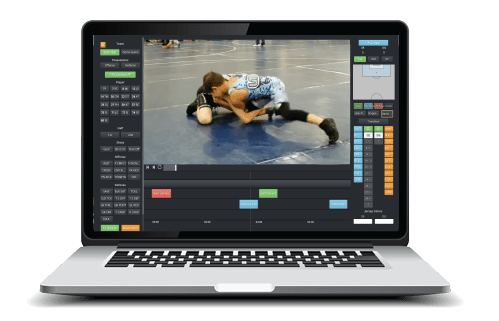
This is what makes the app so easy to promote in short videos. You can show the before (raw match clip) and after (AI breakdown and drills) in under 10 seconds.
Building A Wrestling Training Ecosystem
George did not stop at one feature. His goal was to build an entire wrestling ecosystem so the app becomes a daily habit, not a one‑time novelty.
Inside Wrestle AI you will find:
- Calorie tracker with a nutrition database
- Barcode scanner for quick logging
- A feature where you can take a photo of your food and let AI estimate the calories, similar to what high end nutrition apps offer
- Practice mode with live coaching style tutorials
- The app explains a move
- You record yourself doing it
- The AI tells you what you did right or wrong
- Training programs you can follow
- A calendar for tracking matches
- A weight journal to help with cutting and maintenance
If you look at other AI sports tools like CheckMotion’s AI sports analysis, you will see a similar pattern. The winners turn AI into a full training platform, not just a toy feature.
Wrestle AI follows that same path but tightly focused on wrestling, which is a big reason it works so well as a startup.
Inside George’s 6‑Step Vibe Coding Process
George credits most of his speed and success to a simple six‑step system. He used it for Wrestle AI and says he will follow the same steps for future apps.
Step 1: Nail The Idea With Three Pillars
For George, idea quality is just as important as distribution. If the concept is not shareable and helpful, no amount of marketing will save it.
He uses three pillars for a strong idea:
- Uniqueness: It should stand out and look different at a glance
- Helpfulness: It must actually solve a real problem so people stick around
- Gotcha moment: You need a clear, visual hook that explains the value in about five seconds
Wrestle AI checks all three. It is novel (AI wrestling coach), helpful (real drills and feedback), and has a tight gotcha moment (video in, breakdown out).
He tested this thinking with another app he launched with a big influencer. That app got about 1.8 million impressions but only around 100 downloads, because the idea was too similar to other AI chat tools. Same marketing muscle, very different results.
If you want guidance on forming strong ideas and shipping them to the App Store, the Starter Story iOS bootcamp teaches a similar idea‑first approach.
Step 2: Design For A Specific Person
George keeps his design process simple:
- Who is this for?
- What kind of UI fits that person?
With Wrestle AI, his user is a wrestler, often a student athlete, who spends time on TikTok, uses fitness apps, and likes clean, bold, sports‑style design.
He writes out those answers, then feeds them into ROR, his vibe coding tool, to generate screens. He focuses first on layout and structure, then on the actual features.
He also thinks about organic sharing from day one. What in the app would someone want to screenshot or screen record and share with a friend or coach?
Step 3: Build The Core In One Week With AI
George blocks off a full week to do nothing but build.
He sits at his computer, opens ROR, and prompts from morning to night. During that week he:
- Hooks up Supabase as the backend
- Wires in key APIs for things like nutrition data
- Stress tests the main flows, like video upload and analysis
Errors are part of the process, especially with tools like Expo and TestFlight. Instead of getting stuck, he copies the error logs and sends them to ChatGPT, which acts like a patient senior engineer.
This style of development is very close to how tools like Replit AI work, where you describe what you want and let the AI help you build and fix it. If you want a sense of what vibe coding can look like in practice, Replit has a guide on the best vibe coding tools that compares different options.
For Wrestle AI, it took George about a month to go from first idea to live on the App Store. The first week was core build, then he passed some tasks to a developer, then handled App Store review issues.
Step 4: Build Onboarding That Actually Sells
George calls onboarding the second most important part of the app, right behind the idea. You can have an amazing product, but if onboarding is weak, users will never see it.
His formula looks like this:
- Educate: Explain what the app does in clear, simple language
- Personalize: Ask guiding questions that set up the app (like weight class, goals) and remind the user why they need it
- Create FOMO: Make it feel costly to miss out after they have answered questions and invested time
- Show the gotcha moment: Let them try the core feature, but save the full result for after the paywall or trial
He studied onboarding flows from high converting apps like fitness and calorie trackers, then applied the same patterns to Wrestle AI. The onboarding is longer than average on purpose, which adds friction but also makes users more likely to grab at least a free trial due to sunk cost.
You could summarize his onboarding strategy like this:
| Onboarding Stage | Purpose |
|---|---|
| Education | Make value obvious |
| Personalization | Tailor the app and deepen interest |
| FOMO | Increase desire to continue |
| Gotcha demo | Prove value right before paywall |
Step 5: Hire Out What You Don’t Know
George is honest about his limits. He does not try to force his way through every technical piece.
For Wrestle AI, he:
- Built most of the app himself with vibe coding and AI
- Hired a developer on Fiverr for about $250 to handle payments and authentication
- Gave that developer a tight, well defined task with a one week deadline
His hiring rules:
- Start with a small test task
- If they nail it, slowly give them more responsibility
- Sell them on the vision of the startup, so they feel part of something bigger
- Look for people who use AI well, not just people who know a language
He also sees value in hiring virtual assistants at two points: very early, when you need to DM a ton of influencers, and later, when the startup is big and the founder should not live in their DMs.
Step 6: Grow Past The MVP And Stay Disciplined
George is still inside step six, but his mindset is clear.
Once an app passes about $5,000 per month, he believes you should start investing in:
- Better design, not just template screens
- Stronger infrastructure
- A small team that can help with support and development
He has not taken a single dollar out of Wrestle AI yet. His plan is to keep reinvesting until the app hits $100,000 MRR, then think about paying himself.
That level of discipline is rare, especially for an 18‑year‑old founder running a fast growing startup out of a dorm room.
Influencer Marketing Playbook That Drove Growth
All of Wrestle AI’s growth so far comes from influencer marketing.
George’s co‑founder is one of the largest wrestling creators online. That partnership was the launchpad:
- They set up pre‑orders to climb the App Store charts on launch day
- On release, they hit around #18 in the App Store for their category
- After one creator’s audience started to saturate, they reinvested about $500 into more influencer deals
From there, they kept scaling with more creators in the wrestling niche. As of the interview, they were on track for about $13,000 that month, with another small marketing push planned before month end.

If you want a formal breakdown of this channel for apps, the team at App Radar has a helpful guide on mobile app influencer marketing.
How George Finds And Closes Influencers
George’s playbook is simple and aggressive.
1. DM 100 influencers per day
When you are just starting, volume is everything. He recommends reaching out to 100 people daily in your niche.
2. Start your DM with “Paid promo?”
Influencers get flooded with messages. He says your first two words should be “Paid promo” or “Paid promo for your page?” so they instantly know it is a money conversation.
3. Build social proof for your account
At first, he used his personal Instagram, boosted it with followers, and paid to verify it. That made him look more legit. Once the brand gained traction, he moved outreach to the business account.
4. Get them on the phone
George almost never negotiates in DMs. As soon as someone replies, he sends his number and asks to hop on a call. On the phone, it is easier to build trust and work out a custom deal.
If a creator tries to force you into giving a number in DMs (“What’s your offer?”), he suggests staying patient. You are the one paying. They will come back when ready to talk.
5. Structure the deal around CPM and guarantees
His favorite type of deal is:
- 4 to 5 videos
- 20 to 50 percent upfront
- A view guarantee based on a $2 to $5 CPM (cost per thousand views)
Example: if a creator averages 25,000 views per video, you offer 4 videos for about $225 total with a 100,000 view guarantee. They might get $50 to $100 upfront and the rest once the guarantee is hit. If they miss the views, they keep posting until they do.
For more on this kind of approach from another angle, you can watch this talk on influencer marketing for indie app developers.
What I Learned From George’s Startup Journey
Watching George’s story changed how I think about building a startup with AI.
Here are my biggest takeaways:
Niche beats broad.
He did not try to build a general “AI sports app.” He went straight at wrestling, which has a strong culture and clear needs. That focus made the product better and the marketing sharper.
Idea quality still matters.
“Distribution is everything” is a popular line. George shows that distribution multiplies a good idea and exposes a weak one. His second app with 1.8 million impressions and almost no downloads is proof.
AI is the new equalizer.
He used AI like an always‑on mentor. Vibe coding tools, ChatGPT for debugging, and AI for content inside the app let him build what used to take a full team. Tools like Natively’s iOS app development platform now give non‑coders a real shot at shipping solid native apps.
Treat it like a real business, not a side hustle.
He reinvests everything, tracks MRR, thinks long term, and plans for better product quality as revenue grows. That is how a small app becomes a real startup.
Influencer deals are a skill.
His system for DMing, calling, and structuring offers is repeatable. You can apply it to almost any niche, from baseball to pickleball to language learning.
For me, the biggest lesson is this: the ceiling is much higher than it looks if you are willing to pair AI with an obsessive work ethic.
Simple Tech Stack Behind Wrestle AI
George’s stack is intentionally light and cheap. Here is what runs Wrestle AI:
| Tool | Role in the App | Approx. Cost |
|---|---|---|
| ROR | Vibe coding front end and logic | ~$25 per month plan |
| Supabase | Backend, database, auth | ~ $30 per month |
| OpenAI | AI inference for match analysis, coaching | ~$40–$60 per month |
| ChatGPT Premium | Personal coding and problem solving assistant | $20 per month |
He also uses small third‑party APIs, like nutrition databases, to power features such as calorie tracking.