


Flashy trends get headlines. Quiet cash flow pays bills, buys time, and builds wealth.
When people say these boring businesses have a “90% success rate,” don’t read it like a guarantee. Read it like this: the demand is steady, the business model is old, and the path is known. These aren’t lottery-ticket startups. They’re boring on purpose.
The best part is how they scale. Once your systems are set, going from 100 units to 200 usually isn’t double the work. It can be a smaller jump in effort, while revenue jumps a lot more. That’s the boring magic.
In this guide, you’ll get six proven business ideas, why they work, rough startup costs, key risks, and one simple first step you can take this week without getting overwhelmed.
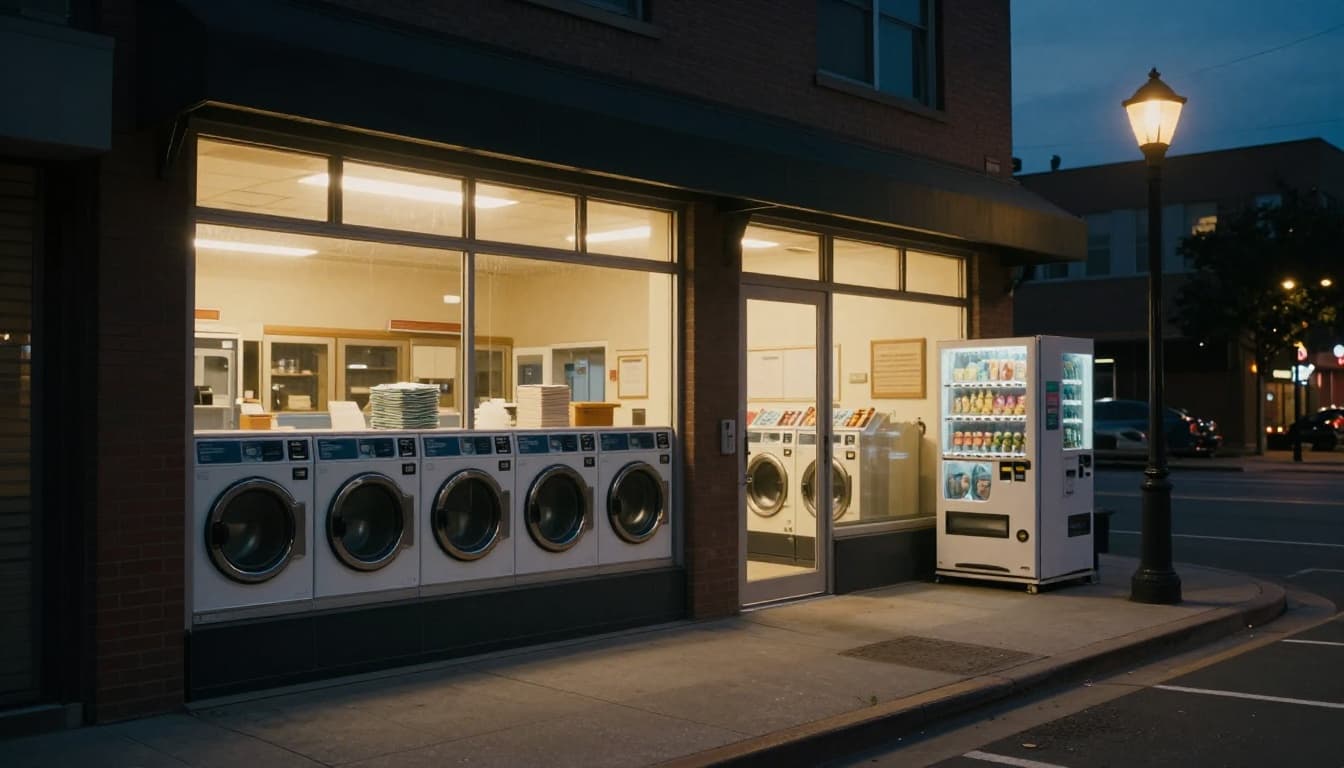 Quiet, repeatable cash flow businesses tend to look… normal. This image was created with AI.
What makes a boring business turn into millionaire money over time?
A boring business doesn’t need a genius idea. It needs a boring problem that never goes away.
These models usually share a few traits: repeat demand, straightforward operations, and numbers you can track without guessing. You don’t need a viral moment. You need Tuesdays to look like Mondays, and next month to look like this month.
That’s why “predictable” beats “exciting” here. Predictable means you can plan staffing, supplies, pricing, and expansion. Exciting often means you’re reacting every day.
One more truth, none of these are passive at the start. They become low-effort only after you build routines, install automation (like card readers or scheduling software), and hire help. Early on, you’ll still deal with permits, repairs, suppliers, and the occasional customer who’s… a lot.
The real secret is repeat demand, not “viral” growth
The winners in this list mostly sell needs, not wants.
People don’t stop needing clean clothes because the economy dips. They don’t stop needing storage because a new app launches. Events still need bathrooms. Cities still have parking pain. Landlords still want someone else to handle tenant drama.
That’s why these categories have been making owners rich for decades. They solve everyday problems that show up in every town, every year. If you want more examples of this “boring but profitable” thinking, it helps to scan broad roundups like boring businesses that make money and notice how often the same themes repeat.
Scalability looks like systems, routes, and automation
Scaling a boring business rarely means reinventing anything. It means doing the same thing, more times, with fewer surprises.
Think in simple units:
- More machines on one route (vending).
- More doors or properties under contract (property management).
- More units and occupancy (self-storage).
- More service stops per day (portable toilets).
Systems make that possible. Card readers reduce cash handling. Route planning reduces drive time. Software turns chaos into checklists. Outsourced repairs stop you from playing handyman every weekend.
If you’re an AI-curious operator, 2026 is kind of wild in a good way. Even basic AI tools can help with customer replies, ad copy, route planning, and demand forecasting.
The 6 boring businesses that keep producing wealthy owners
This isn’t a hype list. It’s a “here’s why it works” list.
For each business below, I’ll keep it practical: what makes it steady, how owners scale, rough cost ranges, what can go wrong, and one first move to make this week.
Vending machines, small boxes that sell snacks while you sleep
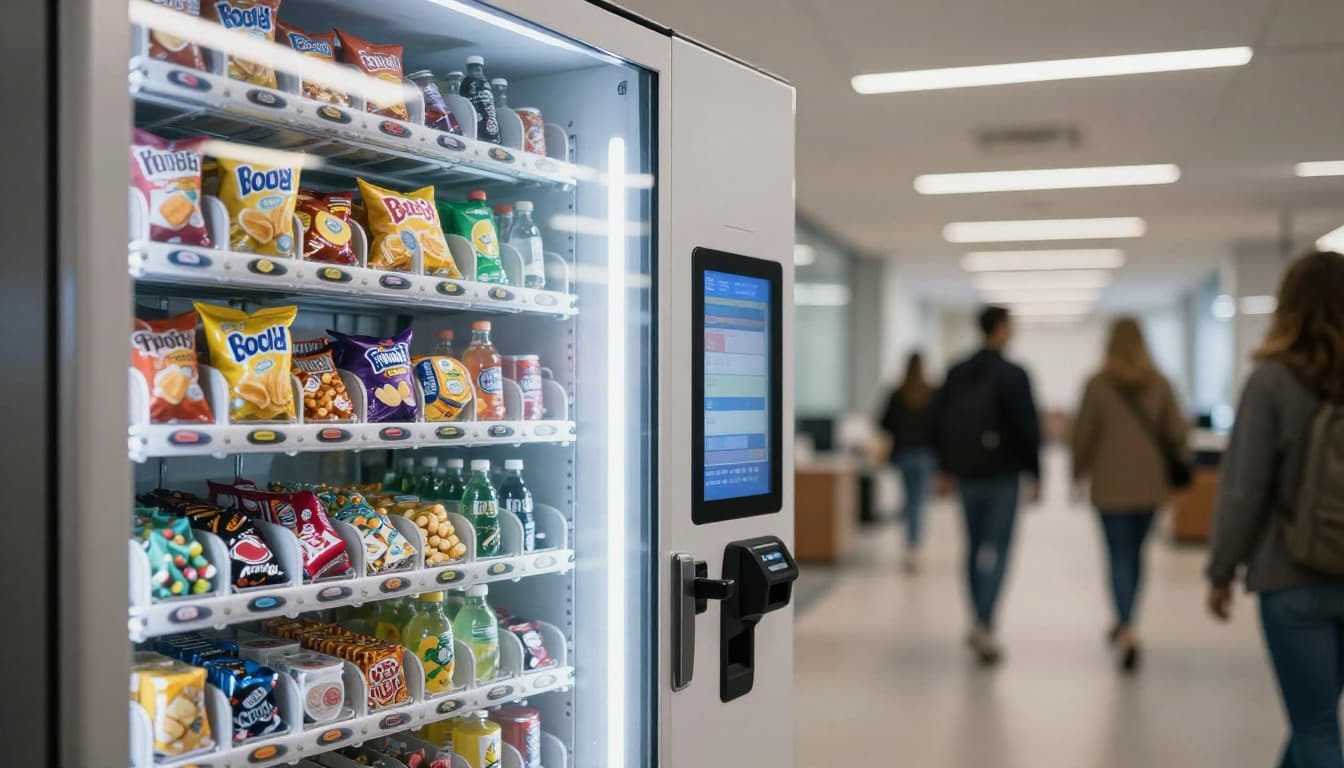 Vending becomes real money when placement and restocking are dialed in. This image was created with AI.
Vending is simple: buy or lease a machine, place it where people already wait or walk, stock what sells, repeat. The machine works 24/7. It doesn’t take lunch breaks.
The difference between “beer money” and real income is almost always location. A dead hallway is a dead machine, even if the snacks are perfect. Modern machines also do better with cashless payments, because people tap cards more than they carry bills now.
Typical startup cost: Roughly $1,500 to $8,000 per machine depending on new vs used, plus inventory and a payment setup.
How owners scale: One machine becomes a small route. A route becomes a part-time helper. Then you’re managing restocking and placement, not carrying cases yourself.
Main risks: Bad placement, vandalism, product spoilage, and “permission problems” with property owners.
First step this week: Walk three high-traffic buildings (gyms, warehouses, office lobbies). Ask who manages vending today, what they hate about it, and what commission they expect.
Self storage, getting paid every month for locked space
Self-storage is basically getting paid for space with a door on it. It sounds almost too plain, and that’s the point.
People buy stuff, run out of room, and then pay to store the overflow. What’s funny is how many customers rent “for a few months” and keep paying for years. It’s sticky, like a gym membership, except they actually use it.
Once built and occupied, labor needs can stay low. Many facilities run with minimal staff, especially with keypad entry, cameras, and online billing.
Typical startup cost: Huge range. A small acquisition can be in the hundreds of thousands, new builds can go much higher.
Profitability reality: Industry margins vary, but self-storage is often discussed as a higher-margin real estate niche when occupancy is strong. Storable’s overview is a good grounding point: self-storage profitability and ROI basics.
Main risks: Zoning restrictions, security issues, competition nearby, and weak marketing.
First step this week: Call two facility managers in your area and ask about occupancy, seasonal patterns, and what unit sizes fill fastest.
Laundromats, the clean clothes business that survives bad economies
Laundromats are not glamorous. They also don’t care if the economy is up or down. People still wash clothes, in recessions, during disruptions, even when everything feels uncertain.
The upfront cost can be higher because commercial washers and dryers aren’t cheap, and build-out matters (plumbing, venting, electrical). But once operations are steady, you can automate a lot: card systems, remote machine monitoring, security cams, and cleaning schedules.
Many owners increase revenue with practical add-ons: wash-and-fold, pickup and delivery, vending, detergent sales, and loyalty programs.
Typical startup cost: Often $150,000 to $500,000 depending on size, equipment, and lease terms.
How owners scale: One location becomes two when the playbook is clean. Staff training, cleaning routines, and maintenance checklists do most of the heavy lifting.
Main risks: Utility costs, machine repairs, rough leases, and poor neighborhood fit.
First step this week: Spend one hour inside two laundromats. Count foot traffic. Check pricing, machine mix, cleanliness, and whether they’re full at peak times.
Portable toilet rentals, the unglamorous service every outdoor site needs
This one makes people laugh… until they see the invoices.
Construction sites, festivals, outdoor weddings, and city events all need bathrooms. Even in downturns, building slows but rarely stops, and events still happen. People don’t pause basic human needs because the stock market’s in a mood.
Portable toilet businesses scale through routes. You start with a few units, lock in service contracts, then add units, then add trucks and staff. Operators who get serious about routing and scheduling can grow fast because servicing 200 units often isn’t 200 times harder than 20. It’s more stops on a map, more planning, more equipment, but the same core work.
You’ll see stories of operators going from a handful of units to hundreds, sometimes quoting strong margins. Treat those numbers as possible, not typical. Region, contracts, and efficiency decide everything.
Typical startup cost: $20,000 to $150,000 depending on how many units you buy, plus truck and pumping equipment.
Main risks: Permits, storage yard needs, logistics mistakes, odor complaints, and servicing consistency.
First step this week: Talk to three local general contractors or event planners and ask who they use, what they pay, and what problems they wish the vendor solved.
Parking lots, monetizing “nothing” in the right location
A good parking lot is a simple deal: sell space in a place where space is scarce.
In the best locations, revenue can be eye-opening. In the wrong location, it’s just an empty slab. Prime demand drivers tend to be boring too: hospitals, downtown offices, stadiums, airports, campuses.
You can run a lot with a booth attendant, but automation has gotten better: pay-by-plate systems, QR codes, app payments, monthly passes, dynamic event pricing.
Typical startup cost: If you lease a lot, you might start lower. If you buy land, the cost is the land. That’s the whole game.
Main risks: City regulations, security, taxes, seasonality, and redevelopment risk (your landlord sells, your lease ends, you’re out).
First step this week: Pick one busy area and do a 30-minute “parking audit.” Count nearby garages, check prices, and watch how fast spots turn over at lunchtime.
Property management, earning a cut without owning the buildings
Property management is the cleanest “low-capital” option on this list. You don’t need to own homes. You manage them for owners who don’t want calls, repairs, and tenant issues.
The math is simple: number of properties times average rent times your fee. A typical fee might be a percentage of monthly rent, sometimes with leasing fees and maintenance coordination fees added in.
Scaling comes from software and process. With the right setup, you can manage many doors with a small team, because tasks repeat: rent collection, maintenance tickets, inspections, renewals, tenant screening.
Typical startup cost: Often $2,000 to $25,000 (licensing, insurance, basic software, marketing).
Main risks: Legal compliance, tenant conflict, reputation damage, and unreliable contractors.
First step this week: Choose a niche (single-family rentals, small multifamily, student housing) and build a vendor list before you even sign your first client. Also, read your local landlord-tenant rules twice, slowly.
If you want a broader set of grounded business ideas beyond this “boring six,” this list fits well with today’s demand: Best Businesses to Start in 2026.
How to pick the right one for you (so you actually stick with it)
The “best” business ideas aren’t universal. The best one is the one you can run on a normal week, even when you’re tired.
Here’s a quick reality lens. Not perfect, but useful.
| Business | Capital needed (typical) | Ops feel | Scaling path |
|---|---|---|---|
| Vending machines | Low to medium | Routes, stocking | More locations, hire stockers |
| Self-storage | High | Security, marketing | More units, higher occupancy |
| Laundromats | Medium to high | Repairs, utilities | More locations, add-ons |
| Portable toilets | Medium | Logistics, servicing | More units, better routing |
| Parking lots | Medium to very high | Pricing, security | More lots, automation |
| Property management | Low | People, compliance | More doors, better systems |

Photo by Pixabay
Match the business to your life, money, and tolerance for mess
This part matters more than spreadsheets.
If you hate phone calls and conflict, property management might drain you. If you’re calm with people and good at boundaries, you can do well there.
If you like routes and logistics, portable toilets and vending can fit. If you want “locked doors and monthly billing,” storage might feel better.
Also, be honest about the “mess” factor. Some of these businesses involve literal dirt, or worse. That doesn’t make them bad. It just means pride can’t be the driver. Steady profit is the driver.
Do quick research before you spend a dollar
A small research sprint can save you months.
Talk to owners. Visit competitors. Learn local rules. Run worst-case math. If you can’t survive a bad month on paper, it won’t feel better in real life.
Keep it simple: a basic spreadsheet with revenue, fixed costs, variable costs, and payback time. Then run three scenarios, best-case, expected, worst-case.
And when possible, test small. One machine. One management contract. One weekend event contract. You’re not trying to prove you’re brave. You’re trying to prove the model works in your area.
For more perspective on how widespread these “boring winners” really are, lists like boring business ideas minting millionaires are useful, not because every idea is perfect, but because the categories repeat for a reason.
What I learned chasing “exciting” ideas, then coming back to boring wins
I’ve spent time around a lot of “hot” ideas. AI tools, creator trends, quick-launch products, all that. It’s fun, and honestly, it can work. But I noticed something that bugged me.
A lot of exciting ideas made me feel productive… without making me feel stable.
I’d be busy. I’d be testing. I’d be tweaking. And then one platform change, or one competitor undercutting, and the whole plan started wobbling. Not always, but often enough that it left this low-level stress in the background.
Then I started paying attention to operators running boring businesses. The vibe was different. Less noise. More routines. More “we do this every Tuesday.” They weren’t chasing attention. They were building systems, hiring slowly, and stacking contracts. And once their process was dialed, adding more units or more locations didn’t look twice as hard. It looked… 20% harder, maybe. That detail stuck with me.
So yeah, boring started to look beautiful. Not because it’s easy, but because it’s knowable. You can plan around it. You can build a life around it. That’s underrated.
Conclusion
These six business ideas, vending machines, self-storage, laundromats, portable toilets, parking lots, and property management, keep creating wealthy owners for one reason: steady demand plus scalable systems.
The “90% success rate” framing is really about odds. If you do the basics right, location, pricing, maintenance, and process, your chances are often higher than in trend-chasing models.
Pick one. Do one small research step this week. One call, one site visit, one spreadsheet. Boring progress compounds, and boring and profitable beats excited and broke, every time.