


WeWork was once held up as the future of work. At its peak, the company was valued at $47 billion, backed by elite investors, and celebrated as a visionary way to share office space in big cities around the world. Today, it sits in Chapter 11 bankruptcy, trading as a penny stock and serving as a warning for founders, investors, and employees alike.
This is the WeWork startup story in full: how a simple real estate idea, wrapped in tech-style hype and charismatic leadership, rocketed to the top, burned through billions, and then crashed when reality finally caught up.
WeWork's Shocking Bankruptcy Filing
When WeWork filed for Chapter 11 bankruptcy in 2023, many people were not surprised, but the scale of the reversal was still hard to process. This was a company once priced like a tech titan and compared to the most valuable startups of its time.
As one description of the collapse put it, a stunning reversal for the desk rental giant.
The fall looks even sharper when you stack the story in simple terms:
- From venture-capital darling to bankrupt penny stock
- From cultural phenomenon to cautionary tale, even dramatized in an Apple TV series that asked, "Who wins in a fight: the smart guy or the crazy guy?"
- From $47 billion valuation to a fraction of that value in only a few years
For a clear factual timeline of the bankruptcy filing and its impact on shareholders, the CNBC coverage of WeWork's bankruptcy gives a concise breakdown.
At the core, the company ran out of cash and time. Even after years of restructuring attempts and a 2021 stock market listing under new leadership, the business never turned a profit, and the money that once seemed endless finally dried up.
The Explosive Rise of a Shared Workspace Giant
To understand how the crash happened, you have to start with why WeWork looked so attractive in the first place.
Founded Post-Financial Crisis In 2010
WeWork was co-founded by Adam Neumann in 2010, right after the global financial crisis. Office space was in flux, startups were everywhere, and many small teams did not want long, traditional leases.
WeWork's model was simple on the surface: it leased large office spaces, redesigned them into stylish shared workspaces, then rented out desks and offices to individuals and companies on flexible terms.
The company sold more than square footage. Its stated mission was about community and belonging. As Neumann put it in one early pitch, "We are a company that builds communities. Our main thing that we do is curate and create culture."
That language clicked with founders, freelancers, and investors who wanted work to feel more social and less rigid.
Seizing The Gig Economy Boom
Timing helped. In the years after the financial crisis, work became more flexible, fragmented, and casual. Remote work was rising, freelancing was growing, and many people were happy to swap cubicles for couches and kombucha taps.
WeWork caught that wave. It positioned itself as a tech-style disruptor, even though its core business was real estate. Neumann convinced investors that WeWork would do to offices what:
- Facebook did to social connections
- Uber did to transportation
In other words, this was pitched as a platform, not a landlord. That framing helped justify massive valuations, even though the business still involved signing long leases and renting space.
For a longer backstory that pulls all these early years together, this deep dive into WeWork's history and bankruptcy maps how the hype built up so quickly.
Massive Funding From Big-Name Backers
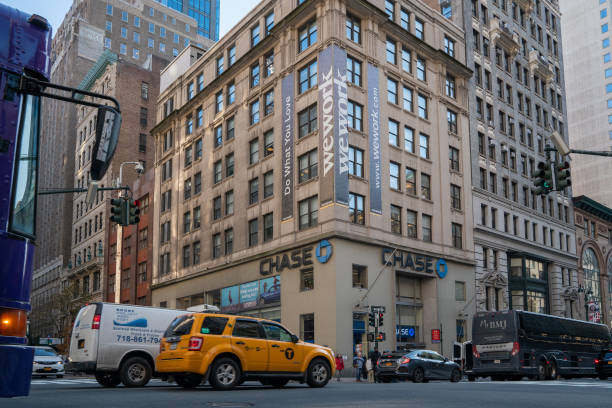
The sales pitch worked. WeWork raised over $10 billion from a roster of heavyweight investors, including:
- Venture capital firm Benchmark Capital
- Big banks like J.P. Morgan and Goldman Sachs
- Later, huge sums from SoftBank, which became the company’s largest backer
Over time, including both equity and debt, the company raised more than $16 billion.
The catch: all this money went into what was, at its core, a real estate company, not a software platform with near-zero marginal costs. The valuation did not match the basic economics of the business.
The 2019 IPO Disaster And Leadership Chaos
By 2019, the story reached its peak. WeWork was huge, global, and everywhere in startup circles. On paper, it was one of the most valuable private companies in the United States.
Peak Valuation And An IPO That Never Happened
In early 2019, WeWork hit that famous $47 billion valuation and prepared for an initial public offering. At the time, private tech startups were treated as the future of the economy, and public markets had rewarded many high-growth companies that still lost money.
So when WeWork filed its IPO paperwork, many expected another splashy debut.
Instead, the filing triggered a reality check. Public market investors and analysts finally got to see the numbers and the details behind the story. The reaction was brutal and fast.
If you want to see how outside observers dissected that moment, the Harvard analysis of the WeWork IPO prospectus is a good example of how the financial and governance issues looked to professionals.
Red Flags Hidden In Plain Sight
The financial picture that emerged was simple and scary:
- Revenue was growing fast, but
- Expenses were growing just as fast or faster, and
- The company had never turned a profit since its founding in 2010
So even after raising billions, there was no clear path to profitability.
The IPO filing also revealed a set of conflicts of interest. For example, Adam Neumann personally owned stakes in several office buildings that he then leased back to WeWork. In those deals, he sat on both sides of the transaction, which worried many investors.
There were other related-party arrangements and deals that added to the sense that the company was built around a single founder with too much control and too few checks.
A timeline like the Business Insider breakdown of the 2019 IPO fiasco shows how quickly sentiment flipped once those details went public.
Inside Adam Neumann's Management Style
Money and governance were not the only issues. Neumann's leadership style became a story of its own.
Accounts from inside the company described his approach as chaotic and unpredictable. At one point, he reportedly pushed the idea that the bottom 20% of staff should be fired every year. That kind of policy may sound like a way to keep standards high, but in practice, it can destroy trust and morale.
Then there was the spending.
WeWork used some of its vast funding on side projects that had little to do with its core business, such as a small unit developing self-driving robots to deliver mail around its offices. On top of that, the company bought a $63 million private jet, which Neumann used heavily and reportedly loved.
Stories from former employees, like those shared in this Business Insider piece on Neumann's behavior at the office, only added to the picture of a culture that prioritized the founder’s personality over discipline.
The IPO Collapses And The Founder Cashes Out
With all of this out in the open, investor appetite for the IPO collapsed. WeWork pulled the IPO in 2019, and the valuation plunged.
Shortly afterward, Adam Neumann resigned as CEO. New leadership and major investor SoftBank stepped in to rescue the company and keep it running.
The most shocking detail: Neumann walked away with a package worth more than $1 billion, thanks mainly to SoftBank buying back his shares and other arrangements. Many people now associate his name with the idea of a founder who got rich while investors and employees saw their stakes wiped out or badly damaged.
For the public, that became part of the legend of WeWork, and part of why the WeWork startup story draws so much attention.
COVID-19 Crushes The Business Model
Even without a pandemic, WeWork had a lot to fix. It was saddled with long-term office leases signed at high pre-2019 prices, faced investor pressure, and needed to prove it could make money.
Then COVID-19 hit.
As lockdowns spread and office workers went remote, demand for office space collapsed. Tenants shrank their footprints or left entirely. Market rents fell.
WeWork's model turned against it. The company had locked itself into expensive, long-term leases from a different era, while many of its own customers were on short, flexible agreements and could pull back quickly.
So the company faced:
- High fixed rent costs
- Lower revenue from tenants
- A business model that depended on steady demand for shared offices
The result was a massive cash drain. At one point, WeWork was burning around $300 million in cash each quarter. Even after promising to restructure, cut costs, and rationalize its footprint, the hole was too deep.
The company did manage to go public in 2021 under new leadership, this time via a different route than a traditional IPO. Still, even with a fresh ticker symbol and a new story, the fundamentals never turned. It never became profitable.
For a broader look at how the pandemic finished what the IPO fiasco started, the NPR overview of WeWork's downfall ties together the cash problems and the office bust.
What I Learned From The WeWork Startup Story
Watching the WeWork saga unfold changed how I look at fast-growing startups, especially those dressed up as tech but rooted in old-line industries like real estate.
Here are a few things I personally take from this story:
- Storytelling is powerful, but numbers still rule. WeWork sold a dream about community, culture, and a new way to work. That story pulled in billions. But when the numbers finally met public scrutiny, the story could not hide the cash burn and conflicts.
- Founders need guardrails, not worship. Adam Neumann was charismatic and bold, and that helped WeWork grow. But concentrated power, weak governance, and hero worship inside a company make it hard for people to say "no" when it matters most.
- Not every fast-growing company is a tech company. Calling something “tech” does not change its economics. WeWork still had to pay rent, fit out buildings, and manage physical space. Those costs behave very differently from software costs.
- Business models must survive shocks. The pandemic did not help, but the business was fragile even before COVID-19. A model that depends on long fixed costs and short flexible revenue will always be exposed in a downturn.
When I think of the WeWork startup story now, I see less of a wild one-off scandal and more of a very loud reminder that hype without discipline can destroy huge amounts of value, very fast.
If you want another angle on what went wrong, this accounting-focused breakdown of WeWork's downfall is a useful read on how the financial structure played a part.
What Comes Next For WeWork After Bankruptcy?
Chapter 11 is not the same as shutting the doors and disappearing. In many cases, it is a legal way to reshape a company, cut debt, and try to come out the other side as a smaller, healthier business.
The same is likely true here.
WeWork still has locations that are profitable at the unit level, meaning individual buildings or floors can make money. The big problem is the whole portfolio and the debt stacked on top of it.
For any new version of WeWork to survive, a few things probably have to happen:
- Cancel or renegotiate a large number of leases, especially those signed at peak prices
- Cut or restructure debt, so the company is not crushed by interest and repayments
- Focus on a smaller, more profitable footprint, rather than chasing growth at all costs
If the bankruptcy process can hit those goals, WeWork could emerge as a much leaner real estate business that actually earns money. That would be a very different company from the one Neumann pitched as a world-changing platform.
For a current look at why the bankruptcy happened and what it means, the ABC News breakdown of the filing and its impact lays out the main causes and why the story still matters.
Conclusion: The Real Legacy Of The WeWork Startup Story
The WeWork saga is dramatic because it has everything: a charismatic founder, huge sums of money, a cultural movement around work, a failed IPO, and a global shock in the middle. But the real legacy of this WeWork startup story is more grounded.
It shows how far investors will go for growth, how quickly public markets can push back, and how important it is to match a bold mission with a business that can actually make money.
It also reminds founders and teams that hype is a short-term fuel. In the end, you still need discipline, clear governance, and a model that survives when the music stops.
WeWork's business will probably live on in some form, smaller and more ordinary. Its story, though, will keep echoing in boardrooms and pitch meetings as a case study in what happens when vision runs far ahead of reality.