


Most people think AI T-Shirts are about pressing a button and waking up to sales. It’s not like that.
The real advantage is speed plus taste. AI helps you generate art, slogans, or both, fast enough to test lots of ideas. Print on demand handles the boring part (printing, packing, shipping), so you can start without buying inventory or turning your bedroom into a warehouse.
And when a design hits the right niche at the right time, it can spike hard. Some sellers report huge monthly numbers in specific styles, but results vary a lot. The goal isn’t to chase hype, it’s to learn the patterns that keep working.
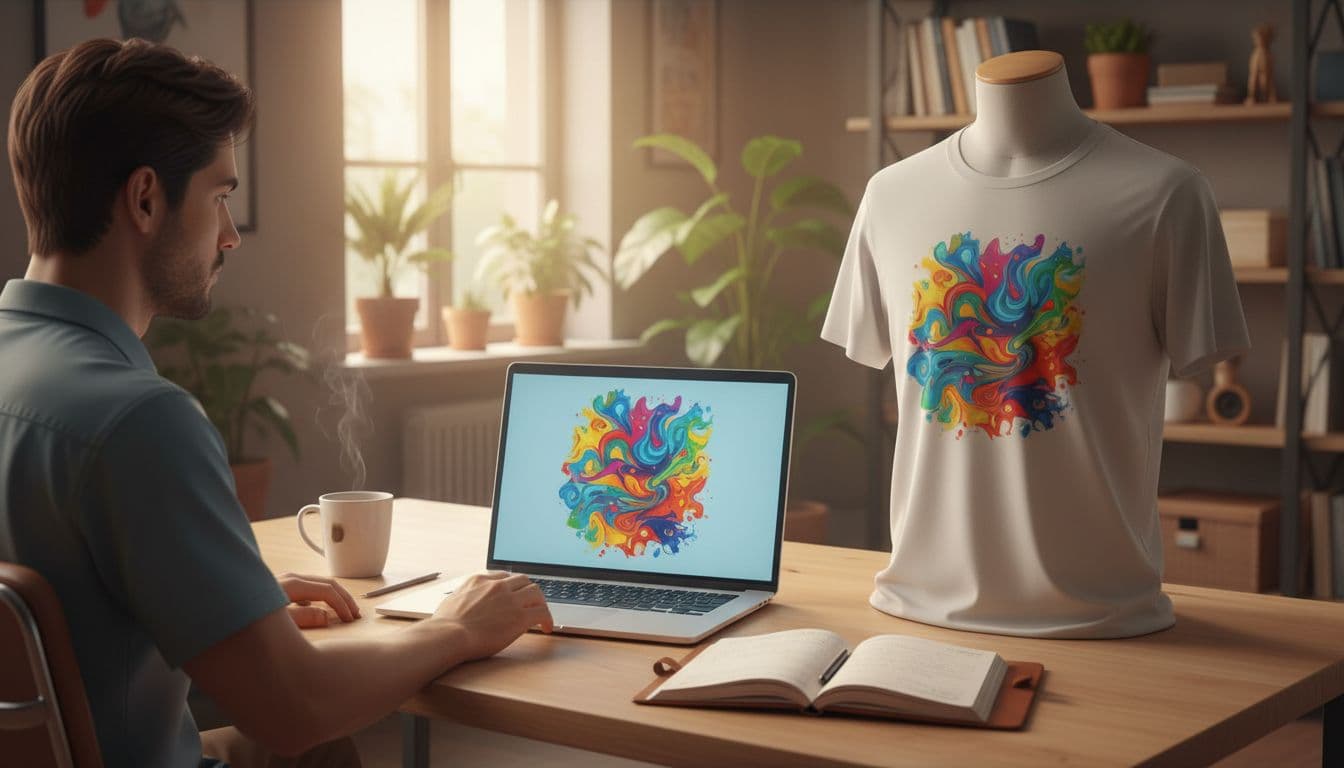 Hero scene of someone creating a t-shirt design on a laptop beside a physical mockup, created with AI.
The AI t-shirt styles that are selling like crazy right now
Trends change, but buyer psychology doesn’t. The shirts that move are usually doing one of three things: making people laugh, helping them signal identity, or giving them a comfort hit of nostalgia. Sometimes all three at once.
Where they sell also matters. Amazon often rewards broad humor that makes sense in one second. Etsy tends to reward niche specificity, the kind that feels like “this was made for me.” That’s why two designs can look similar, yet one prints 30 times a day and the other gets ignored.
A quick note about originality because it matters now more than ever. Don’t copy listings. Don’t “slightly change” someone else’s layout. Instead, combine a style with a niche twist, then do your own edits (color, composition, wording, texture). AI is fast, but your choices are the product.
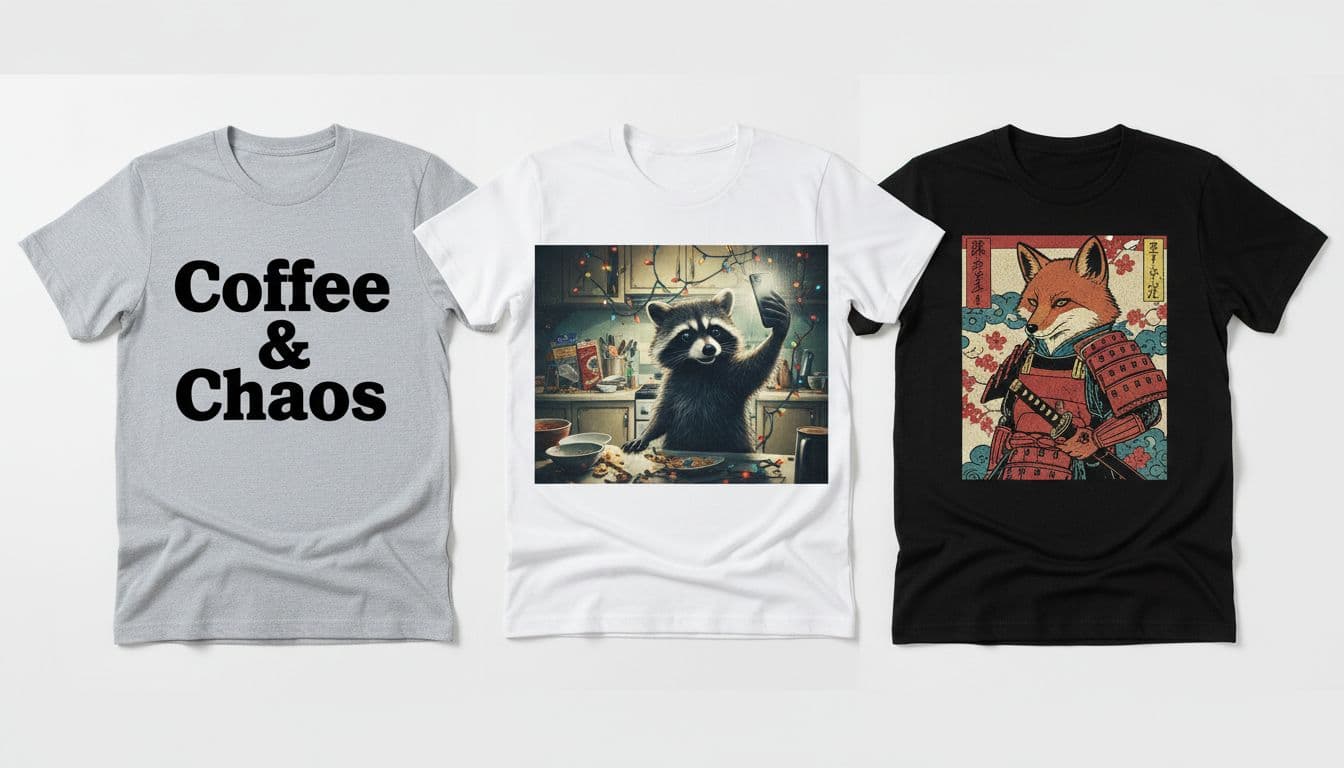 Three popular formats shown side by side for quick comparison, created with AI.
Feralcore confessions, cute animals plus chaotic honesty
Feralcore, in one sentence, is cute little creatures paired with slightly unhinged honesty.
The common formula is simple: a raccoon, possum, frog, or similar “trash goblin but adorable” animal, plus a short confession that sounds like a real thought someone had at 1:00 a.m. The confession is the hook. The animal just makes it wearable.
It sells because it’s a personality badge, especially for Gen Z and younger millennials. People want to say, “Yes, I’m a mess, but I’m funny about it.” The best lines feel specific and oddly true, not like a generic joke you’ve seen 400 times.
If you want fresh phrases, don’t start with “funny t-shirt quotes.” Start with meme language, then pin it to a sub-identity:
- A pet owner angle (dogs, cats, rescue life)
- A student angle (deadlines, finals week brain)
- A night shift worker angle (sleep schedule chaos)
- A niche hobby angle (climbers, DnD players, gardeners)
Then twist the confession into that world. Same vibe, different target. That’s how you keep it original without fighting the trend.
Absurd selfie photos, the weird picture that makes people stop scrolling
This style wins because it forces a double-take. It’s usually an animal or creature “taking a selfie” in a scene that makes no sense, but it still reads instantly.
Think: a cat in front of a UFO, a raccoon in holiday chaos, a mysterious cryptid doing influencer angles, Bigfoot caught mid-vlog. The punchline isn’t text, it’s the situation. People stop scrolling because their brain wants to finish the story.
The money is often in the niche twist, and in the gaps. Trend research tends to show a pattern: a creature or theme goes viral, lots of basic shirts appear, but one specific format is missing. Like, the topic exists, but the absurd selfie version doesn’t. That’s your opening.
Amazon tends to like these when they’re broad and clean, one strong image, readable even on a small thumbnail. Etsy can work too, but it usually needs a tighter angle, like “cryptid lovers who also love baking,” or “UFO dads.” Weird combos are good.
Simple niche typography, the boring looking shirts that quietly print money
Some of the highest earners look almost… plain. Just text. No fancy illustration. No dramatic effects. And yes, they can still outsell complex art.
Why? Because they’re understood in one second. They’re also easy gifts. If someone is shopping for a nurse, a new dad, a teacher, a gamer, they don’t want to decode art. They want a line that feels personal and safe.
The smart way to generate ideas is to start with real life. Little problems, little annoyances, little pride points. Then use a chatbot to brainstorm variations from different perspectives: dad voice, dog voice, tired nurse voice, gamer voice, introvert voice. You’re not asking the bot to “be funny.” You’re asking it to multiply angles.
A lot of high revenue stores lean on this format because it scales. You can build a whole collection with consistent fonts, consistent layout, and different lines for different micro-niches. It’s not glamorous, but it prints.
Modern ukiyo-e remixes, classic Japanese art vibes with a fun twist
Ukiyo-e is an older Japanese woodblock art style, bold outlines, limited colors, strong shapes. Even if you don’t know the name, you’ve probably seen the vibe.
It’s trending because it has instant mood. It feels artsy, but still wearable. And modern remixes make it fun: animals as samurai, everyday scenes in that classic style, or “historical” versions of modern hobbies.
A good approach is to pick an under-used animal angle. For example, snow monkeys as samurai is the kind of twist that feels fresh because it’s specific. Then keep the art readable: bold shapes, limited palette, strong silhouette.
One caution: avoid copyrighted characters. Don’t prompt for famous franchises. If you want pop culture energy, aim for “inspired by the era” and build original characters.
How people actually make money with AI t-shirts, without buying inventory
The business model is simple, and it’s why this works for beginners.
You create a design, list it for sale, and a print-on-demand company prints and ships it when someone orders. You pay the base cost (blank shirt, printing, shipping), and you keep the markup after platform fees. No inventory. No bulk orders. No guessing sizes.
If you’re new to the broader “start with nothing” mindset, this internal guide connects well with the same approach: AI-powered print on demand guide.
Profit depends on your pricing, your costs, and your returns. Here’s a realistic way to think about it:
| Item | Typical range | What changes it |
|---|---|---|
| Retail price | $19 to $35 | Niche urgency, gift season, premium styles |
| Base product cost | $8 to $16 | Shirt type, print size, color, supplier |
| Platform + payment fees | Varies | Marketplace rules, ad spend, taxes |
| Profit per sale | $4 to $12 | Pricing discipline, shipping strategy, refunds |
That doesn’t sound like “rich” money until you zoom out. A handful of evergreen designs can stack daily sales over time. And a trend design can spike for a season and fund the next batch of testing.
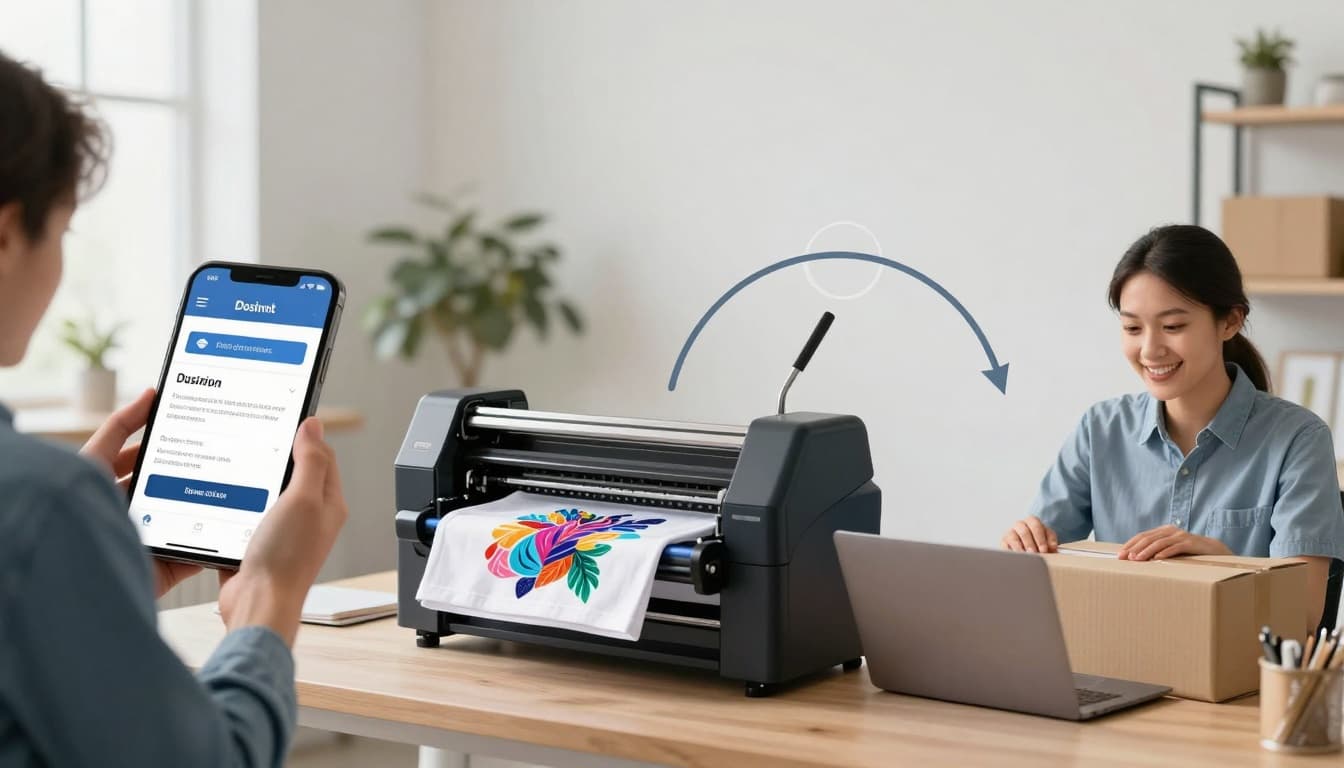 The print-on-demand flow from customer order to delivery and profit, created with AI.
The core workflow, idea, generate, clean up, list, repeat
The workflow that keeps showing up is boring, and that’s a compliment. It’s repeatable.
First, you research. Some creators use an AI search tool for niche research because it can surface meme phrases, micro-trends, and angles faster than a normal browser session. The key is not “what’s popular,” it’s “what’s popular but missing a format or joke.”
Second, you brainstorm words and scenes. A chatbot is great here, especially if you feed it context, like why a shirt is funny, or what point of view you want (dog talking, night shift nurse, burned-out student). You’re basically using it like a creative partner who never gets tired.
Third, you generate visuals in an image model. Some people iterate quickly: generate, tweak, regenerate, until the concept reads clearly.
Fourth, you clean it up in a graphics app. This part decides whether you get refunds.
Common print-prep steps look like this:
- Export as a high-resolution PNG.
- Remove the background (transparent looks cleaner on shirts).
- Adjust colors so the subject pops.
- Upscale if needed, so it prints sharp instead of fuzzy.
A lot of creators also add small finishing touches, like light distress textures or vintage frames. It’s optional, but it can push a design from “AI-ish” to “store-quality.”
Tools people use in 2026, and what each one is best at
As of early 2026, the tool names keep changing, but the roles stay stable.
Chatbots (like ChatGPT or Google Gemini) are best for idea volume, rewrites, and prompt help. They’re also useful for generating niche variations that you wouldn’t think of at first.
Image generators (such as Playground AI, OpenArt, and similar apps) are where you build the visual. Some creators also use Gemini’s image tools for quick scenes, then move on. The point is speed and iteration, not perfection on the first try.
Text-heavy design tools matter more than beginners expect. If your shirt relies on words, you want clean typography and readable spacing. Some tools are built for this, while general design tools can still work if you keep it simple.
Editing and layout tools (like Canva or Kittl) are where you make it printable. Background removal, upscaling, and export settings are the “unsexy” steps that stop you from getting bad reviews.
Tools change fast. The job doesn’t. Research, write, generate, polish, list.
What separates a rich-making shirt from a forgettable one
AI makes it easy to ship 50 designs. That’s not the same as shipping 50 good designs. The difference is positioning.
The shirts that make serious money usually hit one clear identity and one clear emotion, then they show it fast on the thumbnail. Humor, pride, belonging, a tiny bit of chaos, it’s all emotional.
And you have to stay inside platform rules. No trademark bait. No copied layouts. No “inspired by” that’s actually just theft. It’s not worth it.
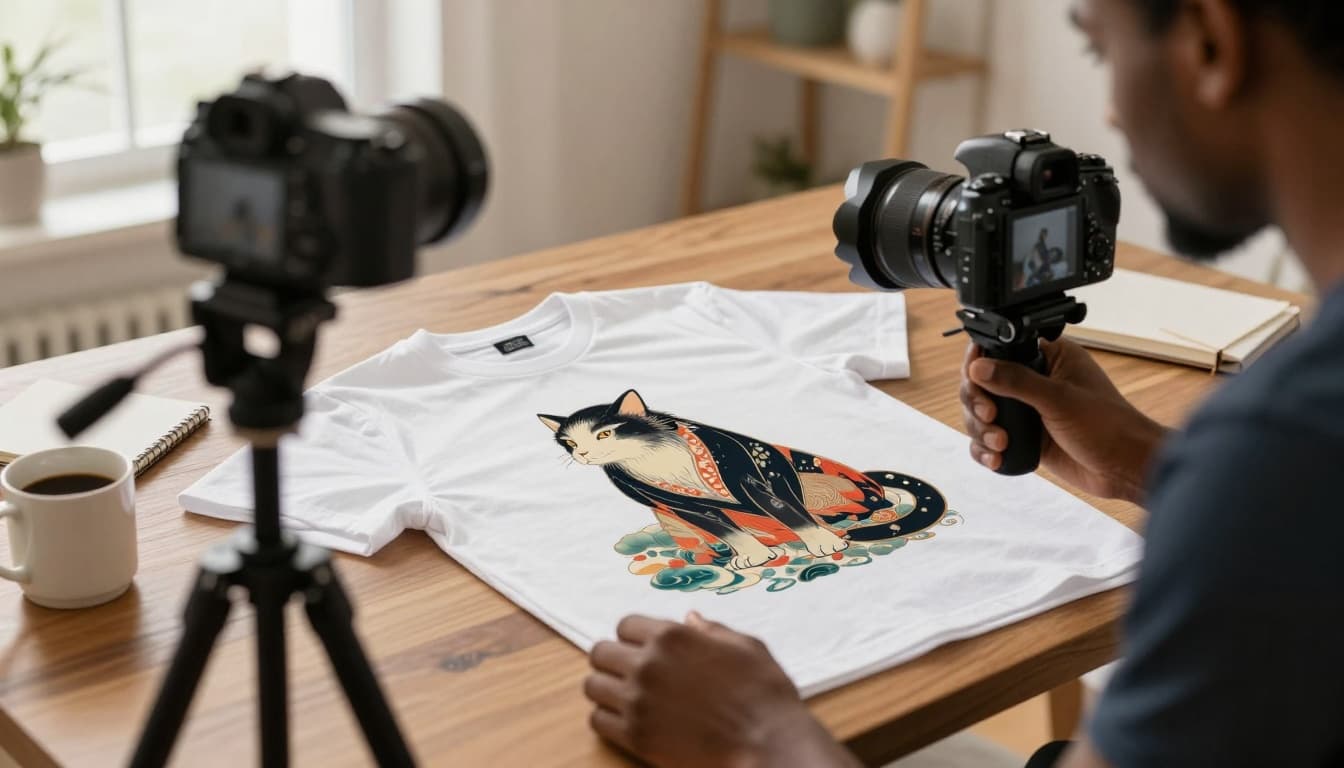 Creating strong listing photos and mockups for a t-shirt design, created with AI.
Find a gap in the market, then fill it fast
Gap thinking is simple. If a niche is hot but a popular format is missing, that’s your opening.
Examples of gaps that are common:
- A meme phrase people repeat, but nobody’s put it on a clean, readable shirt yet.
- A trending creature or theme, but no absurd selfie version exists.
- A style exists (like feralcore), but not for a specific job, hobby, or life situation.
The speed part matters because trends fade. AI helps you test quickly, but you still have to decide what to ship and what to skip. Small experiments beat big plans. Launch a few variations, see what gets clicks, then double down.
Make it yours, so it doesn’t look like the same AI stuff everyone sells
A lot of AI shirts fail for one reason: they feel like they were made by a machine for “everyone.”
To fix that, add your fingerprints:
- Combine two niches on purpose (like “teacher humor” plus “feralcore animal”).
- Rewrite the line in your voice, short and sharp.
- Change composition so it reads better on a phone thumbnail.
- Pick a small color palette and stick to it across a mini-collection.
- Make sets of 5 to 10 designs, not random one-offs.
Also, protect yourself. Don’t copy other listings. Avoid trademarked phrases and copyrighted characters. And don’t promise earnings to anyone, because you can’t control their niche choice or effort.
What I learned after trying this myself (the honest part)
I’m Vinod Pandey, and I’ll say it straight: the hardest part wasn’t the AI.
The hardest part was choosing a tight niche and staying with it long enough to learn what buyers react to. At first I wanted to chase everything. A spooky trend here, a holiday joke there, a “cool art” style the next day. It got exhausting fast, and it made my listings feel random.
The second hard thing was words. Not fancy words, just words that feel real. The lines that work sound like something a person actually says to a friend, not a “t-shirt quote.” I had to rewrite stuff more than I expected. Sometimes I’d stare at a phrase and go, yeah… nobody talks like that.
And wow, readability is everything. If the design looks great zoomed in but turns to mush on a phone thumbnail, it’s basically invisible. I learned to test by zooming out until the shirt is tiny and then asking, can I still get it?
The surprising part was how much the boring prep work mattered. Removing backgrounds, exporting with enough resolution, and using light upscaling when needed, that stuff decided whether a design looked pro or cheap. A great idea can still print badly, and bad prints are how you earn one-star reviews.
What helped me calm down was focusing on a few repeatable formats. Clean typography with a consistent style, plus one or two image-based templates I could remix. Less chaos, more reps. After that, it started feeling like a system, not a lottery.
Conclusion
Pick one style, pick one niche, make five variations, then list them through print on demand. Results vary, but the skills compound fast when you ship consistently and improve based on real clicks and sales. Keep your AI T-Shirts original, keep print quality high, and let the market teach you what it wants.