


Starting a solo business used to mean doing everything yourself, writing, editing, design, admin, customer follow-ups, scheduling, all of it. In January 2026, that’s changed. AI can handle the heavy lifting on the boring parts, so you can spend more time on the parts that actually pay: the offer, the outreach, and delivery that’s repeatable.
This guide is about practical AI Business Ideas for 2026 that can realistically reach $5,000 to $15,000 per month if you pick one lane and stick with it long enough. Not overnight, not in a weekend, but in a way that doesn’t require a team or years of experience.
If you’re new, start with the simplest service model first (you’ll learn fast while getting paid). Then you can level up into recurring revenue, and later into lead-based pricing if you want higher upside. Your results will still depend on consistency, choosing a niche, and learning by doing, there’s no way around that.
The rule for hitting $5k to $15k a month as a solo operator
The math isn’t complicated, it’s just easy to ignore.
If you sell a $1,000/month offer, you need 5 clients for $5k, 10 clients for $10k, 15 clients for $15k. If you sell a $300/month offer, you need way more clients, and you’ll feel it. So the real “rule” is this: sell something with enough price and enough repeatability to fit a one-person schedule.
Solo businesses win when they keep things narrow: one niche, one offer, one main acquisition channel. That’s how you stop rewriting the same scripts and re-building the same process every week. It also keeps your brain quiet. Less switching, more shipping.
Systems beat hustle here. A single all-in-one setup (CRM, landing pages, scheduling, email, texting, workflows, social scheduling) matters because jumping between 12 apps creates tiny delays that add up. If you want a quick sense of what tools people use to run a one-person operation, this roundup is a decent scan: AI tools that run a one-person business.
And picking the right model is more about personality than hype. If you like talking to business owners, services and agents fit. If you hate meetings, software and content channels fit better. If you love ads and numbers, lead-gen is the big swing.
Pick a niche you can serve on repeat
A niche isn’t a prison. It’s a shortcut.
When you focus on one type of customer, your content formats, scripts, landing pages, and automations become reusable. You start to sound confident faster because you’ve seen the same problems 20 times.
Good solo-friendly niches in 2026 are the ones where leads matter and time is tight: local home services, dentists, med spas, real estate agents, coaches, clinics, and small agencies.
Here’s the quick gut-check I use before committing:
- The pain is obvious (missed calls, no-shows, weak social, slow follow-up).
- There’s budget (they can pay monthly without drama).
- Leads equal money (so you can tie your work to revenue).
- You can show proof fast (a week of results, not six months).
If you want more niche directions to compare, this list is broad but useful for brainstorming: low-cost AI business ideas to start in 2026.
Design an offer that is productized so it does not drain your time
“Productized” sounds fancy, but it’s simple: fixed deliverables, clear timing, and clear boundaries.
Instead of “I’ll help with your marketing,” it’s “12 short videos per month, posted 3x/week, with captions and a basic lead capture page.” That’s something a buyer can understand, and something you can deliver without endless calls.
A productized offer usually has:
- A set package (what’s included, what’s not).
- A turnaround time (so you control your week).
- Limited revisions (so clients don’t rewrite your calendar).
- A simple monthly retainer or subscription.
For solo operators, this matters more than AI. AI makes you faster, sure, but the offer is what protects your time. Think of it like cooking a small menu instead of running a restaurant where customers invent the dishes.
Five best 1-person AI business ideas for 2026 (with setup and earnings logic)
Photo by Mikael Blomkvist
Each idea below includes what you sell, who you sell to, what you do weekly, how AI helps, how to get your first three customers, and a realistic path to $5k to $15k/month. You’ll also notice a pattern: the operators who win usually keep their stack simple and run most of it from one place (CRM, pages, calendars, messaging, automations, reporting).
If you want a wider menu of options beyond these five, see Top AI business ideas for 2026 and then come back and pick one lane.
AI YouTube channel that builds an audience you can monetize
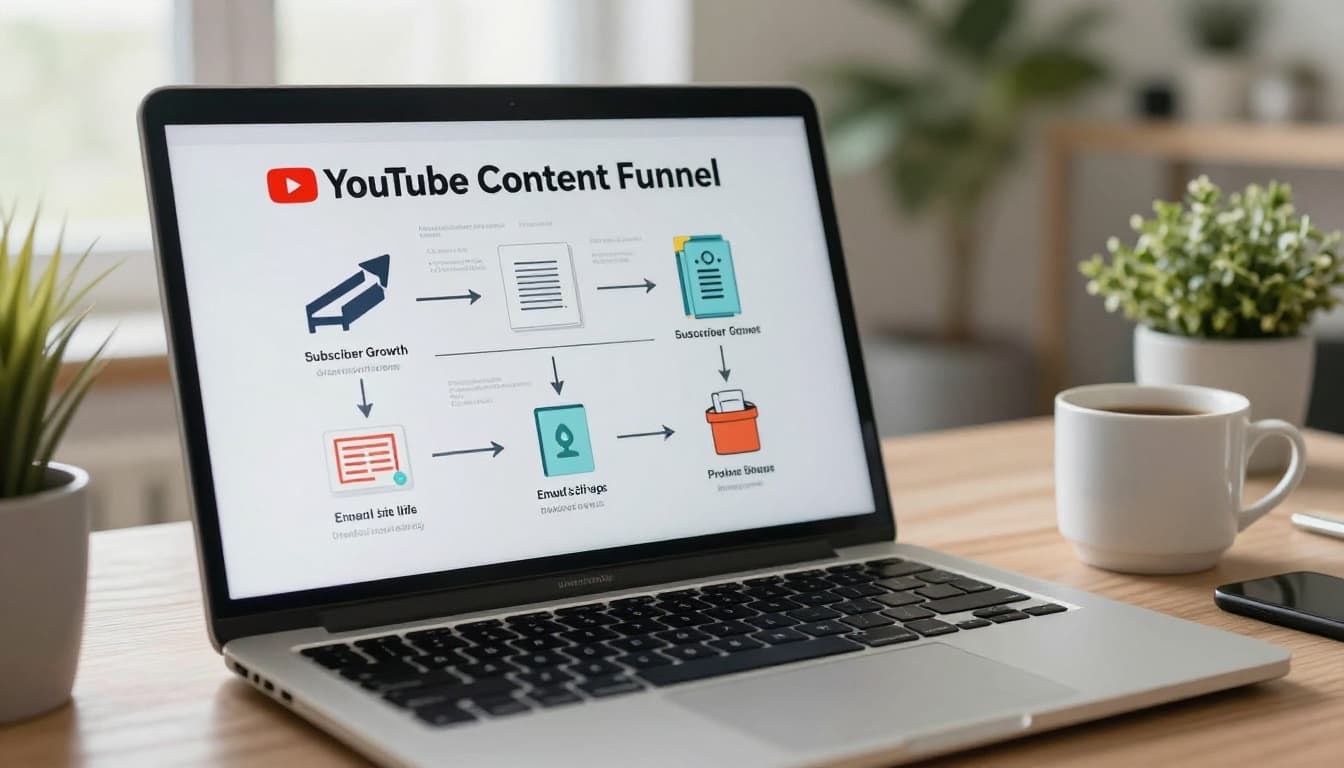 A simple YouTube funnel from views to subscribers to offers, created with AI.
What you sell here isn’t a service at first. You’re building attention you can later convert into ads, affiliates, templates, or your own offers.
Who it’s for: patient creators, people who want a long-term asset, camera-shy folks who prefer voiceovers or avatar videos.
What you do each week: pick topics, write scripts, record (or use an AI avatar), edit, publish, then clip into shorts.
Where AI helps: topic research, script drafts, hook variations, thumbnail ideas, captions, and fast repurposing. Some creators even use avatar-style video tools so they can publish without filming.
How to get your first 3 “customers”: you don’t, you get your first 300 true viewers. Start with one narrow niche (example: “AI tools for dentists” or “automation for home services”), and a repeatable format like “tool review + 3 real use cases + setup steps.”
Path to $5k/month: beginner channels can hit around $5k/month when ads stack with affiliate deals and a simple product (like templates, audits, or a mini-course). It’s slower than services, but once a video ranks, it can pay you while you sleep. That part is real.
A simple publishing plan that doesn’t fry your brain: one niche, two videos a week, same structure every time, for 90 days.
AI content agency for local businesses (fastest path for beginners)
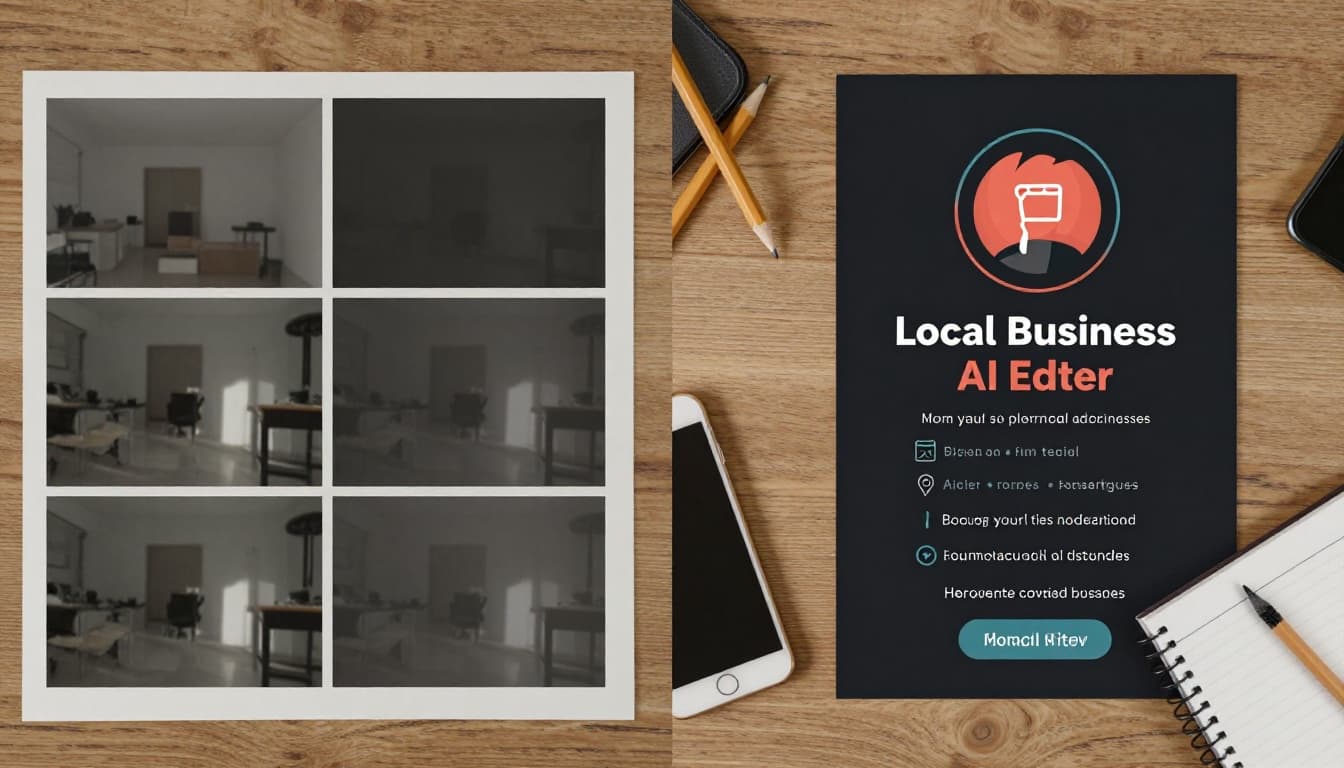 An example of a repeatable short-form content workflow, created with AI.
This is the simplest “get paid fast” model because the problem is obvious: businesses want attention and customers, but owners don’t have time to post consistently.
What you sell: short-form content packages, plus posting and basic lead capture.
Who you sell to: local services, med spas, dentists, real estate agents, gyms, restaurants.
What you do each week: create a batch of 12 to 20 short videos, write captions, schedule posts, and share a simple monthly report (views, clicks, leads, booked calls).
Where AI helps: video scripts, hooks, on-screen captions, image generation for quick visuals, and editing speed. You can also create mascot-style visuals or avatar clips when filming is hard.
How to get your first 3 customers: do three “spec” samples first (one for a plumber, one for a med spa, one for a realtor). Then DM or email 30 local businesses with a short note: what you noticed, one content idea, and a link to the sample. Keep it polite and short, don’t write an essay.
Path to $5k to $15k/month: at $1,500/month, you need 4 to 10 clients. You scale by templates and by managing everything from one dashboard (scheduling, DMs, leads, follow-ups). Beginners should start here because you build real skills that transfer into higher-ticket offers later.
White labeled AI software for one niche (recurring revenue without a team)
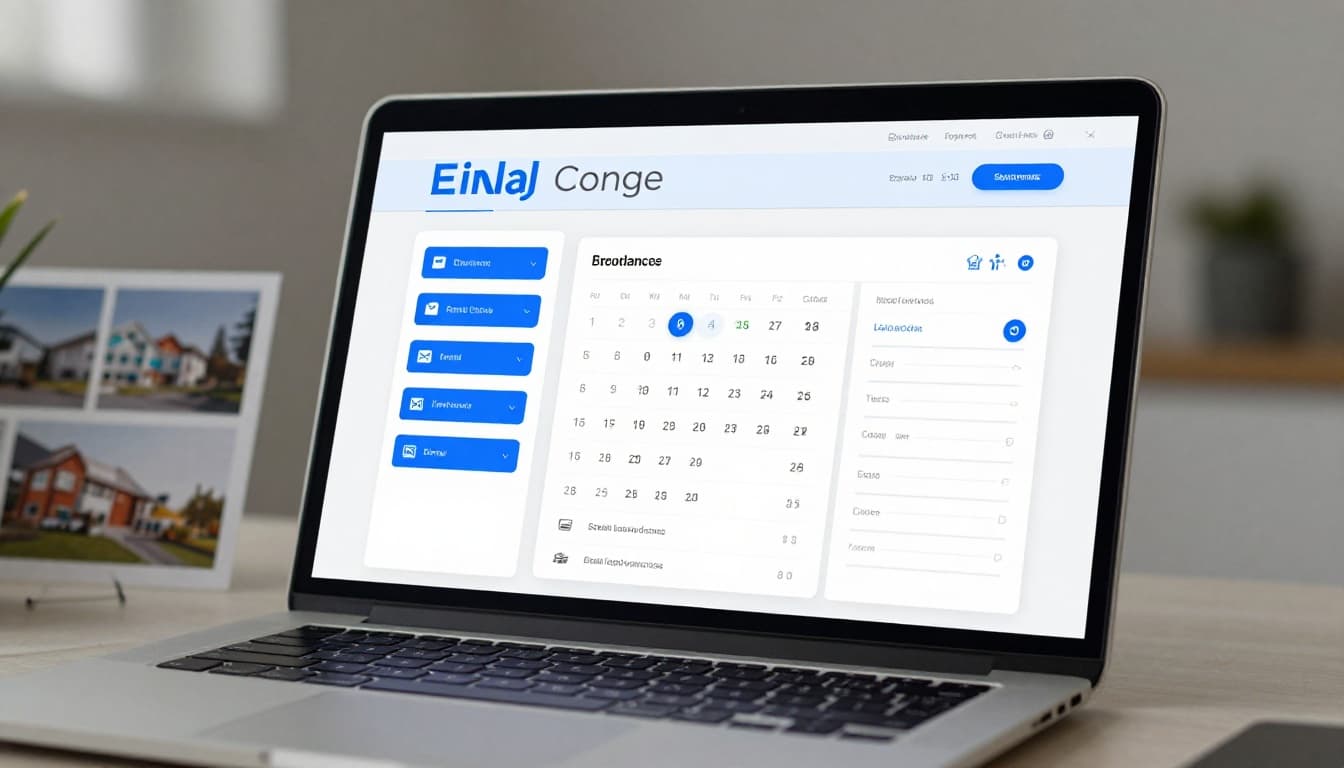 A simple niche dashboard concept for recurring revenue, created with AI.
White labeling means you sell software under your brand, but the underlying platform already exists. In plain words, you’re not coding from scratch, you’re packaging and supporting a tool for a specific niche.
What you sell: a branded “business system” for one niche: landing page, calendar, follow-up emails/texts, social planner, lightweight CRM.
Who you sell to: niches that want a simple operating system, real estate teams, med spas, clinics, agencies, home services.
What you do each week: onboarding new accounts, light support, small improvements to templates and automations, plus a monthly check-in message.
Where AI helps: faster page copy, better follow-up sequences, FAQ content, and quick testing of new workflows.
How to get your first 3 customers: start with people already paying for something messy (multiple tools). Offer a switch-over setup with a 14-day “done for you” onboarding.
Path to $10k/month: if you charge $197/month, you need about 50 customers. It’s a real number, but it’s not instant. The win is that it’s recurring, and support gets easier as your templates improve.
One honest warning: building software from scratch as a solo founder can get fragile fast. Updates break things, errors appear, and suddenly you’re doing tech support at 2 a.m. A stable platform with white label options is often a better first step.
AI communication agents that answer calls, texts, and emails 24/7
This one solves a painful problem that owners feel in their wallet: missed calls equal missed money.
What you sell: an AI receptionist and follow-up agent that answers inbound calls, replies to texts, handles FAQs, books appointments, and escalates edge cases to a human.
Who you sell to: plumbers, HVAC, dentists, clinics, med spas, any business that misses calls during busy hours.
What you do each week: initial setup, testing, and small tuning. After that, you’re mostly monitoring logs and updating FAQs when offers change.
Where AI helps: drafting call flows, handling common questions, and keeping response quality consistent at 2 p.m. and 2 a.m.
How you get your first 3 customers: pick one niche, then call 20 businesses and ask one question: “Do you miss calls during jobs?” If yes, offer a 7-day pilot that books appointments and texts back missed callers.
Pricing logic to reach $5k to $15k/month: you can charge a setup fee plus a monthly fee per location. Many solo operators land in the $500 to $2,000/month range depending on call volume and complexity. Ten clients at $1,000/month is a strong, very livable base.
If you want to compare tools and stacks that help you deliver offers like this, here’s a useful reference: Best AI tools for making money in 2026.
AI lead generation agency that charges per lead or per appointment (high upside, hardest)
This is the model with the biggest upside, and also the fastest way to get burned if you don’t know what a “good lead” is.
What you sell: leads or booked appointments, not “marketing.”
Who you sell to: high-LTV services (med spas, dentists, lawyers, contractors, real estate investors).
What you do each week: run ads or content funnels, test landing pages, track costs, and tighten follow-up so leads don’t go cold.
Where AI helps: ad variations, landing page drafts, offer angles, and quick iteration on copy. But AI won’t save you from bad targeting or weak follow-up.
Simple unit economics example: if you generate a lead for $10 and sell it for $50, you keep $40 margin per lead. At 1,000 leads/month, that’s $40k margin on paper. In real life, quality control and conversion are everything.
How to deliver leads cleanly: use a form, route it into a CRM, trigger instant texts/emails, then notify the client automatically. Keep it boring, boring is good.
Honest note: this is the hardest idea on this list. If you’re brand new, start with content services first, learn what makes businesses money, then move into pay-per-lead once you can define “qualified” without guessing.
A simple 30-day launch plan for your first paying client
Most people don’t fail because they picked a bad idea. They fail because they never ship a first version. So this plan is built for speed, and a little discomfort, because outreach always feels weird at first.
The goal for 30 days is not perfection. It’s one paying client and a process you can repeat.
Week 1, pick one offer and build a tiny proof example
Pick one idea from above and build one demo asset in 48 hours.
If you chose content, make a sample pack of 6 short videos for one niche. If you chose software, build a demo landing page and a simple follow-up sequence. If you chose communication agents, create a basic call flow and record a mock call. Keep it simple and clean.
This tiny proof reduces sales friction. People relax when they can see the thing.
Also, don’t build ten demos. Build one, then start outreach. You’ll improve the demo based on real feedback anyway.
Weeks 2 to 4, outreach, close, deliver, then ask for referrals
For outreach, pick one channel and stick to it (email, Instagram DMs, LinkedIn, or cold calls). Send 20 to 30 messages a day and track three numbers: replies, booked calls, closes. If you don’t track, you’ll start making up stories in your head, and it gets messy.
On sales calls, keep it simple: confirm the pain, show the demo, offer a 14-day pilot with clear deliverables, then ask for the close.
Once you deliver and get a win, ask for a referral the same week. Don’t wait a month. Trust fades faster than you think.
This is also where upsells happen naturally. Content clients become software clients. Software clients add communication agents. The best upsell is the one that removes a headache they already complained about.
What I learned building AI offers as a one person business
A few things surprised me when I started turning AI into real offers.
First, I overbuilt early. I kept polishing pages, rewriting copy, testing tools, basically procrastinating with productivity. The minute I started doing daily outreach, things got clearer. Fast.
Second, I tried too many tools. It felt smart, like I was “staying current,” but it mostly made my workflow shaky. One week I’d be fast, the next week an update broke something. Now I prefer a smaller stack that I know well, and I only add tools when there’s a clear payoff.
Third, I underpriced in the beginning. I told myself it was to “get experience,” but it also attracted clients who didn’t respect the process. When I raised prices and tightened deliverables, delivery got easier. Funny how that works.
And yeah, follow-up is boring, but it’s where money hides. In my agency work, the biggest jumps didn’t come from some magical prompt. They came from having a clean system that texts leads back, reminds people of calls, and keeps conversations from dying in the inbox. That’s the unsexy part, and it’s the part that pays.
Conclusion
The five best picks here each fit a different personality: the YouTube channel for creators, the AI content agency for fast-start service builders, white-labeled software for recurring-revenue thinkers, communication agents for problem-solvers who like clear ROI, and lead-gen for performance marketers who can handle pressure.
If you want a real shot at $5k to $15k months, commit to one idea for 90 days. Pick a niche, create one demo asset, and contact 10 businesses today. The plan isn’t complicated, but you’ve got to actually do it, even on the days it feels a bit awkward.