


If you’ve been online for more than five minutes, you’ve seen it: someone claims ai can build a “fully automated” dropshipping business while you sleep. It sounds like magic. It also sounds like a trap.
The truth sits in the middle. In 2026, AI really can remove a ton of friction, product research, listing writing, basic support, even parts of fulfillment. But it won’t save a weak offer, a sloppy brand, or a store that feels like it was made in 12 minutes (because it was).
This guide walks through a practical way to start dropshipping with AI in 2026, step by step, with the stuff people usually skip: choosing a niche you can actually sell, setting up the store so it looks human, and marketing when you don’t have ad money.
What “AI dropshipping” actually means in 2026
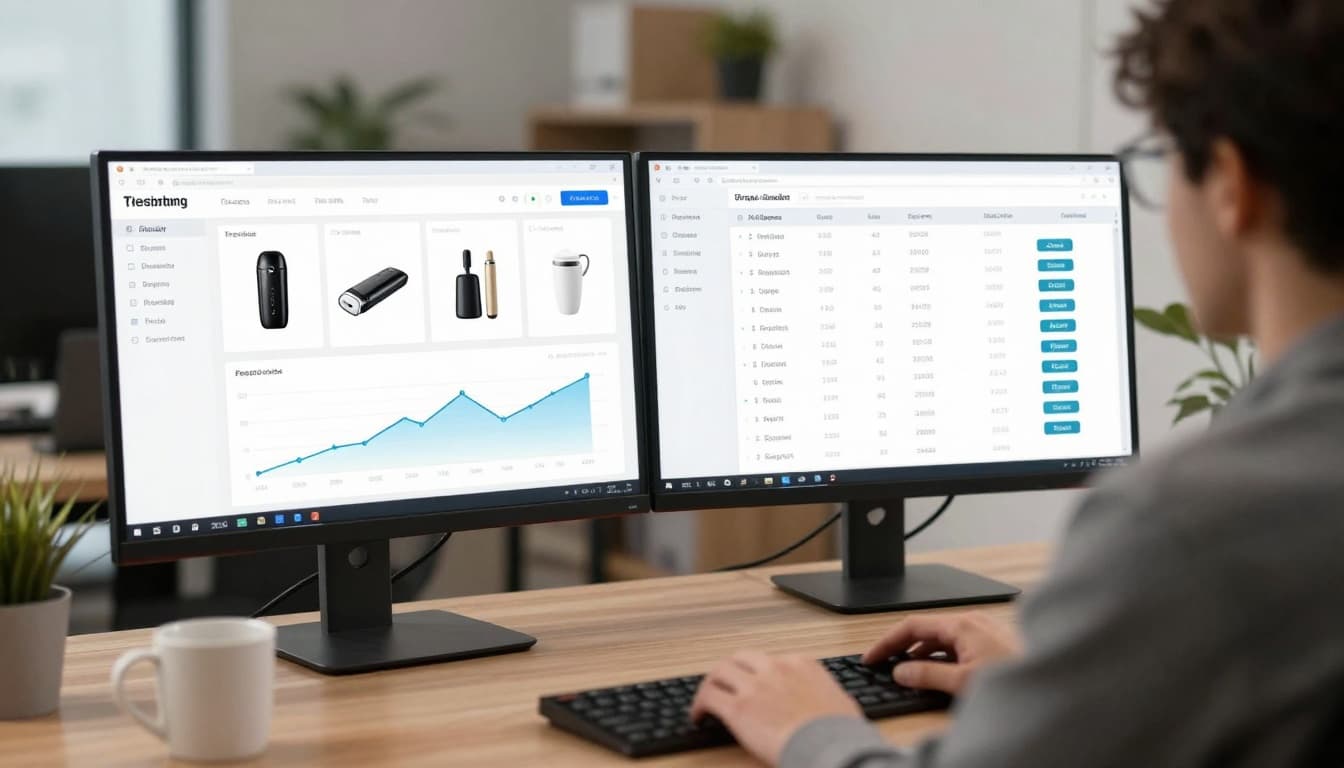 An AI-assisted workflow for product research and supplier checks, created with AI.
Dropshipping hasn’t changed at its core: you sell products you don’t stock, and a supplier ships to the customer. What’s changed is the amount of busywork you can offload.
In 2026, AI helps most in four places:
1) Research: spotting patterns faster than you can, like which products are gaining traction and what angles competitors use to sell them. Tools now summarize competitor pages, scrape ad libraries, and surface “what’s working” themes.
2) Store setup: AI store builders can generate a Shopify layout, collections, product pages, and starter copy. It’s not perfect, but it’s shockingly close, especially for a first draft.
3) Listings and creative: AI can rewrite titles and descriptions, suggest bundles, and spit out ad scripts. That’s a big deal because most beginners stall right here.
4) Operations: order routing, tracking updates, price monitoring, inventory alerts, and customer support chatbots can run in the background.
The important part: this isn’t “passive income from day one.” It’s more like power tools. A nail gun doesn’t build a house by itself, but it does make a real builder faster. That’s what AI is for dropshipping.
If you want a broad list of tool categories and how they’re used, Shopify’s guide on AI dropshipping tools is a solid starting point.
Pick a niche you can talk about for months (not days)
This is where people get weird. They treat niche selection like picking a lottery ticket. But selling online is mostly communication, you’re going to explain, compare, reassure, and repeat.
So pick a niche that meets these three tests:
You care enough to stay in the room. You don’t need to be “passionate,” but you should at least be curious. If you’d be bored talking about it next week, don’t build a store around it.
You can describe the outcome clearly. Not “high-quality resistance bands,” but “a quick workout at home when you can’t get to the gym.” People buy results, not specs.
There’s room for a point of view. Brand matters more in 2026 because product access is easy. If anyone can import the same item, your story and standards become the difference.
A simple way to do this is to write a one-sentence brand promise before you build anything:
- “I help busy people stay consistent at home.”
- “I sell simple desk gear that makes remote work less painful.”
- “I focus on pet products that are safe and easy to clean.”
Also, don’t overthink your first version. A store can be 80% done and still make sales. A store that’s 100% perfect in your notes app makes $0.
Use AI to build the store fast, then make it feel real
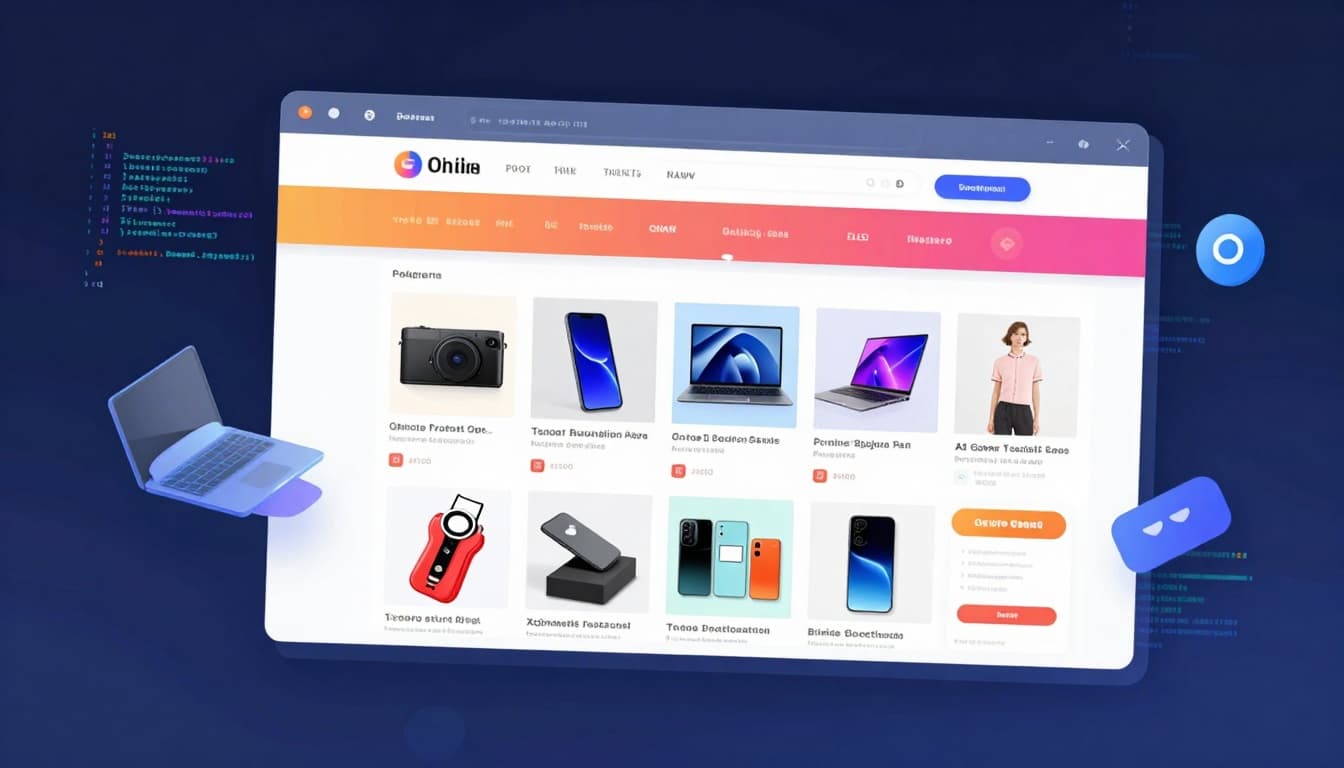 An online store being assembled by automation, created with AI.
AI can get you from “blank screen” to “store exists” fast. That’s huge, because momentum matters. The risk is ending up with a store that looks like a template, reads like a robot, and feels untrustworthy.
Here’s the approach that works best:
Start with AI for the skeleton, then do a human pass on the parts customers actually notice.
Focus on these pages first:
Homepage: One clear promise, one clear audience, and a short list of why someone should trust you. Keep it calm. No screaming banners.
Product pages: AI-written descriptions are fine as a draft, but edit for truth and clarity. Remove claims you can’t prove. Add specifics a buyer cares about: shipping window, returns, what’s included, and who it’s for.
Policies (returns, shipping, contact): People do check these. A missing returns policy is like a locked door on a store.
Brand basics: logo, colors, and tone. Nothing fancy, just consistent. A clean store beats a fancy store that feels random.
If you’re using AI to generate copy, read it out loud. If it sounds like a “business article,” rewrite it like you’re texting a smart friend. You’ll keep the meaning and lose the weird stiffness.
Email also plugs into this early. Even a simple welcome email builds trust, and it gives you a way to follow up without begging social media for attention. Omnisend has a good breakdown of AI tools for dropshipping that includes email and automation ideas worth stealing.
Find products with AI, then verify them like a cautious adult

Photo by Markus Winkler
Product selection is still the make-or-break step. AI can help you spot candidates, but it can’t protect you from a supplier that ships late, lies about stock, or sends low-quality items.
In 2026, a practical research flow looks like this:
Use AI research tools to generate a shortlist, then manually validate each product.
AI can help you:
- scan trending categories,
- summarize competitor listings,
- suggest bundles (like “pull-up bar + grip tape”),
- rewrite titles and descriptions for clarity,
- predict which angles might work in ads.
But do these human checks before you list anything:
Shipping reality check: If the delivery time is fuzzy, assume problems. Long shipping can still work, but only if expectations are clear.
Supplier consistency: Look for repeat reviews over time, not a sudden spike. If possible, check if the same product exists with multiple suppliers so you’re not stuck.
Margins after all costs: Don’t guess. Include transaction fees, app fees, and refunds. Many beginners “profit” on paper and lose money in real life.
Return risk: Some categories are refund magnets. Size-based products, fragile items, and anything that “promises results” can bite you.
For automation, many sellers use tools that can import products, monitor inventory, and handle order processing. Auto-fulfillment is especially helpful when you’re new, because it reduces the dumb mistakes, wrong address, missing tracking, forgetting to order, stuff that quietly kills stores.
Marketing in 2026: small audiences, real stories, and repeatable systems
The biggest lie in dropshipping is that marketing is optional. You can build the prettiest store on Earth and still hear crickets.
If you’re starting with little or no ad budget, you need simple moves you can repeat.
Micro-influencers still work. People love chasing big creators and getting ignored. Smaller creators (even under 5,000 followers) often reply, and they usually have tighter trust with their audience. Your job is to make it easy: give them a clean product page, a short pitch, and a fair offer.
Sell why you’re doing it, not just what you’re selling. This sounds soft, but it’s practical. If your message is “Here’s a pull-up bar,” that’s forgettable. If your message is “I’m trying to get back in shape while working long hours, so I built a small store around quick home training,” people remember you. They might even root for you.
Make content without being the face. If you hate being on camera, you can still do POV style clips, product demos, unboxings, or short “what I learned this week” posts. Just keep it honest. Fake stories get sniffed out fast.
Build an email list early. Even a basic weekly email helps. You’re building a relationship, not chasing one-time clicks. You can share tips, short routines, or “best picks this week,” then link back to products naturally.
AI helps here too: draft scripts, outline emails, and generate variations. But your voice should stay yours. If it reads like a brochure, people bounce.
What I learned while testing AI dropshipping workflows
I used to be skeptical, like hard skeptical. Dropshipping felt noisy, and the internet made it sound like everyone was rich except you. Then I actually tested a modern setup with free and low-cost tools, with strict limits: build from a laptop, move fast, don’t spend real money.
What surprised me wasn’t that AI made money appear. It didn’t. What surprised me was how much friction disappeared.
Store setup that used to take days can happen in under an hour, at least to a “launchable draft.” Product importing is basically one click now. Even writing descriptions, which used to be a time sink, becomes a quick edit job if the AI draft is decent.
The biggest shift for me was fulfillment thinking. Manual fulfillment sounds fine until you imagine doing it daily, while also doing support, while also trying to market. Automation tools that handle order processing and tracking aren’t lazy, they’re how you avoid the small mistakes that cost you reviews and chargebacks.
Still, the hard part stayed the hard part: getting attention, building trust, and sticking with it long enough to learn what your market wants. No tool can do the patience part for you, sadly.
Conclusion: Start simple, let AI do the grunt work
AI can help you start dropshipping in 2026 faster than ever, but it’s not a substitute for taste, honesty, and follow-through. Pick a niche you can talk about, build a store that feels human, validate products like you’re spending your own money (because you are), and market with real stories and repeatable habits. If you treat AI like a helper instead of a miracle, you’ll move faster and make better calls. The next step is simple: build the first draft this week, then improve it in public with ai doing the boring parts.