


A few years ago, starting a SaaS meant hiring a dev team and spending six months on an MVP. In 2026, that model is dead. With the rise of 'Vibe Coding' and AI-native architecture, the barrier to entry has vanished—but the barrier to retention has never been higher. If your software just 'manages data' without providing 'autonomous intelligence,' you aren't building a SaaS; you're building a digital ghost town.
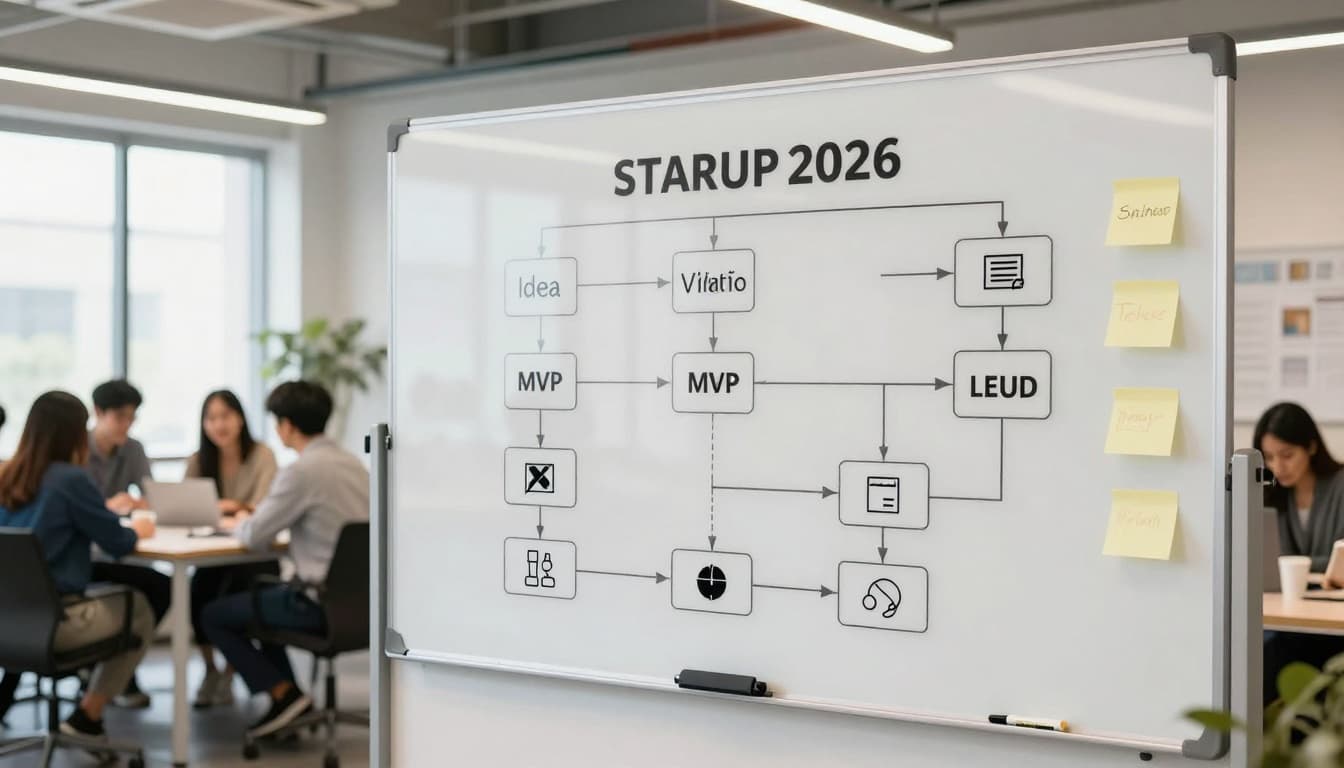 Roadmap-style view of the core phases: validate, build MVP, launch, and grow (created with AI).
Pick a SaaS idea that people will pay for in 2026
Good SaaS starts problem-first. Not “I want to build an app,” but “this group loses money or time because of this annoying mess.”
Keep it simple. If you can’t say the problem in one sentence, it’s probably too broad.
A practical way to choose: You want a painful problem, a clear buyer, a workflow that happens often, and a budget attached to it. If you’re guessing on willingness to pay, stop and find out.
What’s working right now, based on current founder chatter and market momentum: AI-native apps (where AI does real work, not just “chat”), vertical SaaS for one industry, composable tools that plug into other tools, and tiny micro-SaaS products that do one job extremely well. Pricing is shifting too, usage-based and even outcome-based pricing is getting more common, especially where AI value scales with results.
If you want a broader overview of what founders are planning this year, this 2026 SaaS roadmap perspective is a solid scan.
Use fast market research, competitors, reviews, and pricing to spot real demand
Market research doesn’t need to be fancy. It needs to be honest.
Start with competitors. If nobody is charging for a solution, either the market is early or the pain isn’t real (or both). Look at pricing pages first because pricing tells you what customers value enough to fund.
Then read reviews. App stores, G2, Capterra, Chrome extensions, Reddit threads, anywhere people complain in public. Complaints are gold because they’re basically feature requests with emotions attached.
A quick example: A generic scheduling tool competes with a thousand others. A scheduling tool designed only for dental offices (insurance reminders, chair utilization, missed appointment recovery) can win with fewer features because it matches the job better. That’s vertical SaaS in plain English.
One more 2026 reality: AI features are often expected now. But customers don’t pay for “AI.” They pay for a faster outcome. Like “draft responses and resolve 30 percent more tickets,” not “now with AI button.”
Validate before you build: landing page tests and early adopter offers
Validation is where most founders quietly skip steps, then regret it later.
Two simple methods work fast:
First, a landing page test. Put up a page that explains the problem, the promise, and who it’s for. Run a small set of ads or share it in the right communities. Track visits and signups.
Second, a paid early adopter offer. Give early users a discounted first year or a lifetime deal, but only if they pay now. The first payment is the cleanest signal you’ll ever get.
A rough rule of thumb: if you’re getting decent traffic but tiny signups, your message is off or the problem isn’t sharp enough. If you’re getting signups but nobody will pay even at a discount, you might have “interest,” not demand.
| Feature | Traditional SaaS (Old) | AI-Native SaaS (2026) |
| User Interface | Static Dashboards | Generative/Adaptive UI |
| Value Prop | Tool for humans to work | Agent that does the work |
| Pricing Model | Per-Seat (Fixed) | Usage-Based / Value-Based |
| Development | Manual Coding (Months) | Vibe Coding/No-Code (Days) |
Build a simple MVP in 30 to 45 days, without wasting money
Once you’ve got signals, build the smallest thing that solves the core problem. Not a “platform.” Not a Swiss army knife. A single sharp tool.
I’ve seen founders burn through $100,000 in half a year building a huge product, then launch and… nothing. Usually because they tried to impress imaginary users instead of listening to real ones.
In 2026, many founders don’t hire a full team at the start. It’s expensive and slow. A single senior developer can cost something like $120,000 to $180,000 a year, before you add benefits and the fact you still need design, QA, and DevOps. A technical partner can be faster early on if they’ve shipped lots of SaaS products already, and you keep focus on sales, customers, and learning.
 Photo by RDNE Stock project
Map the user journey, then wireframe the screens before writing code
Wireframes are just simple sketches of screens and flows. Buttons, menus, basic steps, nothing pretty. They remove confusion.
A clean user journey usually looks like this: Sign up, reach the first value moment fast, do the key action, see the result, then hit a reason to upgrade.
If your “first value” takes 45 minutes, you’re going to fight churn from day one.
Tools like Figma make wireframing easy. The point isn’t design awards, it’s shared understanding. When builders and founders agree on the flow, builds get faster and rework drops a lot.
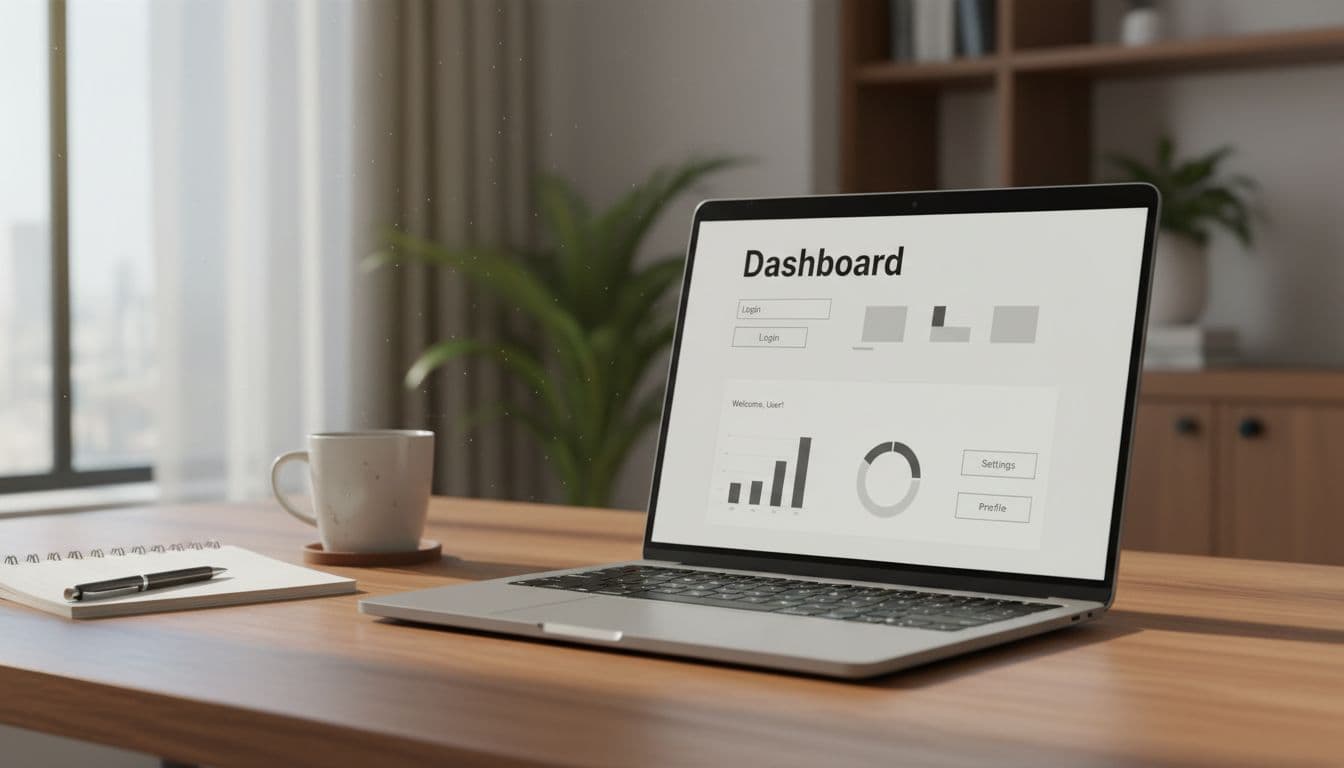 A simple wireframe view on a laptop setup (created with AI).
Choose a 2026-ready stack: secure, scalable, and easy to integrate
You don’t need to overthink the stack, but you do need to respect the basics.
Most SaaS MVPs need: cloud hosting (AWS, GCP, or Azure), authentication, a database with backups, logging, analytics, and payments. Add basic security habits early, strong password rules, least-privilege access, and clean handling of customer data.
Composable SaaS matters more now because customers already have tools. Your product should connect easily through APIs and webhooks instead of forcing a full rip-and-replace.
For AI, think in outcomes: Do users need AI to draft, summarize, classify, route, predict, or complete tasks? Agentic workflows (where AI carries out steps, not just suggests text) are getting popular, but only when they clearly save time or drive revenue.
Launch, price, and get your first customers in 2026
Launching isn’t one day. It’s a loop: ship, measure, talk to users, fix, repeat.
Set simple early goals. Activation in the first 14 days is a good one. Watch bounce rate on the landing page too. If people leave fast, the promise is unclear.
AI can help here in small ways: onboarding help inside the app, smarter support triage, and spotting churn signals earlier. Don’t overbuild it. Start with what reduces human work.
If you’re starting without a technical background, this guide on starting SaaS without being technical lines up with the same reality: execution order matters more than “knowing code.”
Pricing models that fit modern SaaS: subscriptions, freemium, usage, per seat, and outcome-based
Pricing is not a side task. It’s your business model.
Subscription works when value is steady month to month. Freemium works when the product spreads naturally and upgrades are obvious. Usage-based works when costs and value scale with consumption (common with AI). Per-seat still fits some team tools, but it’s under pressure because AI can do work once done by several people. Outcome-based pricing is tricky but powerful when you can measure results clearly.
Also, being “too cheap” can kill you. You can’t fund support, fixes, and growth on vibes.
For a finance and pricing view of where SaaS is heading, this roundup of SaaS finance trends for 2026 is worth reading.
Marketing that works for early traction: content, partnerships, ads, and trust signals
Early marketing is less about volume and more about precision.
Educational content works when it’s specific, like “how clinics reduce no-shows” instead of “productivity tips.” Partnerships can work fast too: integrations, affiliates, or small influencers in your niche. Paid ads can work, but they’re better when you already know your message converts. LinkedIn is often the cleanest place to test B2B.
Trust signals matter early. Testimonials, short case studies, and honest screenshots. Even a simple “here’s what we fixed for this one team” can beat a fancy homepage.
Why "Invisible SaaS" is Winning
In 2026, US users are suffering from "Tool Fatigue." They don't want another dashboard to log into. The most successful SaaS companies today are "Invisible." They live inside Slack, WhatsApp, or Email as autonomous agents.
The Trend: Instead of a UI, provide a Model Context Protocol (MCP) layer that integrates directly into the user’s existing workflow.
What I learned building SaaS with founders who are not technical
After working alongside a lot of non-technical founders, I noticed something that repeats. The idea is rarely the main problem. Execution order is.
The founders who win don’t start by hiring a huge team or spending months in build mode. They start with proof. They talk to customers. They validate demand before they commit to weeks of development.
When scope stays tight, MVPs can move fast, like 30 to 45 days fast, and you can get real users touching it. That changes everything because feedback becomes concrete. Not opinions, not guesses.
I also noticed that technical partnerships often beat early hiring. Not forever, but early on. You get speed, patterns that already work, fewer “surprise” rebuilds. Meanwhile the founder can focus on the stuff that actually makes money, talking to customers, selling, onboarding, fixing the message.
And yes, AI is showing up in almost every product now. The best teams don’t shove AI everywhere. They use it where it removes drag from the workflow.
 A real-world way to learn fast: customer interviews, notes, and uncomfortable honesty (created with AI).
Conclusion
The winners of 2026 won't be the ones with the prettiest UI. They will be the ones who build the tightest Feedback Loops. Use AI to build your product, use AI to support your customers, but keep your human focus on the Proprietary Data that your competitors can't scrape. Stop planning, start 'vibe coding' your MVP today.