


Big tech builds for millions of people at once. That’s why the best saas ideas often look “boring” at first, they’re small, specific, and tied to a messy real-world workflow.
If you’re building with no code, that’s good news. Micro products win when they ship fast, solve one sharp pain, and start charging before the app feels “done.”
This post walks through 8 no-code-friendly SaaS ideas you can actually build with tools like Bubble, Airtable, Zapier, and Make. Each one includes who it’s for, what to build first, and what to charge, with one goal in mind: get to your first paying customers fast, not build a giant platform.
Why big tech misses these SaaS ideas (and why no code wins)
Big companies skip narrow products for a few simple reasons.
First, a micro niche can look “too small” on a spreadsheet, even if it’s painful and profitable. Second, these ideas often require awkward integrations, edge cases, and hands-on support. That’s not the kind of work that gets headlines inside a big org.
Micro SaaS founders can do the opposite. You can build a focused feature set, talk to users weekly, and ship improvements in days, not quarters.
If you’re trying to pick a winner, look for ideas with these traits:
- A painful problem people complain about without being asked
- A clear buyer (not “everyone”)
- A recurring workflow (weekly or monthly)
- Value that’s easy to prove (time saved, errors avoided, money found)
- A simple distribution path (a community, app store, or one role you can DM)
If you want more context on what micro SaaS is and why it works, Knack has a solid primer on micro-SaaS and practical idea examples.
A simple filter to choose the right niche fast
Use this quick checklist before you build anything:
- Who pays? The user, their manager, or the business owner?
- What breaks today? A report, an automation, a handoff, a compliance step?
- What happens weekly? If it’s a once-a-year task, it’s harder to retain.
- What does it cost them? Time, missed revenue, stress, or real cash loss.
- How can you prove ROI in 14 days? Alerts sent, mistakes prevented, dollars recovered.
Pick one persona and commit. Freelancers, e-commerce owners, recruiters, local business operators, and dev teams are all strong starting points because their problems are repeatable and easy to describe.
No code stack that fits most micro SaaS builds in 2025
Most of the ideas below boil down to three things: a dashboard, automation, and alerts.
A beginner-friendly stack that covers a lot:
- Bubble for the web app, auth, admin screens, and a simple dashboard
- Airtable as the database for an MVP (you can swap later)
- Zapier or Make for workflows, scheduling, and routing data
- Stripe for subscriptions and checkout
- Plaid when you need bank connections for finance or tax products
- Webhooks + basic logging so you can track failures and retries
Monitoring, summaries, and notifications are a sweet spot for no code because the value shows up quickly, and users don’t need a deep feature set to feel the benefit.
8 SaaS ideas big tech has not noticed yet (no code friendly)
These are “small on purpose.” Each idea is a mini playbook you can ship in tight steps, then expand only after retention looks good.
 Example of a monitoring-style dashboard concept, created with AI.
Real-time meeting summary agent for Zoom or Teams (sell clarity, not AI)
For: remote teams, agencies, founders who live in meetings
Problem: decisions get lost, action items aren’t assigned, and everyone feels unsure after the call.
MVP: join a Zoom or Microsoft Teams meeting, transcribe, then produce a short summary with decisions, action items, owners, and due dates. Push it to Slack, Notion, or ClickUp within minutes.
No-code build: meeting integration + Make/Zapier workflow + transcription API + Bubble settings page.
Pricing: $15/month for 10 meetings, or $49/month unlimited. Treat action-item accuracy as the product, not long summaries.
AI financial snapshot for freelancers (a calm money dashboard)
For: freelancers and solo consultants
Problem: income feels unpredictable, and that stress affects decisions.
MVP: connect Stripe, PayPal, and a bank account. Show income trend, “dry weeks” risk, a suggested savings set-aside, and alerts when cash flow dips.
No-code build: Bubble dashboard + Plaid + rules (simple thresholds) + Make alerts.
Pricing: around $25/month. Position it clearly: this isn’t full bookkeeping, it’s a simple snapshot that creates calm and helps people plan.
Zapier and Make automation watchdog (uptime monitoring for no code workflows)
For: founders and ops teams running critical automations
Problem: automations fail silently, and you find out too late (missed invoices, bad CRM data, stuck fulfillment).
MVP: capture errors and missed runs, send instant alerts, and show a basic status page: last success, last failure, and retry state.
No-code build: Zapier webhooks + Make error logs + Bubble monitoring dashboard + email/Slack alerts.
Pricing: $29 to $79/month. You’re not competing with automation tools, you’re the seat belt that only gets noticed when it saves someone.
Local micro-influencer finder for small businesses (nearby creators that convert)
For: restaurants, gyms, salons, local shops
Problem: big influencers look impressive, but local creators often drive more real visits.
MVP: find creators within 1 to 5 kilometers, rank by engagement quality and local signals, save an outreach list, and track replies.
No-code build: Bubble directory + Airtable list management + approved data sources and manual curation (start simple) + Zapier to send outreach sequences.
Pricing: $29 to $99/month, or take 10% per campaign. Emphasize “nearby and trusted” over follower count.
AI dynamic pricing optimizer for Shopify or WooCommerce (a quiet revenue lever)
For: small e-commerce brands
Problem: pricing is guessing, and guessing is expensive.
MVP: monitor competitor pricing for a small set of SKUs, track inventory levels, and suggest price moves within guardrails. Later, offer auto-apply for selected products.
No-code build: Shopify or WooCommerce integration + Bubble admin + scheduled Make jobs.
Pricing: monthly fee plus a small performance fee on lift. This model feels safer because the tool costs more only when it creates extra revenue.
For readers who want a wider sweep of product directions, Elementor keeps an updated list of SaaS and micro-SaaS ideas for 2025.
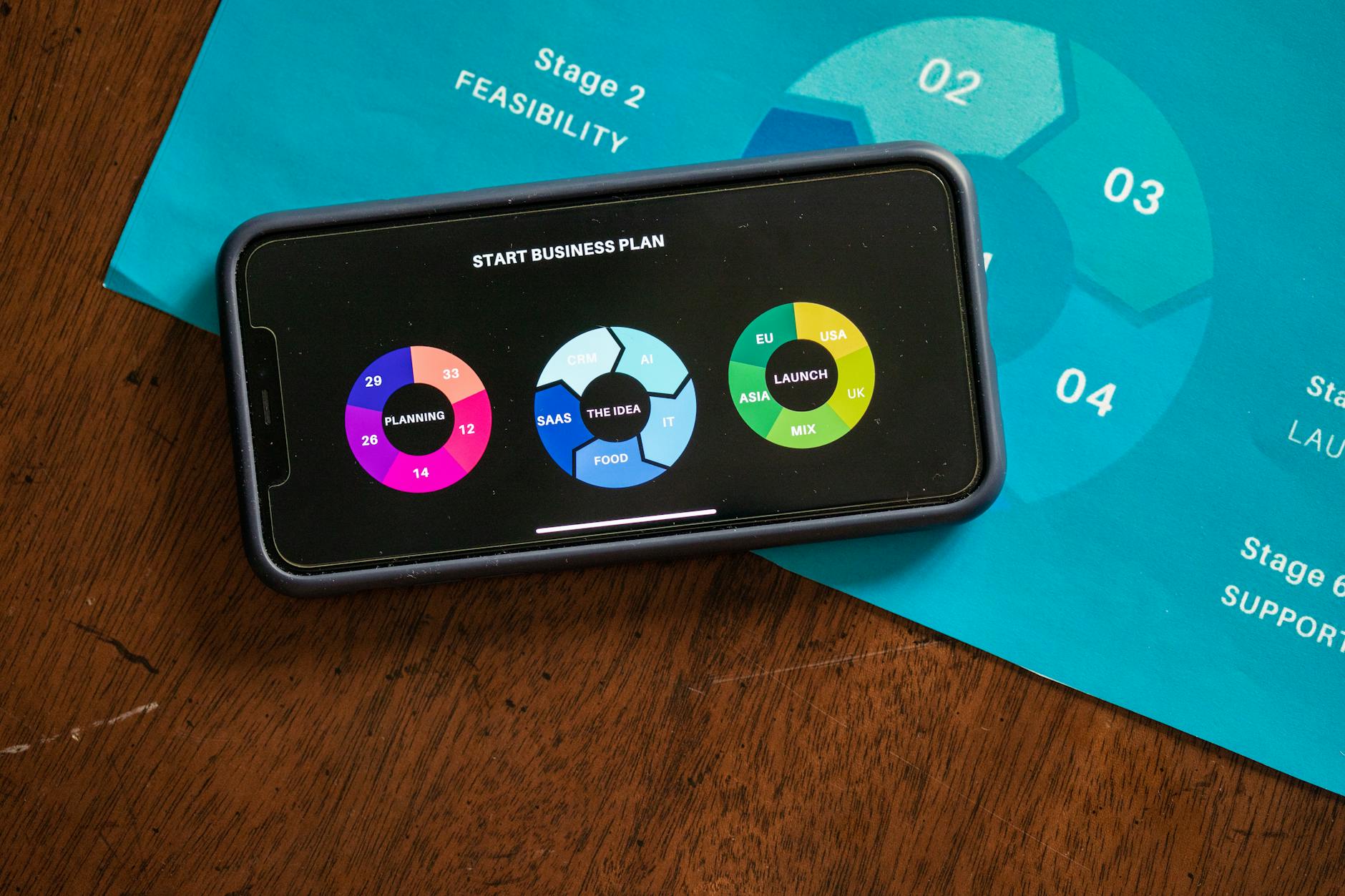 Photo by RDNE Stock project
Niche recruiting filter that ranks resumes by meaning (stop keyword chaos)
For: small recruiting teams and hiring managers filling specialized roles
Problem: keyword matching is noisy, and good candidates get buried.
MVP: upload a job post and a batch of resumes. Rank the top 10 using semantic matching and show short reasons: skills match, domain match, and gaps.
No-code build: Bubble upload flow + AI embeddings/search API + Airtable storage + export to email/ATS.
Pricing: about $299 per job post. The value is easy to explain: hours saved and fewer wrong shortlists.
API change tracker for dev teams (alerts only when it affects you)
For: SaaS builders and dev teams using Stripe, Shopify, Slack, Notion, and similar APIs
Problem: a tiny API update can break production, and changelogs are noisy.
MVP: monitor changelogs and release notes, map updates to the APIs a team uses, then send filtered alerts that highlight breaking changes and deadlines. Store a searchable history.
No-code build: scheduled pulls/scrapes + Bubble dashboard + Slack/email alerts + “watchlist” settings per team.
Pricing: $99 to $149/month, with a white-label add-on for SaaS companies. You’re selling stability, which most dev teams value more than new features.
AI tax deduction finder for freelancers and small businesses (sell relief)
For: freelancers, creators, and small business owners
Problem: tax season is stressful, and people miss deductions or forget what a purchase was for.
MVP: connect a bank feed, categorize spending based on profession, flag possible deductions (equipment, software, travel), then export a clean summary for an accountant.
No-code build: Bubble + Plaid + rules + AI categorization + CSV/PDF export.
Pricing: around $49/month. Be clear that it surfaces potential deductions and people should confirm details with a tax professional. The product isn’t “tax magic,” it’s relief and organization.
If you like scanning big lists to spark variations, Upsilon has a long roundup of micro SaaS ideas to build, and Codica covers broader SaaS application ideas for 2025.
How to validate these saas ideas and launch a no code MVP in 14 days
Validation doesn’t need a big audience. It needs the right 5 to 10 people.
A simple 14-day plan:
- Days 1 to 3: talk to 10 target users, write down exact stories and examples
- Days 4 to 7: build a clickable prototype and a basic onboarding flow
- Days 8 to 10: ship the smallest working version (one workflow end to end)
- Days 11 to 14: onboard users live, fix bugs fast, and ask for payment
Charge earlier than you want to. Even a small paid pilot changes how users talk, and how you build.
Customer discovery script, the 5 questions that find real pain
Ask questions that pull out real events:
- What broke or stressed you out recently in this workflow?
- What do you do today when that happens?
- How much time or money does it cost each month?
- If it was fixed, what would that be worth to you?
- Who needs to approve a subscription for this?
Collect specific examples like a failed invoice, a broken Zap, or a missed deduction. Those details become your landing page copy.
 Solo founder building a simple no-code product at home, created with AI.
MVP scope that keeps you out of trouble (and out of endless building)
Most MVPs fail because they try to do everything.
Cut these early:
- complex roles and permissions
- full analytics suites
- five integrations on day one
- fancy customization
Keep only this:
- one core workflow
- one alert channel (email or Slack)
- one simple dashboard
- Stripe checkout
Monitoring and summaries make great MVPs because users can feel the value in the first week.
What I learned building and selling tiny no code SaaS tools
The “boring” products sell because they remove a daily headache. When someone feels that pain weekly, they don’t need a long feature tour.
Alerts often beat dashboards. People say they want a dashboard, but what they keep paying for is a message that says, “Something broke,” or “Here’s what changed,” before damage spreads.
A narrow ICP makes everything faster. The moment you stop targeting “teams” and start targeting “Shopify brands with 50 to 500 orders a month,” your onboarding, pricing, and marketing get easier.
Pricing is simplest when value is measurable. Saving three hours a week, preventing one broken automation, or catching one breaking API change has a clear dollar story.
Also, “emotional safety” is real value. Meeting clarity reduces anxious follow-ups, a money snapshot reduces panic, and tax prep tools reduce dread. People pay for calm.
Start with one integration, then expand after retention. A product that does one thing reliably beats a product that does five things poorly.
For extra motivation, this internal case studies are worth a look: Build a $14K‑per‑month Skype alternative in a weekend.
Conclusion
Big tech ignores narrow, messy problems because they don’t look exciting at scale. That’s exactly why micro products win, and why these saas ideas are realistic for a no-code builder.
Pick one idea, talk to 10 people in that exact niche, then ship the smallest paid MVP you can support. Your next steps are simple: choose a niche, validate pain, build one workflow, charge, then improve based on usage.