


Most SaaS founders don’t fail because the product is bad. They fail because nobody sees it.
This story is the opposite. A solo developer built momentum on X (Twitter) first, then turned that attention into paid subscriptions until the business crossed the $10K/month mark (and kept climbing). No ad budget. No launch-day miracle. Just daily posting, honest updates, and a repeatable content loop.
MRR means monthly recurring revenue, the predictable subscription income you can expect each month.
 An analytics view of impressions rising over time, created with AI.
The $10K/month SaaS story in plain English (what happened and why it mattered)
Here’s the simple version of what happened.
A solo builder spent years shipping products that made nothing. Not “a little,” literally zero across multiple launches. Painful, but it taught him the part most builders learn too late: distribution and monetization aren’t optional. They’re the job.
Then he did something that felt risky: he posted the truth on X. He shared the failed attempts, the anxiety, the messy middle. That post took off. The attention didn’t just bring dopamine, it brought inbound interest and paying work.
With that audience forming, he later launched a focused SaaS for the same people who were already reading his posts. The product (SuperX) helps users grow on X using real performance data, basically showing what went viral, why it worked, and helping create new variations. Over time, the business reached roughly $13K MRR, powered mostly by a simple $29/month plan and around 450 active subscribers.
One detail worth sitting with: a “normal” launch post didn’t perform as well as a more human post. A casual, non-sales update (even a simple selfie-style moment) drove a bigger signup wave, adding roughly $1,000 in new MRR in about 24 hours. The lesson is blunt: people buy from people they trust.
Once he stopped guessing and started following post performance data, impressions became consistent, hovering around 100,000 per day. That reach became the top of funnel for the SaaS.
This wasn’t luck. It was distribution + trust + a system.
If you want broader context on how viral mechanics work on X, this breakdown is a useful companion: How To Go Viral on X (Twitter): Case Study + Step-by-Step Strategy.
The exact X growth system he used to sell his SaaS (no ads, just a repeatable loop)
A lot of founders think they need followers before they can sell. This story argues the reverse: you don’t need followers to start, you need consistency, a clear storyline, and a method you can repeat when motivation fades.
His approach wasn’t “post whatever.” It had structure:
1) Set the foundation first
He treated the profile like a landing page. Clear photo, one-sentence bio, and a pinned post that explained the mission in plain words. When a post hit the feed, the profile did the selling.
2) Pick one goal and document it daily
Not ten goals. One. The audience followed the journey because it had a plot.
3) Use a content loop instead of random posting
He rotated through four post types on purpose: entertain (reach), educate (value), sell (offer), inspire (story). The mix keeps the feed from feeling like ads, while still moving people toward the product.
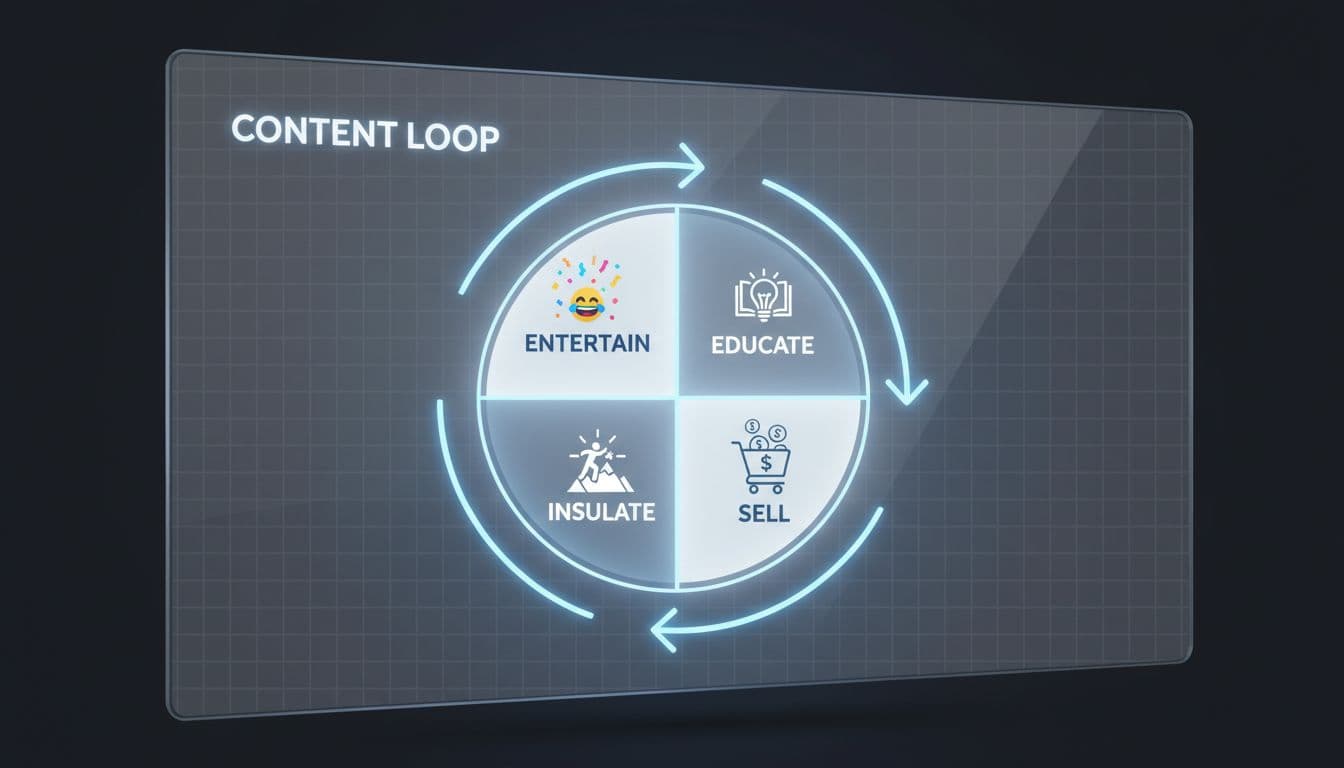 A simple content loop that turns attention into trust, created with AI.
4) Don’t guess, track what works
He analyzed high-performing posts in his niche, pulled out the concept (not the wording), then rebuilt it with his own voice. When something hit, he made more like it. When something flopped, he moved on.
5) Follow the format the platform is pushing
At different times, X has boosted different formats. In his case, shifting toward video gave a big lift in reach. The point isn’t “video forever,” it’s staying alert and adapting as the feed changes.
6) Build real connections, not spam
He called out a common trap: replying to hundreds of posts with empty comments. That creates noise, not relationships. What worked was slower and more human, finding people in the same niche and showing up with real replies, shared experience, and thoughtful questions.
For a different angle on building micro-SaaS around the X ecosystem, this Indie Hackers post adds more ideas: Building $1K to $10K MRR micro saas products around Twitter audience/Twitter APIs.
How X posts turned into paying SaaS customers (the simple funnel behind the scenes)
It’s easy to look at a viral post and think, “Cool, but how does that become revenue?” The funnel is simpler than most founders expect.
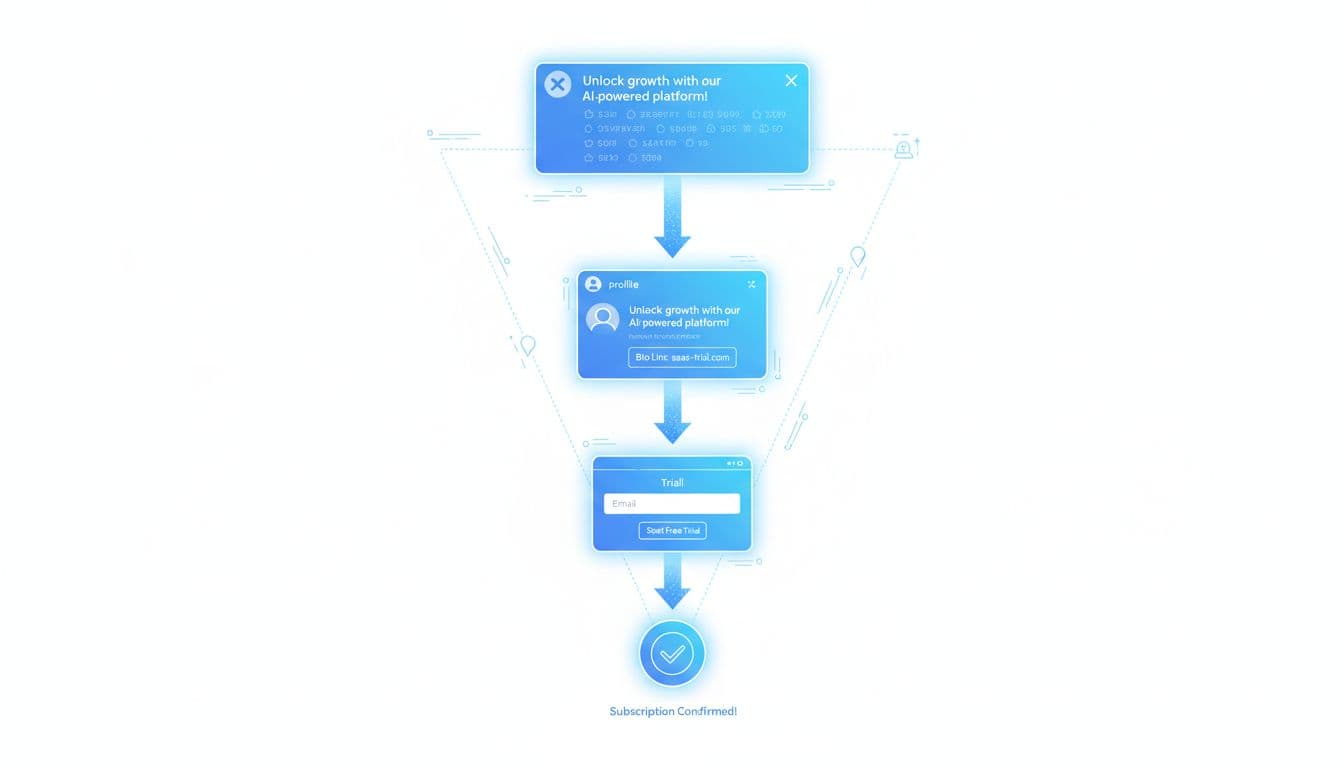 A basic path from post to purchase, created with AI.
The conversion path that actually happened
Post gets reach: relatable story, demo, or lesson.
Profile gets clicks: people want context.
Pinned post clarifies the offer: “Here’s what I’m building and who it’s for.”
Link leads to a trial: low friction, easy yes.
Product delivers value fast: the user gets a win early.
Subscription becomes obvious: paying feels like the next step, not a leap.
A few practical details made this work:
- CTAs felt human, not pushy. Simple lines like “If you want this, it’s in my bio” often beat aggressive pitching.
- Proof posts did heavy lifting: short demos, screenshots of progress, and “here’s what changed this week” updates.
- Onboarding mattered: the product had to pay off quickly, because attention from X is high-intent but impatient.
Costs and margins (the part founders forget)
One reason many “X-first SaaS” ideas struggle is that the tooling can be expensive. This founder shared real operating costs tied to APIs and AI.
Here’s what a stack like this can look like per month:
| Cost area | What it supports | Approx. monthly cost |
|---|---|---|
| X API | Data access and features | $2,000 to $3,000 |
| LLM APIs | AI generation and analysis | About $1,000 |
| Hosting | Servers and app runtime | About $200 |
| Vector database | Similarity search and embeddings | About $200 |
If you’re charging $29/month, you can’t ignore churn and trials. In his case, the trial conversion hovered around the 30 percent range, and churn was also a known issue he wanted to reduce. That’s normal for early SaaS, but it’s also why unit economics need attention early, not “after we grow.”
One related read that reinforces the “distribution first” theme is this internal case study: How to build a $15K/month SaaS app in 12 hours.
What I learned from this story (and how I’d apply it to my own SaaS)
If I had to steal the playbook and start from zero, I wouldn’t start by polishing a landing page. I’d start by earning attention and trust, one post at a time.
Here are the takeaways I’m keeping:
Distribution comes first: building quietly is comfortable, but it’s a trap.
Show the hard parts: clean wins don’t build trust like honest struggles do.
Commit to one clear goal: a focused storyline beats random updates.
Consistency beats intensity: one good post daily is better than a weekend sprint.
Track performance: treat posts like experiments, not diary entries.
Make friends, don’t spam: real replies build real customers.
Build painkillers, not vitamins: “nice to have” doesn’t sell like urgent relief.
Breathe, then act with intention: emotion leads to noise, intention leads to output.
A simple 7-day action plan (starting from zero followers)
Day 1: Fix your profile, photo, bio, and pinned post.
Day 2: Post your goal and why you care about it.
Day 3: Share one specific problem you’re solving and what you tried.
Day 4: Reply to 10 people in your niche with real substance.
Day 5: Post a tiny demo or screenshot of progress.
Day 6: Teach one lesson you learned the hard way.
Day 7: Ask for feedback, then build one small improvement and share it.
If you want extra perspective on engagement habits (good and bad), this discussion is thought-provoking: Replying to 500 tweets/day and other tips for growing to 70k Twitter followers.
Conclusion
X can be a real growth channel for SaaS when you combine storytelling, data, and real relationships. Viral posts help, but the repeatable part is the system: clear profile, consistent updates, and content that earns trust before it asks for anything.
Pick one goal, write a pinned post today, and publish your first build-in-public update. Results might come fast or slow, but consistency with intention compounds.