


Most people want an ecommerce business they can brag about. Something flashy. Something that “feels” modern.
But the truth is, the stores printing steady money usually sell stuff you’d never post on Instagram. They sell the things people need on a random Tuesday when something breaks, runs out, or becomes urgent. That’s why Business Ideas built around boring products can be weirdly powerful.
There’s a simple reason these niches keep winning: customers don’t buy them for fun. They buy them because life forced their hand. And once you solve the problem once, a lot of buyers don’t shop around next time. They just reorder.
Why “boring” ecommerce niches keep winning in 2026
A viral product is like a street food trend. It’s fun for a minute, then everyone starts selling it, and the line disappears. Boring products are more like plumbing. Nobody talks about it, but when you need it, you need it now.
One estimate floating around in the ecommerce world suggests well over 300,000 US businesses reorder the same everyday supplies on repeat each month. The core point matters more than the exact number: repeat buying is normal in unglamorous categories, and switching costs are often emotional (risk) instead of logical (price).
Here’s the pattern that shows up again and again in “boring but rich” niches:
- Urgency beats persuasion. If a TV won’t turn on or a facility ran out of gloves, the buyer isn’t in a browsing mood.
- Compatibility creates moat. Model numbers, fitment, and exact replacements make it harder for random competitors to copy your listing and steal the sale.
- Repeat orders are baked in. Consumables and wear-and-tear parts are basically subscriptions, just without the subscription software.
- SEO is cleaner. People search very specific phrases, like “compatible filter for Hoover WindTunnel” or “HP 5255 ink replacement,” and they’re ready to buy.
If you want a deeper look at niche selection trends from a mainstream business angle, this Entrepreneur breakdown of profitable online niches is a useful contrast, it’s more “popular categories,” while boring niches often hide in plain sight.
The 7 boring ecommerce niches quietly making millions
1) Funeral and memorial products (urns, keepsakes, memorial jewelry)
This niche feels heavy, but it’s real, and it’s steady. Cremation rates have been rising over time in the US, and families want memorial products that don’t look like they were designed decades ago.
A strong example in this space is a brand that started with a small line of modern-looking urns and keepsakes. Their average order value has been reported around $400, which is high for ecommerce, and that changes the math fast. You don’t need thousands of customers a day, you need a few meaningful orders.
The opportunity isn’t about being flashy. It’s about being respectful, clear, and modern. In a niche where many catalogs look dated, design alone can be differentiation. Listings on marketplaces like Etsy can also work early on, because shoppers already search there for specific memorial styles.
2) Industrial safety supplies (gloves, goggles, ear protection, vests)
Industrial safety is boring in the best way. Construction crews and factories burn through consumables constantly. Gloves tear, glasses scratch, earplugs get lost, and managers just want the supply problem to stop.
One founder reportedly grew an industrial safety supply company to around $15 million per year using a surprisingly simple approach: start small, then sell B2B by showing up and asking what sites run out of most often. Then return with those exact items. Not the cheapest. Just reliable.
That’s the hidden advantage here: a few good accounts can look like a subscription business. If you’re dependable, you don’t need to “go viral.” You need to show up on time.
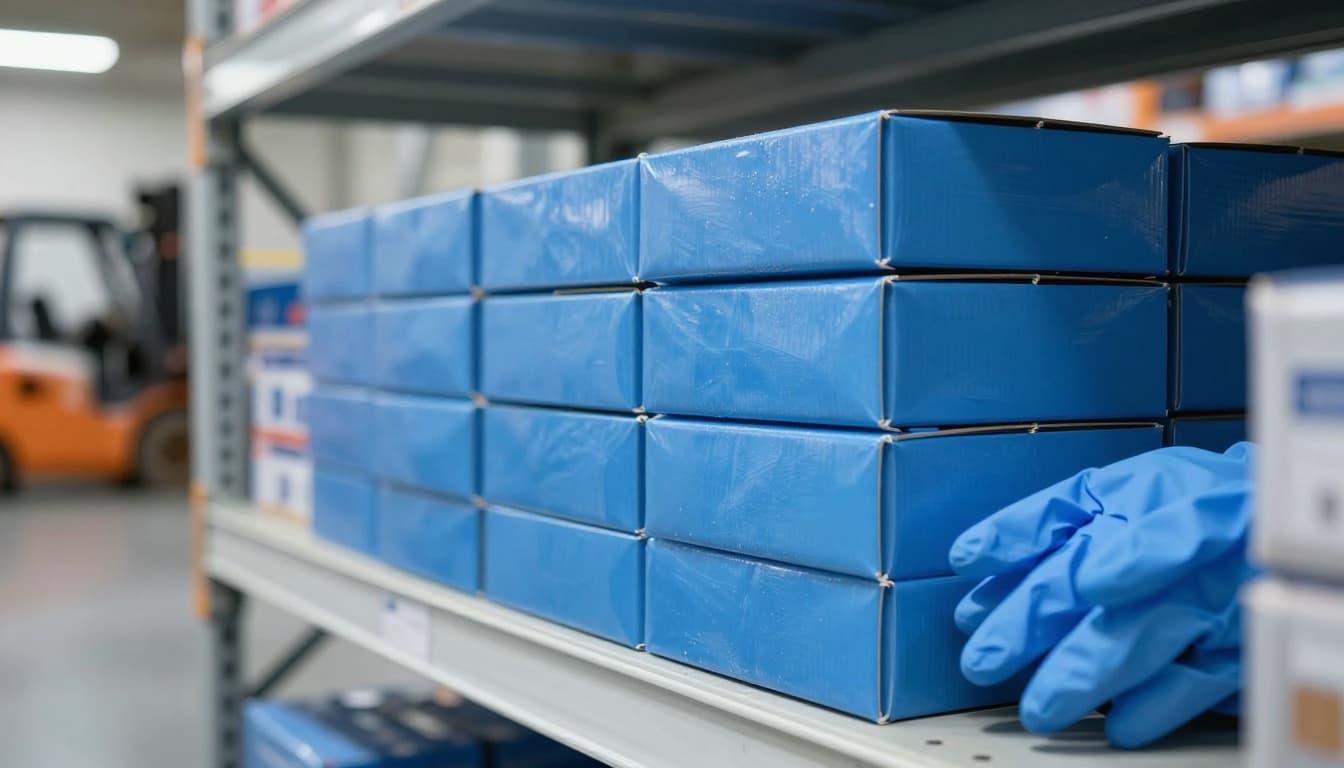 Boxes of disposable gloves on warehouse shelving, a classic repeat-order product (created with AI).
3) Replacement parts for appliances and electronics (TV boards, switches, knobs)
When something breaks at home, people don’t always replace the whole item. They try to fix it. That instinct creates a monster market for replacement parts, and the buyers are often stressed and in a hurry.
A well-known story in this niche is a parts seller that reportedly does $10 million to $19 million per year, largely by offering very specific replacement parts with compatibility details. The origin idea is clever: instead of fixing broken TVs and reselling them, break them down, test the boards, list the working parts, and ship fast.
This niche rewards sellers who are obsessive about:
- accurate part numbers and compatibility notes
- testing and grading (if used/refurbished)
- packing quality (parts get damaged easily)
- fast shipping
In other words, it rewards operations, not hype.
4) Printer ink and toner (compatible cartridges, office refills)
Printer ink is probably the least exciting product on Earth. Which is exactly why it works.
A famous example is a printer supply company that hit around $119 million at its peak, started by someone who noticed how expensive cartridges were and offered compatible versions at better prices. The playbook wasn’t complicated: start with a small set of SKUs, make compatibility crystal clear, let reviews build trust, then reinvest profits into more SKUs.
This niche is all about reducing buyer anxiety. People fear two things: “Will it work with my printer?” and “Will it mess up my printer?” Your listings, packaging, and support need to calm that fear.
And don’t ignore B2B. Small offices reorder like clockwork. They just don’t talk about it online.
5) HVAC filters and vacuum filters (replacements people forget until they can’t)
This one is quiet money. People forget filters until airflow drops, allergies spike, or the system starts acting up. Then it’s an “I need it this week” purchase.
A strong operator in this category reportedly built to tens of millions in annual revenue selling replacement filters and parts. The growth lever was simple: sell common models first, nail the search terms people actually type, then expand adjacent products once you see what customers buy next.
It’s not about clever branding. It’s about being the store that matches “exact model” and ships fast.
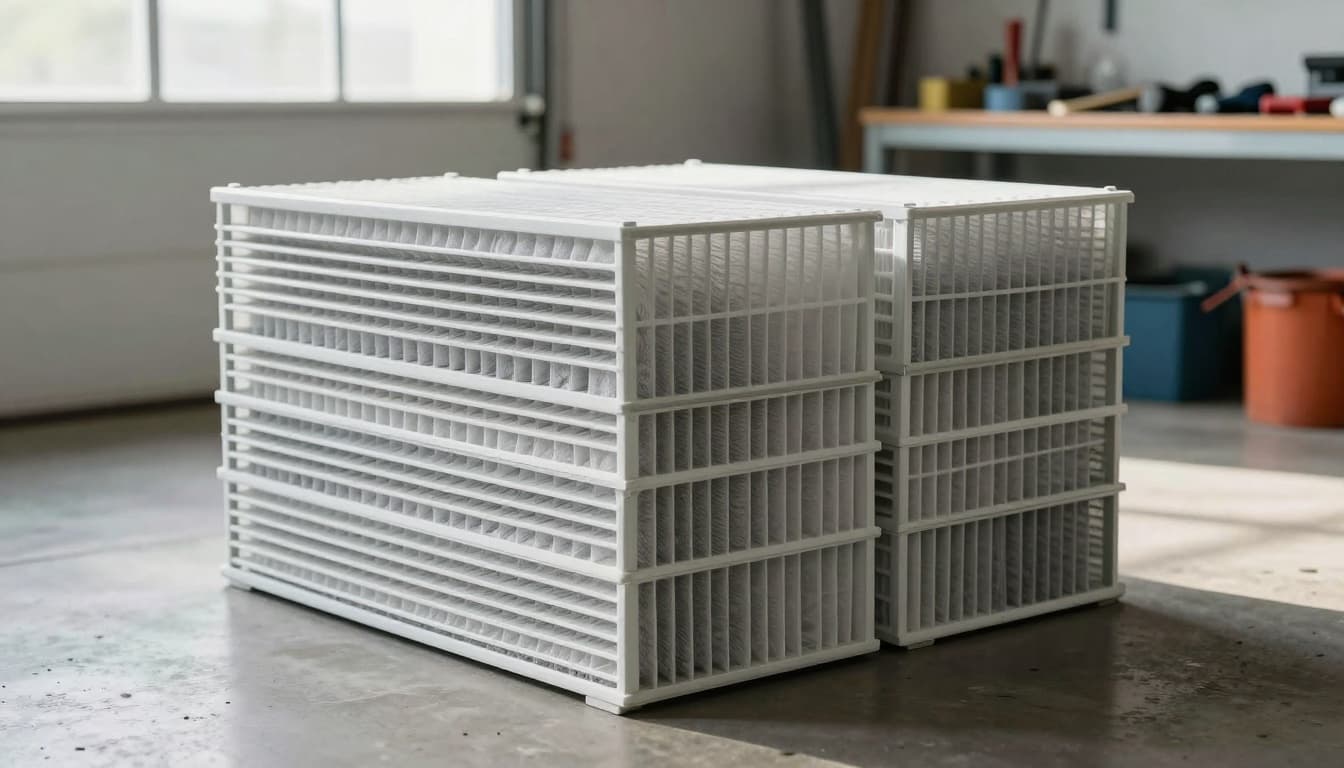 Stacked HVAC filters in a practical workspace, the kind of product customers reorder regularly (created with AI).
6) Pest control products (simple kits that solve one problem well)
Pest control is a big market, but you don’t have to compete with giant brands head-on. A small brand can win by being specific and helpful.
One newer example reportedly did about $74,000 in its first year with a straightforward pest kit and short educational videos. The concept is simple: show someone how to solve one annoying problem (ants in the kitchen, roaches in the bathroom), then offer a kit that makes it easy.
This niche rewards clarity over creativity. People don’t want clever names. They want instructions that work.
If you like hearing stories of odd but profitable ecommerce categories, this EcommerceFuel episode on “crazy” niches is a good reminder that boring and weird often equals profitable.
7) Senior aid and mobility products (grab bars, dressing aids, reachers)
This niche isn’t glamorous, but it’s growing because demographics are real life, not a trend. Products that help seniors stay independent, or help caregivers reduce daily friction, tend to get purchased with care and intention.
A reported example in this category grew by starting with a small catalog (not thousands of products), then focusing on items caregivers search for but can’t easily find locally. Think long-handled shoe horns, button hooks for arthritis, and reachers for limited mobility.
This niche can be very SEO-friendly because the searches are specific and emotional. People type things like “help mom put on socks” at midnight. If your product page is clear and respectful, you earn trust fast.
How to choose the right boring niche (without overthinking it)
You don’t need to pick the “best” niche. You need a niche you can serve better than the average seller.
A quick gut-check that helps:
Look for repeat pressure: Does the item wear out, get used up, or break?
Look for urgent triggers: Is there a moment when the buyer goes from calm to “buy now”?
Look for search intent: Do people search by model number, size, or compatibility?
Look for trust signals: Can reviews, guides, and clear photos reduce fear?
Also, pay attention to what’s quietly normal in 2026. Remote work is still a thing, which is why home office micro-upgrades keep selling. Wellness and sleep products keep moving too. Real-time trend roundups often highlight those “everyday repeat buy” categories, even if they aren’t exciting.
What I learned after trying to chase “cool” products
I’ve tried the cool route. It looked fun on paper, and honestly, it was fun for about two weeks.
Then the problems showed up. Too many sellers. Ads got expensive. Reviews were brutal because the product was a “nice-to-have,” not a need. Customers compared everything, and they waited for discounts. I remember thinking, why does every sale feel like a debate?
When I shifted my thinking toward boring stuff, something changed. The work became less about persuasion and more about being useful. Clear product titles. Compatibility notes. Simple photos. A short FAQ that answers the real worries. And a support inbox that treats people like humans.
It’s not romantic, but it’s calmer. And calm is kind of underrated when you’re trying to build something that lasts.
Conclusion: boring ecommerce niches are built for steady money
The best boring ecommerce niches share the same backbone: repeat demand, urgent problems, and buyers who reward the first brand that gets it right. If you want Business Ideas that don’t rely on trends, start by looking for products people reorder, replace, or rush to buy when something breaks.
Pick one niche, solve one problem clearly, and earn trust with details most sellers ignore. Boring doesn’t mean small, it means predictable.