


Picture this: you’re broke, kind of embarrassed about it, and weirdly motivated. You’ve got a phone, a laptop, and about six dollars in your bank account that you’re pretending doesn’t exist.
That’s not a fantasy scene. That’s a normal Tuesday for a lot of founders before things click.
Here’s the promise: if I had to start over in 2026 with $0, I wouldn’t begin with a logo, a “brand,” or a big plan. I’d start with speed, I’d pre-sell before building anything, and I’d pick work that creates cash fast.
Most businesses don’t make it long-term. The scary headline is that roughly 65% fail within 10 years, based on recent U.S. tracking over the last decade. But the part people miss is this: failure isn’t evenly spread. A huge chunk of the outcome is tied to what you choose to build, and how fast you test it.
If you want better odds, your “business ideas” can’t be random. They need to be chosen like a bet.
Photo by Leeloo The First
Start with speed: validate in 24 hours, not “someday”
In 2026, the biggest advantage isn’t genius or money. It’s moving while other people are still “thinking about it.”
Tools are cheap, competition is loud, and attention costs more than it used to. If you wait for perfect, you’re basically donating your idea to someone faster.
So I’d run a simple loop, almost like a checklist you carry in your head.
First, observe. Look for what people already complain about, pay for, or keep putting off. Scroll local groups, read one-star reviews, listen to friends who own small businesses vent for five minutes. It’s all there.
Then orient. Ask, “What type of person has this pain, and what do they want instead?” Not the service, the outcome. Not “cleaning,” but “I can host people this weekend and not panic-clean at midnight.”
Then decide. Pick one offer you can explain in one sentence. If it takes a paragraph, it’s still fuzzy.
Then act. Put it in front of real humans today. Not next month.
Speed works because it forces truth. And truth is what you need when you’re starting from zero.
Sell first, build second: the simplest pre-sell that costs nothing
Pre-selling is the cleanest way to start with $0 because it flips the risk. Instead of spending money and hoping someone buys, you get a yes first, then build.
The simplest version looks like this: a one-page offer, a payment link, and a post where your buyers already hang out.
A practical example: say you notice busy homeowners hate dealing with “three quotes and no replies” for small repairs. You pre-sell a same-week handyman booking experience. Your post might say you’re opening five early spots, you’ll manage scheduling, show up on time, and handle the job or coordinate the right person.
A founder I followed did something similar in a totally unglamorous industry, posted in a local community group, and collected recurring sign-ups before owning equipment. That’s the point. The money was hiding in the quiet stuff.
A few guardrails matter here, because trust is the whole thing:
Be clear it’s a presale, don’t hide that. Set a real deadline. Cap spots so you don’t drown. If you can’t deliver, refund fast, no drama, no excuses.
A $0 “validation stack” you can copy today
You don’t need a tech build. You need a basic setup that makes paying you feel normal.
A free landing page builder gives you one clean page that says who it’s for, what they get, and how to buy. A basic payment link lets someone pay in 20 seconds. A scheduling tool stops the back-and-forth texts. A simple form collects details so you can quote without guessing. A free CRM or even a spreadsheet tracks leads so you don’t forget who asked you what.
AI can help you draft the page, the follow-ups, and the offer wording, faster. But it can’t do the most important part: hearing what a customer actually means when they say, “I just need this handled.” You still have to edit, think, and talk to people.
If you want more ideas for low-cost starts, Shopify has a solid breakdown of starting a business with no money that matches this “sell first” approach.
Pick an industry where the math is on your side
A lot of founders lose before they begin because they pick games with terrible odds. They chase what looks cool online, then get crushed by competition, ad costs, and customers who shop on price.
The “65% fail in 10 years” stat gets repeated a lot, but here’s the useful part: outcomes vary by industry, and even by business model inside the same industry. Recent U.S. data also shows first-year failure rates can be steep in some categories. For example, the information sector has shown very high early failure in recent tracking.
So if you want to build from $0, you don’t want the hardest mode. You want simple demand, clear buying, and fast cash collection.
2026 is also not the year to depend on ads when you’re broke. Paid clicks are expensive, and plenty of markets are saturated. Needs-based services, local work, and boring B2B help still have gaps because people actually need them, every week, whether the economy feels good or weird.
Look for quiet, needs-based cash flow (and avoid headline chasing)
The best “$0” opportunities have three traits.
The problem is urgent, so people don’t procrastinate forever. It repeats, so you can get monthly money instead of one-time crumbs. And people already complain about it, publicly.
You can spot this in:
Home services (cleaning, junk removal coordination, simple maintenance).
Equipment repair and upkeep (small engines, shop tools, pool systems).
Basic B2B admin help (inbox clean-up, appointment setting, review follow-ups).
Local services where owners still answer the phone like it’s 1998.
The magic is not inventing demand. It’s improving how the service gets delivered. Faster response, clearer pricing, online booking, consistent follow-up. That stuff feels small, but it’s the difference between “I’ll call you back” and “I just took your card.”
If you want a broad scan of what’s popular this year, Entrepreneur’s roundup of small business ideas to start in 2026 can spark options, just filter them through “urgent, repeating, complained-about.”
Use the “boomer exit” to your advantage without buying a business (yet)
There’s a massive handoff happening as older owners retire. One estimate-heavy, but widely discussed trend is that millions of small businesses will change hands or close over the next decade, and a big reason is simple: many owners don’t have a clear succession plan.
You don’t need cash to benefit from that. You can offer a performance-based deal that helps an owner keep revenue steady while they step back.
For example: you approach a local service business and offer to fix booking, reviews, follow-up texts, and “missed call” handling. You take a cut of new booked jobs for 60 days. No upfront fee. You earn only if you produce.
This can lead to subcontracting work, partnerships, referral agreements, and eventually a chance to buy something small once you’ve stacked cash flow.
If you want background on the retirement wave and why communities care, Teamshares has a clear explainer on the small business “silver tsunami”.
Build a $0 offer that rich clients actually say yes to
In 2026, a lot of people feel squeezed. Prices are up, patience is down. At the same time, top earners still spend, and in many categories they spend more, because convenience matters more than saving $40.
That’s the simple version of a K-shaped economy: two different realities, happening at the same time.
If you’re starting with $0, selling to higher-end clients can be easier than selling to everyone, because you can charge enough to breathe. You can also do fewer jobs, which keeps quality high.
This isn’t about being fancy. It’s about packaging results so the buyer feels relief.
Create a premium package that feels “done for me”
A premium offer is just a basic service with the stress removed.
You answer fast. You give clear time windows. You confirm the day before. You show up clean and ready. You document results with before-and-after photos. You fix small issues without turning everything into an upsell conversation.
And you price it like you mean it.
Most new owners underprice because they aim at the wrong buyer, then they get stuck doing too much work for too little money. I’ve done it. It feels responsible at first, then it quietly breaks you.
A simple way to structure it is three tiers, with one clearly built for people who want speed and certainty.
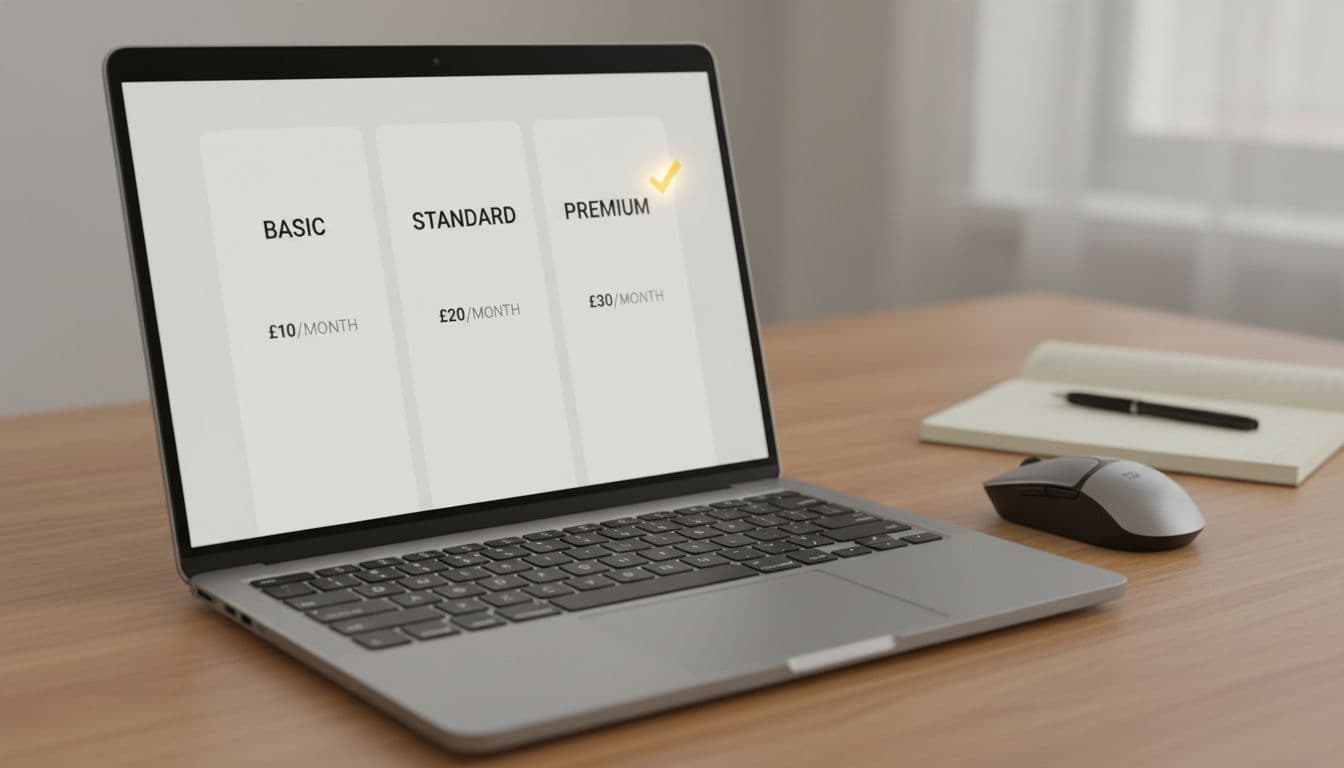
Three simple service tiers with a clear premium option, created with AI.
Why rich people buy: time, privacy, exclusivity, scarcity, and status
Higher-end buyers don’t buy the same way everyone else does. They buy to protect something.
Time: “Just handle it.” Example: priority booking windows, same-week service.
Privacy: less hassle, fewer people involved, quieter coordination. Example: one point of contact, no group texts.
Exclusivity: a plan that feels like it’s for them, not the public menu. Example: “concierge maintenance” for a small set of homes.
Scarcity: limited slots makes it real. Example: “We take 12 monthly members, that’s it.”
Status: they want results they can show. Example: “yard looks like a magazine shoot,” “office lobby always spotless,” “reviews look perfect.”
None of this requires money. It requires care, speed, and a tight offer.
Get customers without ads by owning attention and using simple AI systems
Ads can work, but when you’re starting with $0, ads feel like a tax you can’t afford. You pay, you guess, you hope.
Owned attention compounds. One channel, posted consistently, builds trust while you sleep. Not overnight, yeah, but it stacks.
A simple plan in 2026: pick one platform, tell the truth, show proof, then do direct outreach like a normal person.
If you want a mainstream step-by-step for starting from nothing, Bank of America’s guide on starting a business with little or no money is worth reading. Then come right back and actually do the uncomfortable part: talk to customers.
Choose one channel, then publish proof, not hype
Pick one primary channel for 90 days. YouTube if you can talk and teach. TikTok or Instagram if you can show quick proof. A newsletter if your buyers are more business-focused and live in email.
Don’t post motivation quotes. Post receipts.
Show a before-and-after. Show what a “same-day response” looks like. Show how you quote. Show what customers ask. Explain pricing without being weird about it.
Video and podcasts keep working because people want to see you think. And for B2B, customer acquisition can be cheaper because one client can be worth months of revenue, not a one-time purchase.

Recording simple proof content on-site, created with AI.
Add “agentic” workflows so you can run lean (even solo)
In plain English, an agent-style workflow is an AI setup that doesn’t just answer questions. It asks you questions, checks details, uses tools, tries again if it fails, and saves what worked so the next run is faster.
For a $0 service business, that can look like:
Lead intake that turns into a draft quote in minutes.
Follow-up messages that go out when someone doesn’t reply.
Appointment reminders so you don’t get no-shows.
A simple troubleshooting script that handles common issues before you step in.
The phrase I keep coming back to is AI first, not AI eventually. Not because it’s trendy, but because it lets one person operate like a small team.
Still, don’t remove humans from the moments that matter. Phone calls, awkward customer concerns, anything emotional, that’s where you win. Weirdly, human connection is getting rarer, so it’s worth more.
What I learned doing this the hard way (so you do not waste weeks)
I’ve started things the dumb way, more than once.
I thought I needed a logo first. I wasted two weeks naming something that didn’t need a name. I told myself I was “researching,” but honestly I was hiding from rejection. The real issue wasn’t the plan, it was me not wanting to hear “no.”
Once I finally talked to customers, everything got simpler. Not easier, simpler.
People don’t want your grand vision. They want their problem gone. They want to feel taken care of. That’s it.
Pre-selling also saved me from building the wrong thing. The first time someone pays, your brain wakes up. You stop writing cute copy and start writing promises you can deliver.
And boring problems, yeah, they paid better. I didn’t love that at first. I wanted the sexy thing. Then I realized “sexy” usually means crowded, and crowded means you’re fighting for scraps.
The moments I almost quit, and what actually fixed it
The first failure point is silence. You post, you DM, and nobody replies. It feels personal, even though it’s not. What fixed it was volume and clarity. More messages, tighter offer, fewer words.
The second is fear of selling. I used to over-explain. Now I keep it simple: “Here’s what I do, here’s who it’s for, here’s the price, want me to hold you a spot?” If they hesitate, I ask what they’re worried about, then I shut up.
The third is low prices. Low prices don’t feel safe, they feel stressful. After a couple wins, I raised prices faster than I was comfortable with, and the quality of customers improved right away.
The fourth is trying too many ideas. One offer for 30 days beats ten offers for three days each. Boring, but true.
And the last one is building too early. A landing page is enough. A schedule link is enough. The “real business” starts when you consistently talk to customers, and deliver.
Conclusion
If I had to build a business from $0 in 2026, I’d keep it simple: move fast, choose an industry with real demand, pre-sell before building, sell to better buyers, own attention with one channel, then add systems so you can stay lean.
Here’s the 24-hour plan: pick one problem you can solve this week, write one clear offer, message 10 people, book 2 quick calls, and pre-sell 1 spot. That’s it. Tomorrow you deliver, and you repeat.
Do that for a month, and you won’t just have ideas, you’ll have momentum.