


Can AI build a brand new business for you while you sit on your laptop at home? That promise is everywhere right now, and the YouTube video behind this post puts it to a real test with three ground rules: keep the store build under $1, do it laptop-only, and finish in under an hour.
The setup is simple on paper. You create a Shopify store, list products from a supplier, and when a customer orders, the supplier ships it directly to them. You keep the margin after costs. That’s the core of dropshipping, no warehouse, no boxes in your living room.
Still, let’s be honest: fast setup doesn’t mean fast money. Think of this as a quick-start framework for an AI Business, not a guaranteed income plan.
The $1 AI Business model, explained like you are new to it
In this context, the “AI Business” idea is really an AI-assisted Shopify dropshipping store. The AI part helps you move faster, it doesn’t replace the job.
Here’s what AI can help with:
- Generating a starter Shopify store layout and structure
- Suggesting themes, banners, and basic brand direction
- Improving product titles and descriptions so they read better
- Sometimes helping with ad creatives or simple UGC-style videos
Here’s what you still do (and it’s a lot of the outcome, honestly):
- Pick your niche and decide who the store is for
- Choose products that can actually sell and won’t create nonstop refunds
- Set pricing that leaves room for fees, returns, and support time
- Handle customer messages, shipping questions, and complaints
- Do the marketing, because a store with zero visitors is just a website
A mindset shift that matters: people love saying “passive income,” but this is usually closer to passive sales. You can build systems that reduce busywork later, but early on you’ll earn every sale with attention and follow-through.
What you get, what you do, and what can go wrong
The upside is real: speed, low upfront cost, no inventory risk. A store can go from zero to live in the time it takes to finish a coffee.
The tradeoffs show up right after your first orders:
- Thin margins if you don’t price with fees and returns in mind
- Supplier issues like sudden stock-outs or slow shipping
- Chargebacks if delivery takes too long or expectations aren’t clear
- Payment holds from processors when you’re brand new
- Policy compliance headaches if you ignore platform rules and ad policies (especially later, if you run paid ads)
A simple risk checklist I’d keep on a sticky note: support time, refunds, supplier quality, shipping time promises, platform policies.
Build the store fast: niche, branding, and a clean first impression
The video’s workflow is pretty direct: use an AI store builder to generate a base Shopify store, choose a niche, then clean up the look so it feels like a real brand and not a template.
Niche choice gets underrated because it feels boring. But it’s the difference between “I’m selling random stuff” and “I’m building a store for people like me.” The creator’s approach makes sense: pick something you care about, and make sure the market is big enough to support demand.
Branding matters here more than people think. When ten stores sell similar products, brand becomes the reason someone buys from you instead of the next tab.
Also, practical advice I agree with: don’t overthink banners and visuals. Ship an 80% version, then improve it after you have real data (and real customers).
 An at-home setup that matches how many people actually build and run a store today, created with AI.
How to pick a niche you can market without faking it
Use a simple filter: interest + market size + story you can tell without acting.
The video uses sports and fitness as an example, and it’s a smart one for a lot of people in 2026. Remote work is common, time is tight, and home-friendly gear sells because it fits real life. People don’t want a new identity, they want a quick win between meetings.
The rule that keeps you honest: don’t invent a reason. If fitness matters because you’re trying to get healthier, say that. If you’re doing it because a personal event made it real for you, share it. If you fake the “why,” your marketing starts to sound like… marketing, and people feel that.
Brand basics that make your store feel real (even if AI built it)
Start with the basics that shape trust in five seconds:
- A name that matches the niche and doesn’t sound random
- A simple color set that doesn’t fight itself
- Banners that show the vibe (not twenty messages at once)
- Messaging that states what you stand for, like quality, affordability, or simplicity
If you buy a domain, do a quick check for name conflicts and trademarks before you get attached. It’s boring, yes, but it’s cheaper than rebuilding later.
Find “winning” products and set up fulfillment without drowning in busywork
Product research can make or break the store. In the video, the flow is: use a tool to find trending products in your niche, import a product, let AI improve the title and description, then publish.
Tools like AutoDS are popular because they’re trying to reduce the repetitive tasks. As of January 2026, AutoDS is known for features like product importing, price and stock monitoring, and automated order fulfillment with tracking updates, based on current summaries and tool documentation. You can see how they position these capabilities in their own write-up on AutoDS features for finding winning products.
Automation helps, but you still need to watch the store. If you “set and forget,” you’ll eventually forget, and your customers will remind you.
How product selection actually works (and a simple test plan)
The video picks a pull-up bar, and the logic is relatable: busy people want short workouts at home or in the office. It’s not a weird niche product, it’s a daily-life product.
A simple test plan that doesn’t melt your brain: Start with a small set of products, then watch behavior. Clicks are nice, add-to-carts are better, purchases are best, and refunds are the warning light.
Pricing is where beginners lose without noticing. Leave room for: payment fees, app costs, shipping surprises, and the time you’ll spend answering “where’s my order?” messages.
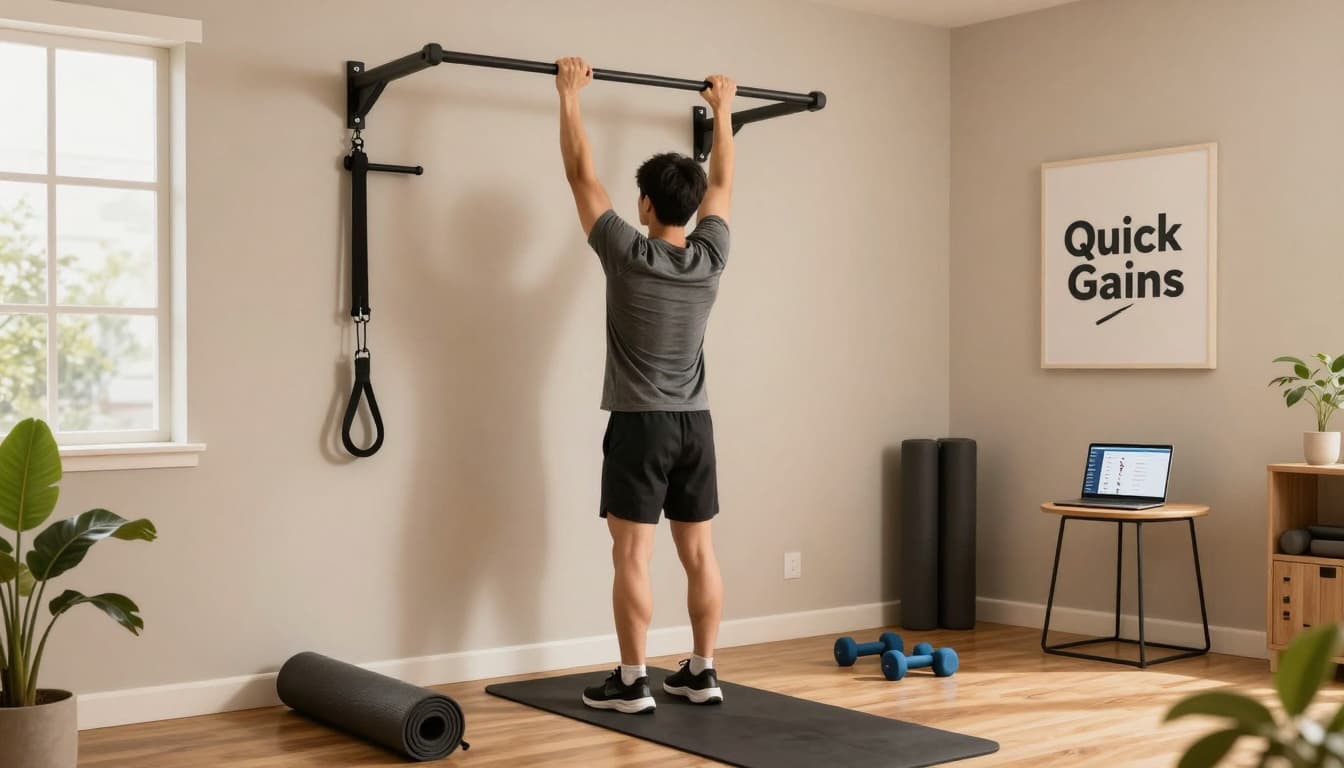 A realistic example of the “busy remote worker fitness” angle that can shape product choice, created with AI.
Manual vs auto fulfillment: what you gain, what you risk
Manual fulfillment gives more control, but it eats time and increases human error, like wrong variants or missed tracking.
Auto fulfillment saves time, but it adds a different risk: you’re trusting software and suppliers to stay accurate. Reviews for these tools can be mixed. For example, AutoDS has a broad range of user experiences on AutoDS user reviews on Capterra and AutoDS reviews on Software Advice, where the overall sentiment leans positive but complaints do show up.
My practical recommendation: do a daily check routine. Scan for stock changes, price jumps, and delayed orders. Also, set clear shipping expectations on your product pages so customers aren’t imagining 2-day delivery.
Marketing on a zero budget: the 3 moves that get your first visitors
If you’re staying inside the $1 constraint, you’re not buying ads. So you need marketing that costs time, not cash.
The video frames it well: marketing is basically relationship building. And growth is slow at first. Ten views, fifteen views, then maybe fifty. That doesn’t mean it’s broken, it means you’re at the start.
The three zero-budget moves are: micro influencers, simple content, and an email list you own.
Micro influencers: a numbers game that can work when you are small
Creators under about 5,000 followers can be surprisingly effective. They’re closer to their audience, and they’ll actually reply if your pitch is respectful.
A simple outreach message structure: Start with a real compliment, share the mission, offer a fair cut, and make it easy with a ready-to-share link. And yes, you’ll probably message 50 to get 5 conversations, then maybe 1 or 2 “yes” responses. That’s normal.
If you hate being on camera, try POV content and honest storytelling
If you can speak on camera, tell the story of why you’re building this store. Sell the “why,” not a list of features. People back people.
If you hate being on camera, POV content can work: quick interviews in parks or gyms, or simple clips of products being used (with permission when people are involved). The video also mentions experimenting with AI-generated UGC-style ads. That can help you test creatives quickly, just don’t expect it to replace real trust.
What I learned trying the $1 AI Business approach (the honest part)
I went in skeptical. I’ve seen too many “push button, get rich” claims, and they usually fall apart when you ask basic questions like, “Who handles refunds?” or “Where does traffic come from?”
But I’ll say it: the speed surprised me. Watching a store go from nothing to live, with products uploaded and pages filled out, it’s kind of wild. I had this small moment of, wait, that used to take days.
Then the reality kicked in, because the hard part didn’t vanish. Product choices still matter. Clarity still matters. Marketing still matters. And I caught myself hesitating on the outreach part, like… do I really want to DM 50 people today? Yeah. That’s the work.
So no, it’s not passive from day one. Not even close. But over time, with automation for fulfillment and routines for checks, it can feel less like chaos and more like a system.
Conclusion
The AI Business promise is real in one way: AI can lower the time and skill barrier to getting started. It can’t care for customers, protect your reputation, or build trust for you.
If you want a grounded next step, pick one niche you can talk about honestly, build a first draft store, add a small set of products, then commit to a 7-day marketing sprint. Do micro influencer outreach daily, and post one short story video or POV clip that explains why you’re doing this. Consistency beats hype, every time.