


You ever wake up, check your bank account, then sit in traffic to a job that doesn’t even feel like yours? That moment hits different. Not dramatic, just… heavy. And it makes you want a faster path to real income, not another “opportunity” that’s really just a trap with nicer packaging.
That’s why Best Home Service Businesses keep winning in 2026. They’re simple businesses, not easy ones. You show up, solve a real problem, get paid. No waiting for a boss to notice you. No praying an algorithm likes you.
 Homeowners are booking services from their phones more than ever, this image was created with AI.
Before you pick a service, there are three things you’ll want in place: a basic way to track customers and jobs (a simple CRM), a smooth system for estimates and invoices, and a website that brings leads. And if you want to grow faster, “website farming” (building local pages that pull in nearby searches, including AI-driven search results) is worth understanding later. Not today, but soon.
Now let’s get into the five options that fit 2026: busy households, older homes, climate wear, and more homeowners outsourcing the “I’ll do it this weekend” list.
What makes the best home service businesses in 2026 (and what to avoid)
When I say “best,” I’m not talking about what sounds exciting on TikTok. I mean businesses with fast demand, low to mid startup cost, healthy margins, and a clear path to repeat customers. The kind of work people keep paying for even when they’re watching their spending.
In 2026, homeowners keep shifting from DIY to “please just handle it.” Convenience is the product. A lot of customers aren’t shopping for the cheapest option either, they’re picking the person who answers fast, shows up, and feels trustworthy. Industry folks are calling this out more and more, including BDR’s round-up of home service trends to watch in 2026, where tech, speed, and customer expectations keep tightening the game.
What to avoid? Any model where you can’t win trust locally. If nobody in your area is searching for it, or the service requires a level of licensing you’re not ready for, it becomes “hard mode” for no reason. Same goes for hype businesses that claim you’ll be rich by Friday. Real service businesses grow because they’re boring in a good way.
The 2026 checklist: demand, margins, repeat work, and simple operations
Here’s the quick gut-check I use when judging a service:
Demand you can feel: If a homeowner puts it off, does it get worse (dirty homes, broken HVAC, overgrown yards)? Those services stay booked.
Margins that leave room to breathe: If every job feels like running uphill, your pricing or costs are off.
Repeat work baked in: Weekly cleaning, seasonal lawn care, annual tune-ups, repaint cycles. Recurring revenue is calm.
Simple operations: Predictable jobs beat mystery jobs, especially early on. Painting is often more predictable than “figure out what’s wrong with this weird leak.”
Realistic hiring later: Can you train someone without betting the business on them?
A good example of repeat work is maintenance plans. Cleaning every two weeks, lawn care all season, HVAC tune-ups twice a year. Those aren’t just add-ons, they’re how you stop starting from zero each month.
The three tools you will wish you set up first
Most beginners don’t fail because they can’t do the work. They fail because they can’t manage the work.
Start with:
A way to schedule and track customers: names, addresses, what you did last time, and when you’re coming back. This cuts no-shows and keeps you from double-booking.
Estimates and invoices that look clean: send them fast, collect deposits when it makes sense, and make payment easy. You want “paid” to happen quickly, not eventually.
A website that brings leads: a simple site with clear services, service areas, reviews, and a contact form can do a lot. Pair it with a Google Business Profile and you’re in the game.
Also, in 2026, response time matters like crazy. If you answer calls and texts fast, you’ll beat better companies that respond tomorrow. It’s kind of unfair, but it’s real.
The 5 best home service businesses to start in 2026 (with real-world earning potential)
These are practical picks you can actually run in real life. Not fantasy. Not “quit your job in two weeks.” Just businesses where effort turns into revenue without weird tricks.
Here’s a quick snapshot to compare:
| Business | Typical startup level | Common gross margin (often) | Repeat work potential |
|---|---|---|---|
| Residential cleaning | Low | 40 to 50% | High |
| Lawn care and landscaping | Low to mid | 20 to 30% | High |
| Handyman service | Low | 40 to 50% | Medium |
| House painting | Low to mid | 50%+ | Medium |
| HVAC repair and maintenance | Mid to high | 50 to 60% | High |
If you want more ideas beyond this list, Jotform has a solid overview of home service business options for 2026. But the five below are a strong “start here” set.
Residential cleaning: low cost to start, easy to sell, and built for recurring income
 Photo by Tima Miroshnichenko
Cleaning is one of the easiest services to sell because the pain is obvious. People are busy, tired, managing kids, work, aging parents, you name it. Landlords need turnovers cleaned. Short-term rentals need resets. Life creates mess, over and over.
Startup is simple: basic supplies, a vacuum, a system, and a way to get paid. When you’re lean and solo, cleaning can often hit 40 to 50% gross margin, sometimes more if you keep overhead low and route jobs smart.
Your first 10 customers usually come from two places: local Facebook groups and referrals. Offer a “first clean” special to get in the door, then push recurring plans (weekly, biweekly). Recurring clients stabilize cash flow, which is the whole point.
A smart niche angle for 2026:
- Move-out and move-in cleans for real estate agents and landlords
- Airbnb turns with tight checklists
- “Busy parent maintenance” plans (same day and time every two weeks)
Common mistake: hiring too early without a checklist. Scaling is the hard part here. Once you add employees, quality control becomes your job. If you do it right, $100K in annual revenue within a couple years is very reachable.
Lawn care and landscaping: reliable repeat customers if you lock in contracts
Lawn care stays popular because curb appeal never stops mattering. Homeowners want a clean yard. Commercial properties need it. And once you’ve got a customer, they usually don’t want to switch providers every month.
You can start small: mower, trimmer, blower, basic hand tools, and a truck or trailer. Margins often sit around 20 to 30%, with the potential to be higher when you’re solo and tight on costs.
The big problem is seasonality, depending on where you live. Winter can slow you down hard. One practical fix is annual contracts with steady monthly payments. Customers pay the same amount every month, even if service frequency changes across seasons. It smooths cash flow, and it makes your business feel more “real” fast.
Upsells that actually work:
- Mulch refresh
- Trimming and edging upgrades
- Spring cleanups and fall leaf removal
- Small landscape add-ons like beds or simple plant installs
Your first 10 customers often come from one tight neighborhood. Do one yard well, then put a small sign out (if allowed) and ask for referrals. In 2026, eco-friendly options are also getting more attention, like pet-safe treatments and less harsh chemicals, which aligns with broader consumer trends around sustainability.
Handyman service: great starter business if you stay in your lane
Handyman work is a classic “get started this month” option. Demand is everywhere: door hardware, drywall patches, fixture swaps, fence repairs, minor carpentry, the list goes on.
Startup costs are low if you already own basic tools. And margins can often land around 40 to 50% when you price correctly and avoid time-sucking jobs.
Here’s the rule that protects you: don’t take jobs you can’t confidently finish. It’s tempting to say yes to everything early on. But one job that drags on, or goes sideways, can eat your week and damage your reviews.
How to get your first 10 customers: tell everyone you know, then prove you’re dependable. Handyman businesses grow on trust more than marketing. Take before and after photos, show up on time, and communicate clearly.
Common mistakes:
- Underpricing “small” jobs that take 3 hours
- Not setting job boundaries (like disposal, patch matching, paint matching)
- Letting scheduling become chaos
A good path to $100K: start broad, then niche down once patterns show up. Maybe you become “the door and trim person,” or “the drywall patch guy,” or “the fixture install team.” Narrow beats scattered.
House painting: simple, predictable jobs with strong margins and fast scaling
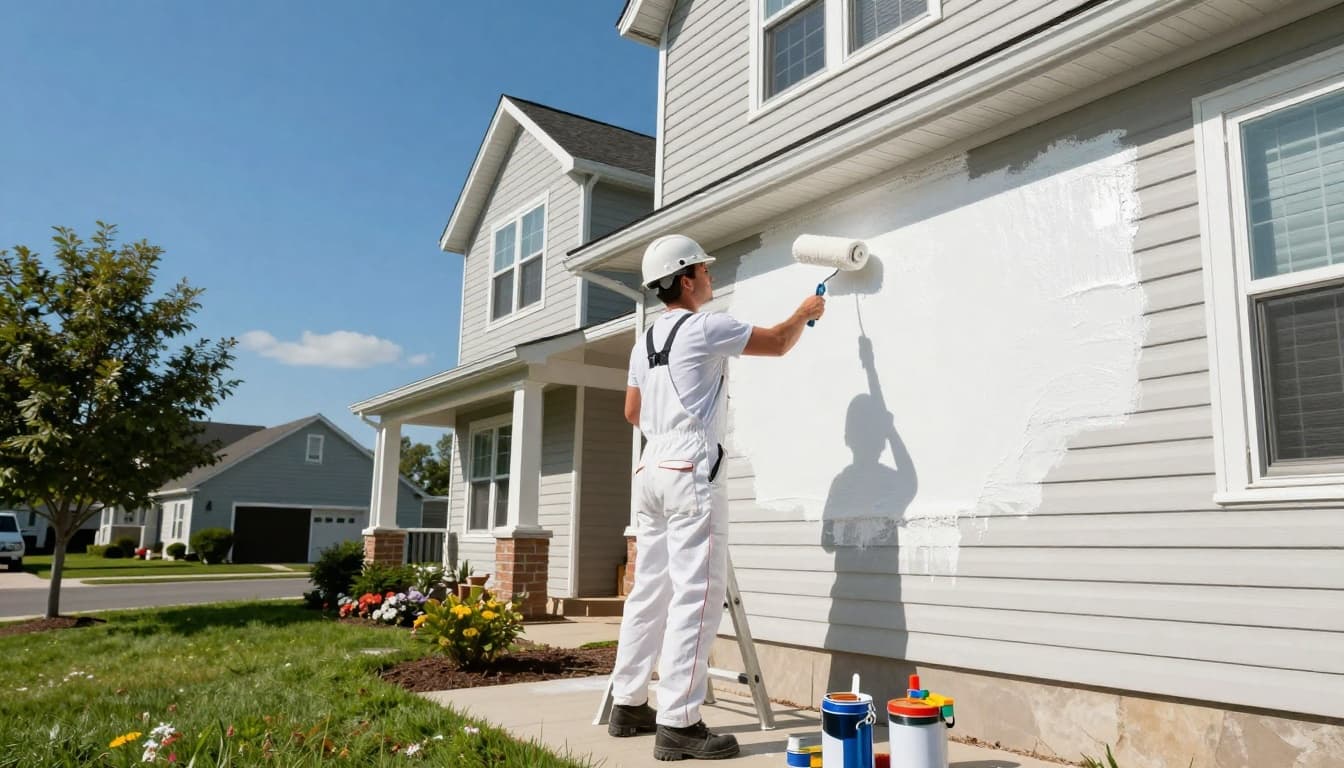 Exterior painting is a straightforward service with clear results, this image was created with AI.
Painting is one of the most predictable home services. People buy a house and repaint. They remodel and repaint. They list a home and repaint. It’s constant.
Compared to handyman work, painting has fewer surprise problems. The wall is the wall. Prep it, protect the area, paint it, clean up. If something goes wrong, you repaint. That predictability is gold when you’re trying to build a schedule you can actually manage.
Margins can be very strong, often 50% or more when estimating is tight and your process is consistent. Some operators push higher once they’ve got crews and a steady pipeline.
Beginner issues to avoid:
- Skipping prep, then paying for it later
- Not protecting floors, landscaping, or fixtures
- Vague scope, which leads to “I thought that was included”
- No touch-up policy (set clear expectations up front)
Good add-ons:
- Cabinet painting packages
- Trim and door upgrades
- Exterior maintenance plans (touch-ups, fascia, minor repairs)
Want to scale? Painting scales well because training a solid painter is easier than training a solid diagnostic tech.
HVAC repair and maintenance: higher barrier, bigger ticket jobs, and urgent demand
HVAC is essential. When it breaks in a heat wave or cold snap, it’s not optional. Customers don’t “think about it,” they act now. That urgency is why HVAC can be so lucrative in the right region.
Ticket sizes are bigger too. A single service call can often bring in a few hundred dollars (roughly $200 to $500 is common in many markets, depending on the issue). Profit margins can reach 50 to 60% for well-run operations, but only if you manage labor, parts, and dispatch well.
The tradeoff is real: certifications, licensing, and higher tool costs. You can’t just decide on Saturday and be legit by Monday.
A safer entry route is partnering with a licensed tech, apprenticing, or working for an established shop while you build your skills and credentials. Then you branch out with confidence.
Maintenance plans matter here. Tune-ups twice a year create repeat work and reduce the feast-or-famine cycle. And in 2026, homeowners are also paying more attention to energy efficiency and smart thermostats, which keeps demand steady for upgrades.
How to get customers in 2026 without guessing
 Local search and reviews drive calls, this image was created with AI.
Marketing a local service business isn’t magic. It’s a few basics done consistently.
Start with your Google Business Profile, fill it out fully, add real photos, list your services, and keep your hours current. Then collect reviews like it’s part of the job, because it is. In 2026, the fastest responders often win, and reviews help people choose you quickly.
Local channels still work:
- Neighborhood Facebook groups (be helpful, not spammy)
- Nextdoor (good for homeowners who actually buy services)
- Simple referral offers (like $25 off the next clean or mow)
- Answering calls fast, or at least calling back within minutes
For a broader look at what’s trending in service business models, Asphalt Kingdom has a useful list of proven service business ideas for 2026. It’s a good reminder that boring work often prints money when you run it right.
Website farming, in plain English, is building location-focused pages that match what people search (and what AI summaries pull from). Think “house cleaning in [town]” or “lawn care near [neighborhood].” Done right, it can create a steady trickle of leads without paying for every click. Keep it simple at first, then expand.
Your first 30 days plan: get reviews, set pricing, and book repeat work
In the first week, pick a service area you can drive fast. Get a basic logo, a basic site, and a clean estimate template. Don’t overthink it.
Weeks two and three, do a handful of slightly discounted jobs in exchange for honest reviews and photos. Not a forever discount, just enough to build proof. Then raise prices to where the work is worth doing.
By week four, focus on repeat work. Ask cleaning clients to go biweekly. Ask lawn clients to get on seasonal plans. Offer HVAC maintenance. Repeat customers turn a stressful hustle into a schedule.
Simple systems that make you look bigger than you are
A few small systems make you look established:
Text reminders the day before, and the morning of.
A short quoting script so you don’t sound unsure.
Before and after photos sent to the customer.
Easy payment options, and a clear due date.
These connect back to those three tools: customer tracking, estimates and invoices, and a lead-generating website. When those are in place, the business feels calmer. It’s still work, but it’s not chaos every day.
What I learned the hard way (so you do not waste months like I did)
I used to think the goal was “get more jobs.” That’s half true. The real goal is to get the right jobs, the ones you can repeat, price well, and deliver without panic.
I remember taking a job early on that sounded simple. It wasn’t. I showed up, and the customer kept adding little extras. “While you’re here…” and I didn’t know how to say no yet. I left late, tired, and honestly kind of annoyed at myself. The money wasn’t even good once I did the math. It taught me something I needed to learn fast: your time is the product.
Recurring revenue ended up being peace of mind. When you know next Tuesday is already booked, you stop waking up stressed. It’s not glamorous, but it’s stable.
And setting up basic scheduling and invoicing changed everything. Less back-and-forth, fewer missed appointments, fewer awkward “hey can you pay that invoice” texts. It made me feel more legit too, which sounds small, but it matters.
Conclusion
The best move is the one you can stick with for 90 days, without quitting when it gets boring or awkward. Pick the business that matches your skills, budget, and local demand, then commit and keep showing up.
If you want a simple shortlist, it’s this: residential cleaning, lawn care and landscaping, handyman services, house painting, and HVAC repair and maintenance. The fastest progress comes from consistent marketing, strong reviews, and repeat customers.
Your next step is simple: pick one service, price it, set up your quoting and website basics, then go get your first 3 jobs.