

 Someone getting a simple online business off the ground from a small home setup, created with AI.
If you keep thinking, "I need money to start," it might be time to pause and re-check that belief. A lot of the best Business Ideas for Women in 2026 can start with almost nothing, sometimes literally $0, and you can run them from your phone.
The real shift is this: online business is getting more beginner-friendly because tools do more of the heavy lifting now. That means you can move faster, test ideas quicker, and build something real without renting an office or buying inventory.
Below are six practical options that were built around the same promise: low risk, flexible schedule, and work you can do from anywhere. Not every idea will fit your personality, but at least one will probably feel like, "Wait, I could actually do that."
Why women have a huge edge in online business right now
There is a huge advantage as a girl in the online space, and it is not some mystery. It is simple stuff, but it matters.
First, women already drive a lot of shopping decisions, especially in categories like beauty, wellness, self-care, family, and lifestyle. So when you pick products to sell, content to post, or brand deals to chase, you are often closer to the buyer. You "get" the customer because you are the customer, or you have been around that customer your whole life.
Second, a ton of online business models reward communication. Being clear, being relatable, and knowing what to say in a caption or a video hook can turn into income. That skill has become a money skill.
And third, the cost barrier keeps dropping. With AI tools that can brainstorm, write drafts, and help map out a plan, you can start without feeling stuck. It is not magic, but it removes friction.
Here is the vibe to keep in your head: no excuses. Not because life is easy, it is not, but because the entry point is lower than it has ever been.
If you can pick one idea, stick to one niche, and stay consistent long enough to get feedback, you are already ahead of most people.
1) Digital products: create once, sell again and again
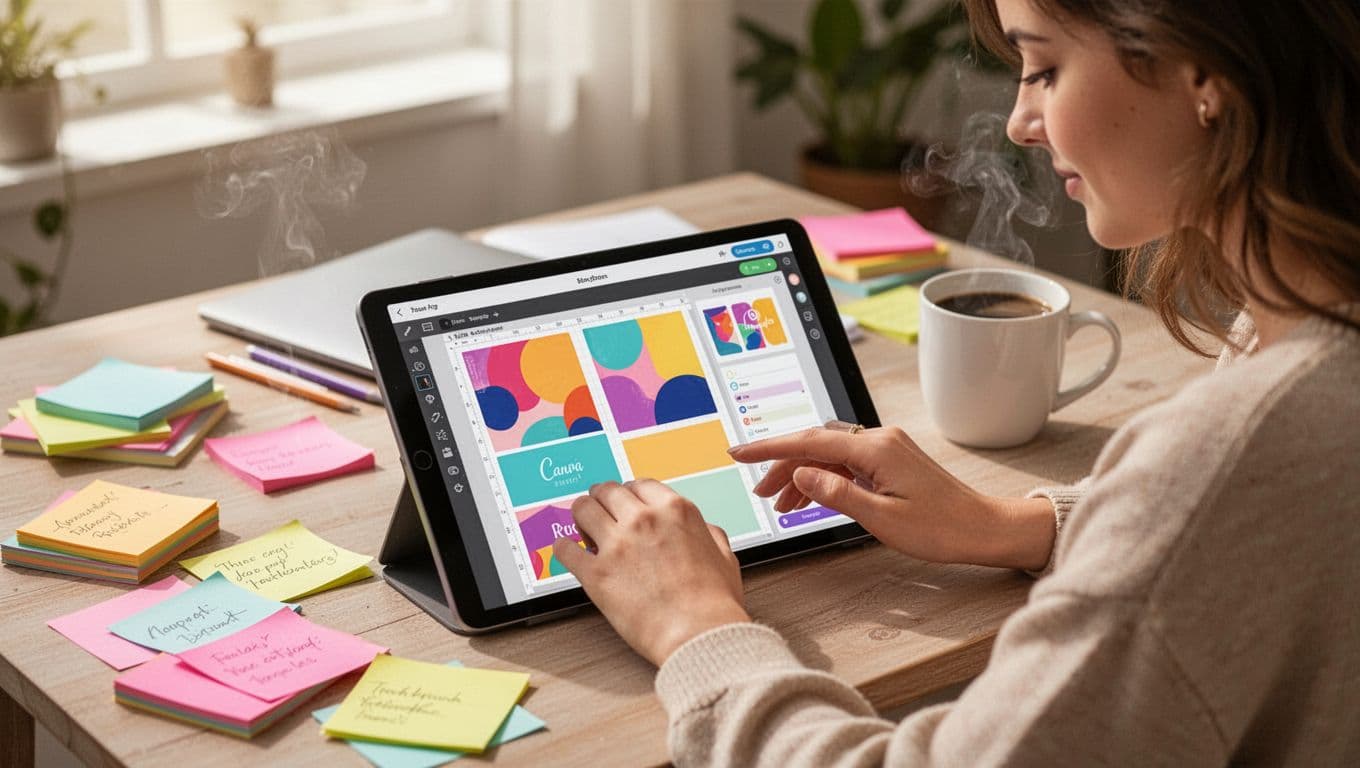 Designing a simple digital product like a planner or guide on a tablet, created with AI.
Digital products are one of the cleanest ways to start because you are not selling "a file." You are building a digital asset that can keep paying you over time.
A digital product can be an ebook, a PDF guide, templates, planners, recipes, mini-courses, tutorials, consulting-style guides, even simple games. The point is that you make it once, then you sell it without worrying about packaging, shipping, or inventory.
The upside is also straightforward: high profit margins. In many setups, you keep the money from every sale (minus platform fees, if you use a platform). That changes the math fast, especially if your product solves a real problem.
Niches that tend to work well for women
Niche matters here because "general" products get ignored. It helps to pick a lane, then stay in it long enough to build trust. Common lanes include personal development, self-care, health and wellness, entrepreneurship, parenting and family, beauty and fashion, personal finance, relationships, hobbies and creativity, travel, and career and work-life balance.
If you want a deeper list of product directions that can realistically pay, this internal guide on 7 digital products to sell in 2026 is packed with examples that feel more "useful" than trendy.
A fast way to start (without overthinking it)
AI can speed up the early steps a lot. Tools like Trend Assist AI for business strategy and content ideas can help you brainstorm, outline, and draft faster. Pair that with free Canva templates and you can get a first version done quickly.
A simple flow looks like this:
- Pick one niche and one clear outcome (what does the buyer get?).
- Draft the content fast (AI can help, but you still edit it).
- Design it cleanly in Canva using a template.
- Put basic marketing in place so people can find it and buy it.
2) Niche stores: sell what women already shop for (without holding inventory)
 Photo by Kampus Production
Niche stores are basically online shops built around one tight theme. Think "travel accessories for women who pack light" or "self-care night routine products," not a random store with everything.
The model described here is simple: you find products at a lower price, list them at a higher price, and keep the difference. The important part is you do not need to touch the products. The supplier ships directly to the customer, so you are not managing inventory at home.
That is why this can feel low risk. You are not buying 200 units up front. You are building a storefront and marketing it.
Using AI to set up a store fast
Store setup used to be a pain. Now, tools can build the first version in minutes. One option mentioned is a free AI store builder that creates a custom ecommerce store where you pick a niche, choose banners, and the system sets up a working store.
After that, supplier automation matters. A platform like AutoDS for supplier sourcing and store automation connects you to suppliers, helps import products, and supports automation like order processing. It also surfaces trends by showing what ads are running across platforms.
If you want a grounded, practical read on this path, this internal guide on how to start dropshipping with AI in 2026 is worth your time, because it focuses on what to do (and what to avoid).
A quick comparison so you pick faster
Here is a simple way to compare the "feel" of these models before you commit weeks to one.
| Model | Best for | Startup cost vibe | What takes the most effort |
|---|---|---|---|
| Digital products | Teaching, organizing info, templates | Very low | Creating something truly useful and marketing it |
| Niche store (dropshipping) | Product curators and trend watchers | Low | Finding winning products and building trust |
| YouTube automation | Patient builders who like systems | Low | Consistency and improving video quality |
| Content creator | People who can post regularly | Low | Staying consistent long enough to get traction |
| Social media manager | Service-minded, organized creators | Very low | Outreach and getting first clients |
| UGC creator | People who can shoot simple clips | Low | Posting samples and building a repeatable style |
The takeaway: none of these require a big upfront budget, but all of them require reps. You do the work, you learn, you improve, you repeat. That is the real formula.
3) YouTube automation: faceless channels that still earn
A lot of people still think YouTube equals being on camera. It does not. Faceless channels can pull serious views using stock clips, voiceovers, and strong topics like motivation, education, travel, or tech.
What is interesting is the wider definition of "faceless." You can create original content without showing your face. Cooking videos are a perfect example, you can film hands, the ingredients, the process, the final dish. Even family recipes can become a whole channel, and it still feels personal without turning into "influencer life."
The other mindset shift is saturation. Many people assume every niche is packed. Yet new channels grow all the time because nobody tells your story the way you tell it. A simple habit that helps is "productive scrolling," searching keywords on YouTube to see what pops up, then noticing patterns in titles and thumbnails.
AI can also speed up the boring parts, topic research, titles, scripts. Tools like Trend Assist AI for YouTube brainstorming and script writing are built for that kind of workflow.
4) Content creator: monetize your life (without making it weird)
Content creation gets dismissed because it sounds like a trend. Still, as a business skill, it is hard to beat. Once you understand how to make content that holds attention, you can point that skill at almost any offer later.
The cleanest way to start is to pick one topic you actually enjoy. Cooking, fitness routines, study tips, budget hacks, pet content, beauty routines, home organization, whatever makes you feel normal and happy. Then post on multiple platforms, Instagram, TikTok, Facebook, YouTube. One piece of content can be shared across all of them, so you are not reinventing your life daily.
The part most people skip is treating it like a funnel. Instead of chasing random viral clips, you build a clear theme, repeat it, and let the algorithm learn who to show your content to. It is slower at first, which is why people quit. Consistency is the whole thing.
For a broader scan of online options, Shopify also maintains a big list of business ideas for women in 2026, which can help when you are still deciding what fits your schedule and personality.
5) Social media manager: get paid to run someone else's accounts
Social media management is a service business, which means you can start with almost nothing besides time and skill. You learn content creation, then you sell that skill to businesses that do not have time to post.
This model can also be faceless. You can work from the client's footage, edit clips, write captions, plan the posting schedule, and suggest content ideas. Some people build their whole income this way because physical businesses need social media now. If they do not show up, they fade out. So they are looking for help, and they will pay for it.
A simple way to build your first portfolio
Instead of waiting for a client to "give you a chance," you practice on a personal project.
Try managing your own account like a mini brand. Or create a fake practice brand (a makeup brand works well), then build a week of posts, a basic strategy, and a sample content calendar. Canva is enough to document your work and make it look professional.
From there, you can start with low-priced freelance work or small internships, just to get results you can show. Over time, a small portfolio becomes a selling tool.
6) UGC creator: brands pay for authentic videos (followers not required)
 Filming a simple UGC-style product clip at home with natural light, created with AI.
UGC (user-generated content) is one of the most beginner-friendly models right now because it is not influencer marketing. You are not getting paid for your audience size. You are getting paid for the content itself.
Brands want clips that feel real, like a normal person showing a product in real life. That is why UGC works. It feels more natural than a big influencer ad, and it can be cheaper for brands too. The rates mentioned for a set of clips were around $300 to $500 in many cases.
The biggest tip here is not trying to be everything at once. Pick one or two niches so brands can quickly understand what you do. Beauty, skincare, wellness, fashion, and lifestyle are common, and yes, there are a lot of products built for women in this space.
A good starting content mix is pretty simple: unboxings, short reviews, tutorials, how-to videos, lifestyle clips, and before-and-afters. Post what you are already using, and keep it consistent so your page becomes a portfolio.
One approach shared was to focus on building your presence so brands come to you. That can give you more pricing power, because you are not begging for a deal. You are responding to demand.
Tools that keep showing up across all these ideas
A funny thing about online business in 2026 is that a few tools keep repeating across models. Not because you need a massive tool stack, you really do not, but because the right tools save you from the early "blank page" problem.
If you are building stores, the AI store builder that creates a store for free and AutoDS automation tools can reduce setup friction.
If you are creating content (digital products, YouTube scripts, post ideas), Trend Assist AI for trends and brainstorming gets mentioned for a reason.
And if you want tighter help with social media marketing for your own business, there is also a 1:1 help program for social media marketing shared as an option.
On the ecommerce side, if you want a more general explainer from outside sources, TrueProfit has a walkthrough on digital dropshipping in 2026 that can help you understand the model in plain terms.
What I learned after laying all six ideas side-by-side
Putting these six side hustles next to each other made one thing obvious, the "best" idea is the one you can stick with long enough to get evidence. Most people do not fail because the model is broken. They fail because they keep switching.
I also noticed how often niche shows up as the real cheat code. Not a fancy niche, just a clear one. When you pick one lane (beauty, parenting, wellness, personal finance), your content gets easier, your offers get clearer, and people start to remember you. That is when momentum starts to feel real.
Another small lesson, but it matters, is that AI helps most when it saves you from slow starts. Brainstorming, outlines, first drafts, product titles, script structure. It is like having a coworker who never gets tired. Still, you have to steer. If you let the tool do everything, it comes out flat, and people can tell.
Finally, I keep coming back to the same quiet truth: consistency is a business skill. It sounds boring, and yeah, it kind of is, but it is the separator.
Conclusion
The best Business Ideas for Women in 2026 are not the ones that sound impressive at a party. They are the ones you can start small, learn fast, and improve week by week. Pick one model, commit to one niche, and give yourself enough time to get real feedback. When you do that, it gets a lot easier to see what is working, and what needs a tweak.