


AI Dropshipping is simple in theory: you sell a product online, your supplier ships it, and AI handles a lot of the busy work that used to eat your nights and weekends.
So why does 2026 feel like a gold rush, but most beginners still lose money?
Because they copy an old playbook. The “2019 guru” version tells you to build a huge general store, slap on random products, run ads right away, and pray. In 2026, shoppers are sharper, platforms are stricter, and competition is faster. You can absolutely start with low money, no coding, and no inventory, but you still have to do the unsexy stuff: validate demand, make your store feel safe, and learn basic marketing.
If you want a beginner-friendly path, this is it. Fast, but not reckless.
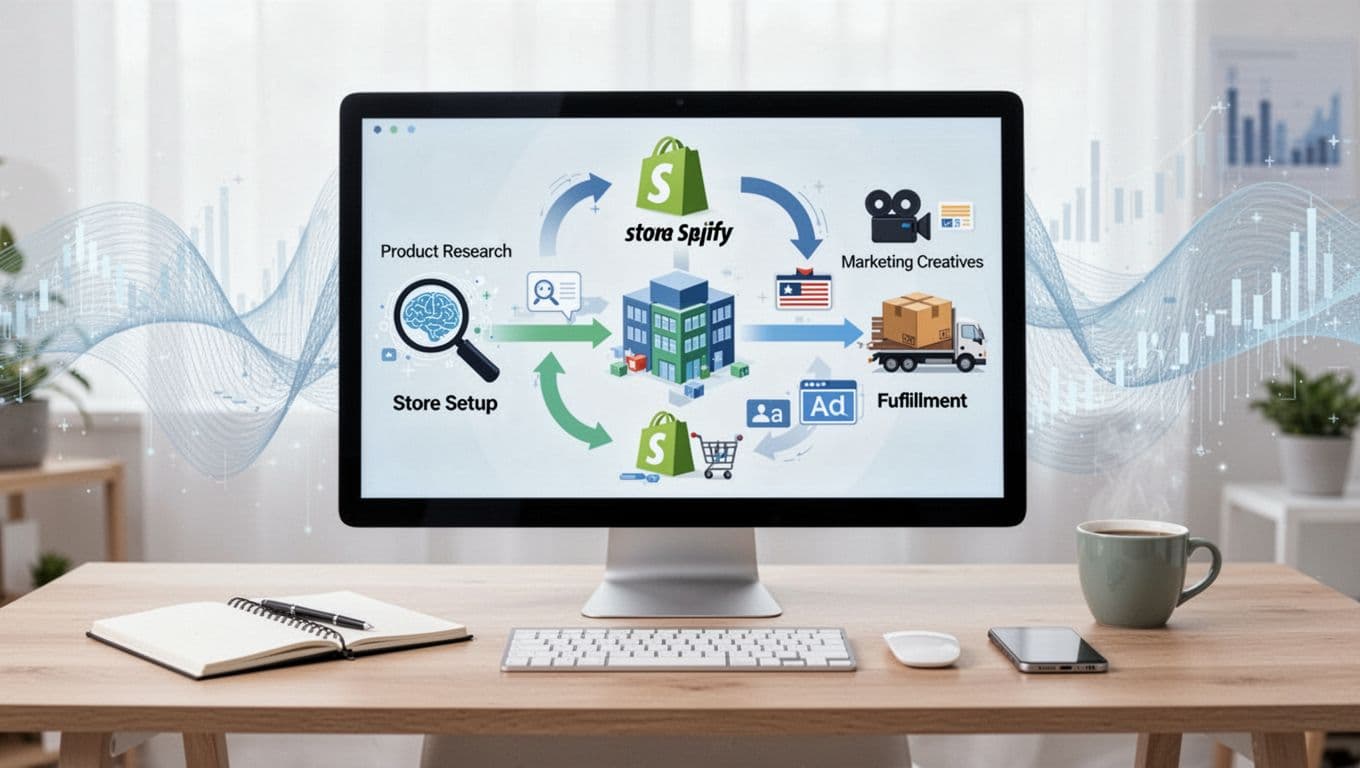 An AI-assisted workflow for starting and running a small dropshipping store, created with AI.
Start with the simplest game plan, so you do not waste money
Most beginners don’t fail because they’re “bad at e-commerce.” They fail because they do things in the wrong order. They spend a week on a logo, two weeks on a store, then try to force a product nobody asked for.
A safer order of operations looks like this:
You pick one product with obvious demand, you validate it quickly, you build a clean one-product store (or one hero product plus 1 to 2 add-ons), then you test simple creatives. After you get signal, you improve. It’s like learning to cook. You don’t open a restaurant on day one, you learn one dish, then repeat it until it tastes right.
The good news is AI makes the early steps much faster. I’ve watched complete beginners put up their first store over a weekend because the tools handle the blank-page pain. But speed only helps if you keep the plan tight.
What AI dropshipping really means (and what it does not)
AI dropshipping means AI supports the work that used to slow you down: product research, store setup, copywriting, ad scripts, image cleanup, and basic support replies. The supplier still handles shipping, and you still handle the brand and customer promises.
A beginner-friendly stack can be as simple as Shopify + a supplier/automation app + ChatGPT (or similar) for copy and creative drafts.
What AI does not do is the important part:
- It won’t guarantee a winning product.
- It can’t fix slow shipping or a sketchy supplier.
- It won’t protect you from bad judgment, like selling something fragile or return-heavy.
Think of AI like power tools. You still need to measure twice before you cut.
The 2026 beginner checklist: time, budget, and skills you actually need
You don’t need thousands in startup cash. You do need enough to run the basics and test traffic without panicking. In the US, a realistic starting range is often $150 to $400 for your first month (Shopify plan, a domain, one or two apps, and a small ad test). Tools and pricing change a lot, so treat that as a range, not a promise.
Time matters more than people admit. Plan for 5 to 8 hours a week at the start. Not 40, not 1. Consistent hours.
The real “must-have” skills are boring but learnable: writing clearly, reading basic metrics, and replying to customers like a normal human. You also need four essentials: a niche direction, one product to test, a simple customer support plan, and one traffic source (TikTok or Meta is common in 2026).
Pick a product that can win before you build anything
Your store can be gorgeous and still make zero sales. Product choice comes first.
In February 2026, the fastest product discovery loops are still built around short-form video signals and “shop marketplace” proof. Tools that scan ads and trending products can speed it up, but the concept is old-school: don’t guess demand, look for evidence.
Here’s the simple flow I like for beginners.
First, you collect 10 to 20 product candidates from TikTok-style feeds, ad libraries, and marketplaces. Then you narrow to 3. Then you pick 1 and validate it hard. The point is to reduce wasted ad spend, not to find a magical secret product nobody has seen.
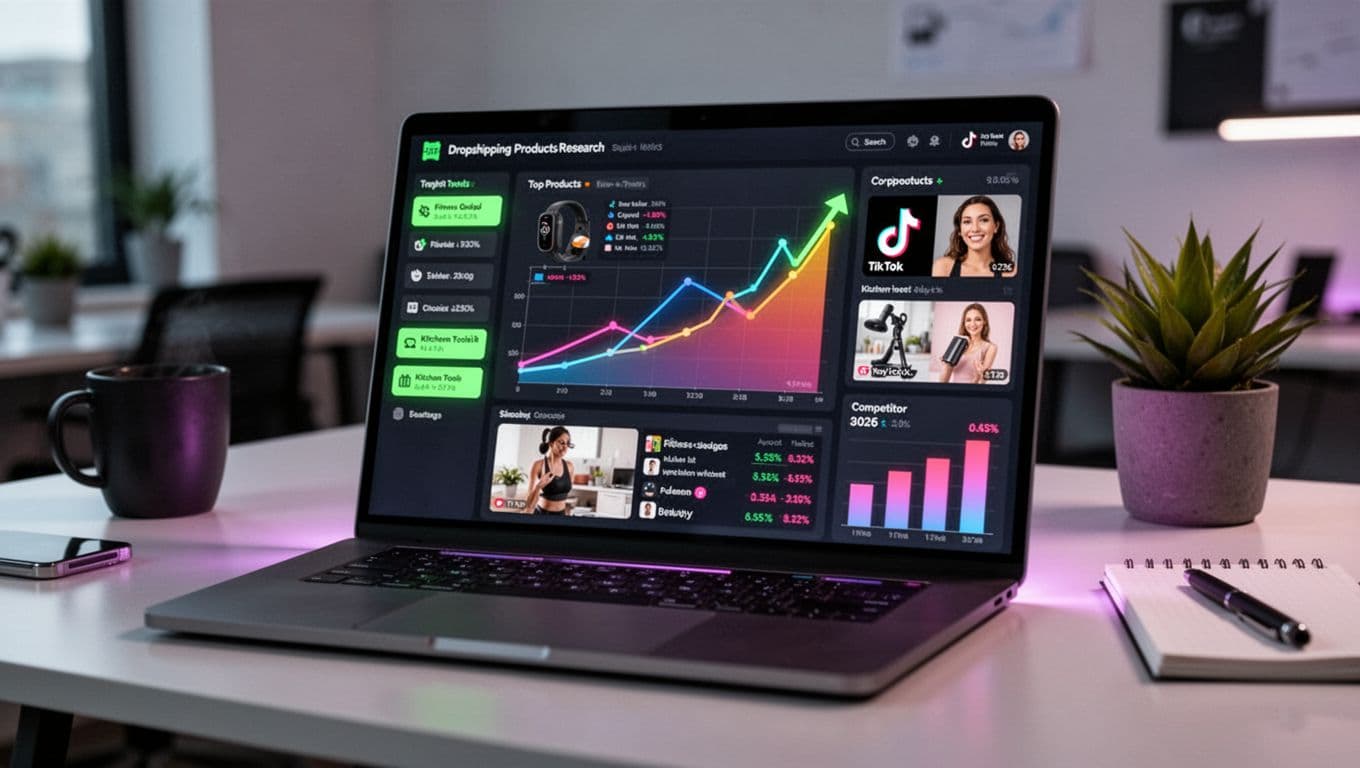 An example of what a trend and competition dashboard might look like during product research, created with AI.
The easiest way to spot demand in 2026: short-form video signals
Short-form platforms are basically a live focus group, if you know what to look for.
Good demand signals include repeat creators posting the same product (not just one viral hit), comments asking “where do I get this?”, and videos showing multiple angles or use-cases. If the product is also selling on a shop marketplace, that’s even stronger because it moves beyond views into actual transactions.
One warning though: viral doesn’t always mean viable. Some products spike because they’re funny or shocking, then refunds crush the seller. Cross-check with reviews, competitor pages, and shipping realities.
For a broader rundown of tool categories people use for research and creatives right now, Shopify’s overview of AI dropshipping tools for 2026 is a helpful reference.
Use AI to validate the product fast (demand, competition, margins)
Once you have a candidate, stop scrolling and validate it like an adult.
A quick method: paste the product link and a few product photos into AI and ask for (1) target customer summary, (2) top benefits (not features), (3) likely objections, (4) competitor positioning themes, (5) a realistic price band, and (6) three ad angles you can actually film.
Then do a simple green light vs red flag check:
- Green lights: clear problem solved, easy to show in 5 seconds, strong reviews with specific praise, room for margin after shipping and fees.
- Red flags: fragile shipping, confusing setup, heavy sizing risk, high return patterns, or anything that brushes up against trademarks and brand names.
AI helps you move faster, but you still make the call. If the numbers don’t work on paper, they won’t work in real life.
Build a store that looks trustworthy, in one afternoon
In 2026, the biggest beginner mistake isn’t “bad design.” It’s building a store that feels fake. Shoppers sense it fast. Weird copy, messy photos, unclear shipping, no contact info, and suddenly your conversion rate falls off a cliff.
AI store builders and theme generators can get you from zero to a decent layout in minutes, which is great. Some also bundle premium theme features, like variant swatches or product bundles, so you don’t stack five paid apps on day one.
Still, the goal isn’t to look fancy. The goal is to look safe.
Fast store setup: Shopify basics, theme choices, and key pages
Keep your first build minimal. One main product, clean navigation, and the pages people check when they’re unsure.
At a minimum, you want: a homepage that says who the product is for, a strong product page, shipping policy, returns/refunds policy, contact page, and an FAQ. If your supplier app supports a tracking page, add it. In the US, transparent shipping expectations matter, and hiding them backfires.
Also, set up the basics that reduce “is this a scam?” fear: a real support email, clear refund rules, and copy that doesn’t make wild claims.
If you want another list of AI tool options people are using around store-building and operations, Shiprocket’s roundup of AI tools for dropshipping in 2026 is worth skimming.
Let AI write your product page and brand voice (without sounding fake)
This is where AI can save you hours, and also where it can hurt you if you let it get weird.
A good prompt asks for: a clear headline, the problem, the simple solution, the benefits, a short “who it’s for” story, quick FAQs, and a direct call-to-action. You’re basically guiding AI into an Attention, Desire, Action flow, without turning your page into a textbook.
Two rules that keep it human:
- Talk benefits over features. People buy outcomes. “Breathable fabric” is a feature. “Feels cool on a hot commute” is a benefit.
- Add one or two specific details that sound real (what’s in the box, a realistic use scenario, who it’s not for).
Then read it out loud. If it sounds like a brochure, rewrite it. Keep the reading level simple.
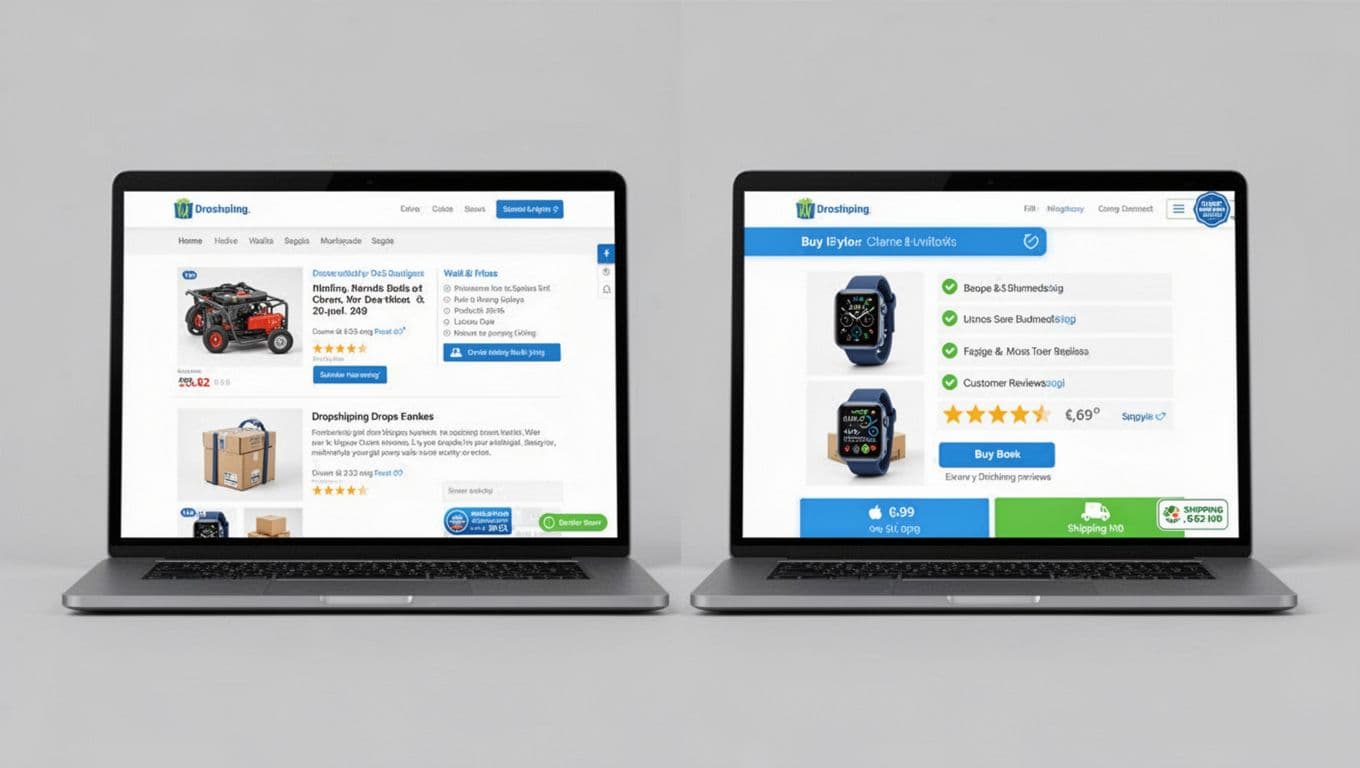 A before-and-after look at a product page cleaned up for trust and clarity, created with AI.
Launch marketing that beginners can handle, then automate the boring parts
Marketing is the engine. AI just helps you build and tune it without burning out.
For US beginners in early 2026, common tool picks include AutoDS for store automation, Dropship.IO or similar research tools for product signals, and supplier networks like Spocket for faster shipping options. The exact tool doesn’t matter as much as the habit: test, measure, adjust.
Start small. A basic test might be $10 to $30/day for 2 to 3 days per creative angle, depending on platform. You’re not trying to “scale” yet. You’re buying data.
Watch a few basics: cost per click, add-to-cart rate, and whether people reach checkout. If you get clicks but no carts, it’s usually the offer or the page. If you get carts but no purchases, it’s often trust, shipping clarity, or price.
Make scroll-stopping creatives with AI, even if you hate being on camera
You don’t need to be an influencer. You need a clear hook and proof.
A simple workflow: ask AI for three hooks, one 15-second script, and three primary text options. Then you create versions:
- A voiceover with product clips (you can source clips from your own samples or supplier media if allowed).
- An “AI presenter” style video, if you’re comfortable using one, but still edit it so it doesn’t feel stiff.
- One to two image ads using clean templates and strong benefit-focused text.
Basic editing in a simple app is enough. Keep videos short, show the product fast, and test multiple angles. Perfection is a trap, testing is the job.
Turn on automations: fulfillment, tracking updates, and customer support replies
Once you start getting orders, the “boring” stuff hits you fast.
Supplier automation apps can auto-place orders and push tracking into Shopify. Set up tracking emails, order confirmation emails, and a simple FAQ that answers shipping windows in plain language.
And yes, you’ll get the same email over and over: where’s my order?
Here’s the process that keeps you sane: copy the customer message, paste it into AI with your policy rules, add the real tracking details, then send a polite reply. Always double-check the output. Don’t invent tracking updates, don’t promise dates you can’t guarantee, and don’t offer refunds outside your policy unless you mean it.
For more ideas on what to automate first, Daylily’s guide on dropshipping automation tools in 2026 is a decent checklist.
What I learned the hard way starting out with AI dropshipping
I’ll be honest, my first “AI Dropshipping” attempts were messy. I moved fast, but not in the right direction. I chased a viral product late, built a store around it, ran ads, and got that sick feeling when the numbers didn’t add up. Clicks came in, carts happened, then refunds and angry shipping emails started stacking. I almost quit right there because it felt like the whole model was fake.
What changed was boring: I started validating before spending, and I stopped copying what everyone else was doing. Same product access, same platforms, but I wrote clearer pages, showed shipping times upfront, and aimed for simple branding over fancy logos. A clean text logo and consistent tone beat “premium” design with no trust.
The biggest lesson: AI is help, not the boss. It can draft faster than me, sure. But I still have to decide what’s true, what’s fair to promise, and what kind of store I’d feel safe buying from.
Conclusion
AI Dropshipping in 2026 isn’t magic, but it’s a real opportunity if you treat it like a skill, not a lottery ticket. Start small, move fast, and keep your promises simple and clear.
Over the next 2 days, keep it practical: (1) pick one product with real demand signals, (2) validate it with AI and basic math, (3) build a clean store with clear policies, (4) create 3 to 5 creatives using different hooks, (5) launch a small test budget, then (6) set up basic fulfillment and support automations.
Do that, and you’re no longer guessing. You’re building a system, and systems get better with reps.